
Small parrots are among the most popular pet birds in the world. They are intelligent, colorful, social, and easier to care for than many large parrot species. Their smaller size makes them a practical choice for apartments, families, and first-time bird owners.
From cheerful budgies to playful parrotlets and affectionate lovebirds, there are many small parrot breeds to choose from. Some can even learn words and phrases, making them excellent companions for people who enjoy interactive pets.
This guide covers the most popular types of small parrots, their personality traits, lifespan, care needs, diet, and costs. Whether you are looking for a talking bird, a family-friendly pet, or simply want to learn more about tiny parrots, this article will help you choose the right species.
What Are Small Parrots Called?
Small parrots are generally referred to as parakeets, parrotlets, lovebirds, and small companion parrots. While all parakeets are parrots, not all parrots are parakeets.
Most small parrots share several characteristics:
- Curved beaks
- Strong feet for climbing
- High intelligence
- Social behavior
- Ability to learn routines
- Long lifespan compared to many pet birds
The size of small parrots usually ranges between 3.5 and 12 inches (9 to 30 cm), depending on the species.
Difference Between Parrots and Parakeets
A parrot is a broad group of birds belonging to the Psittaciformes family. A parakeet is a type of parrot that usually has a slim body and a long tail.
Examples include:
- Budgerigars (Budgies)
- Bourke’s Parakeets
- Lineolated Parakeets
- Quaker Parrots
Characteristics of Small Parrots
Small parrots are known for:
- Friendly personalities
- Bright colors
- Curiosity
- Strong bonds with owners
- Trainable behavior
- Active and playful nature
Many species can learn tricks, respond to commands, and enjoy spending time with their human family.
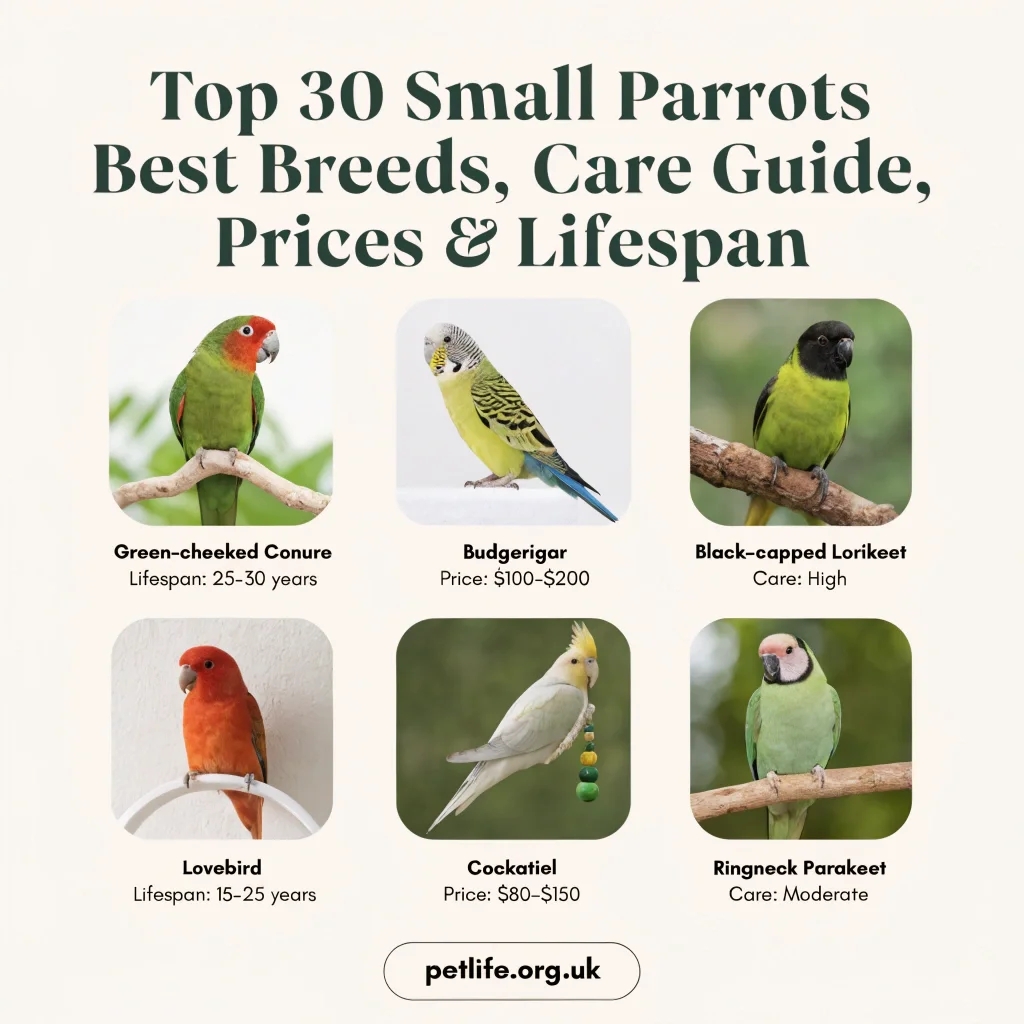
30 Popular Small Parrot Breeds
Choosing the right small parrot depends on your lifestyle, available space, and experience level. Below are some of the most popular small parrot breeds kept as pets.
Budgerigar (Budgie)
Budgies are the most popular small parrots worldwide.
They are affordable, easy to care for, and available in many color varieties. Budgies can learn hundreds of words when trained consistently.
Size: 7 inches (18 cm)
Lifespan: 5 to 15 years
Best For:
- Beginners
- Families
- Apartment living
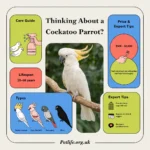
Cockatiel
Cockatiels are gentle birds known for their expressive crests and friendly nature.
Although they are slightly larger than budgies, they are still considered small pet parrots.
Many cockatiels learn whistles and simple words.
Size: 12 to 13 inches
Lifespan: 15 to 25 years
Best For:
- New bird owners
- Families
- Companion bird lovers
Lovebird
Lovebirds are small, colorful parrots with strong social bonds.
They are active birds that enjoy toys, climbing, and interaction. Their playful personality makes them entertaining pets.
Size: 5 to 7 inches
Lifespan: 10 to 20 years
Best For:
- Experienced beginners
- Active households
Pacific Parrotlet
Parrotlets are often described as “big parrots in small bodies.”
Despite their tiny size, they are confident, intelligent, and fearless.
Size: 4 to 5 inches
Lifespan: 15 to 20 years
Best For:
- People wanting tiny parrots
- Owners with time for training
Green-Cheeked Conure
Green-cheeked conures are among the friendliest small parrots.
They enjoy human interaction and often form strong bonds with their owners.
Size: 10 inches
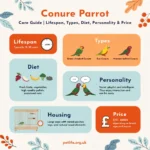
Lifespan: 20 to 30 years
Best For:
- Interactive pet owners
- Families
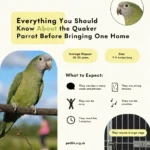
Quaker Parrot (Monk Parakeet)
Quaker parrots are highly intelligent birds known for their talking ability.
Many owners consider them among the best small talking parrots.
Size: 11 to 12 inches
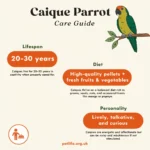
Lifespan: 20 to 30 years
Best For:
- People wanting a talking bird
- Experienced owners
Lineolated Parakeet
Lineolated parakeets, often called Linnies, are calm and quiet birds.
They are excellent apartment pets because they tend to be less noisy than many other parrots.
Bourke’s Parakeet
Bourke’s parakeets are gentle Australian birds known for their soft colors and calm personality.
They are often recommended for people who prefer quieter birds.
Senegal Parrot
Although slightly larger than some species on this list, Senegal parrots remain a popular choice for people seeking intelligent companion birds.
Meyer’s Parrot
Meyer’s parrots are playful and affectionate. They are known for their balanced temperament and moderate noise level.
Black-Headed Parrot
Black-headed parrots are energetic birds with attractive color patterns and curious personalities.
Plum-Headed Parakeet
This beautiful species is recognized by its colorful head and graceful appearance.
Rosella
Rosellas are among the most colorful parrots in Australia. They are active birds that thrive in spacious environments.
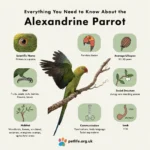
Alexandrine Parakeet
Young Alexandrine parakeets are medium-sized parrots with excellent intelligence and training potential.
Buff-Faced Pygmy Parrot
The Buff-Faced Pygmy Parrot is the smallest parrot in the world.
Native to New Guinea, this tiny species grows to only about 3.3 inches (8.5 cm) in length.
Small Parrot Breeds With Pictures
When people search for small parrot breeds with pictures, they are often interested in color variations.
Small Blue Parrots
Blue-colored small parrots include:
- Blue Budgies
- Blue Pacific Parrotlets
- Blue Lineolated Parakeets
These birds are popular because of their bright and attractive appearance.
Green Small Parrots
Many green small parrots are excellent pets.
Examples include:
- Quaker Parrots
- Green-Cheeked Conures
- Lovebirds
- Pacific Parrotlets
Green remains one of the most common colors found among pet parrots.
Small Colorful Parrots
If you want a bird with striking colors, consider:
- Rosellas
- Lovebirds
- Conures
- Bourke’s Parakeets
These species display combinations of red, blue, yellow, green, and orange feathers.
Smallest Parrots in the World
Many bird lovers are fascinated by the smallest parrots.
Here are some of the tiniest parrot species:
| Species | Average Size |
| Buff-Faced Pygmy Parrot | 3.3 inches |
| Pacific Parrotlet | 4 to 5 inches |
| Lovebird | 5 to 7 inches |
| Budgie | 7 inches |
Small size does not mean less personality. Many of these birds are energetic, intelligent, and highly social.
Best Small Parrots for Beginners
New bird owners often want a species that is friendly, adaptable, and easy to care for.
Budgies
Budgies are often considered the best beginner parrots because they are affordable, social, and easy to train.
Cockatiels
Cockatiels are gentle and forgiving birds that adapt well to family life.
Bourke’s Parakeets
Their calm personality makes them suitable for people who want a quieter pet bird.
Lineolated Parakeets
Linnies are easygoing birds that are often recommended for apartment living.
Lovebirds
Lovebirds can be excellent beginner pets when properly socialized from a young age.
Small Parrots That Talk
Many people specifically search for small parrots that talk.
While large parrots are famous for speech, several small species can also learn words and phrases.
Budgies
Budgies are among the best talking birds relative to their size.
Some individuals develop surprisingly large vocabularies.
Quaker Parrots
Quakers are known for clear speech and excellent word recognition.
Cockatiels
Cockatiels typically learn whistles more easily than speech, but some birds can mimic words.
Green-Cheeked Conures
Green-cheeked conures may learn a few words and sounds, though they are not as strong talkers as budgies or Quakers.
Which Small Parrot Talks Best?
For most owners, the best small talking parrots are:
- Budgie
- Quaker Parrot
- Cockatiel
- Green-Cheeked Conure
Training, social interaction, and repetition play a major role in speech development.
Best Small Parrots for Families and Apartments
Not every parrot is a good fit for every home. Some species are quieter, while others need more attention and activity. Choosing the right bird can make life easier for both you and your pet.
Best Small Parrots for Families
Families often look for birds that are friendly, social, and easy to handle.
Budgie
Budgies are among the best family-friendly parrots. They enjoy interaction and can bond with multiple family members.
Cockatiel
Cockatiels are gentle birds with a calm personality. They are often recommended for homes with children who are old enough to handle birds responsibly.
Green-Cheeked Conure
These playful parrots enjoy attention and often become very attached to their owners.
Best Small Parrots for Apartments
Noise is an important factor when living in an apartment.
The following species are generally quieter than many larger parrots:
- Bourke’s Parakeet
- Lineolated Parakeet
- Cockatiel
- Pacific Parrotlet
Even quiet parrots make sounds every day, but these species are usually easier to manage in smaller living spaces.
How Long Do Small Parrots Live?
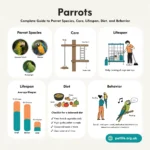
One reason people choose parrots as pets is their long lifespan. Many small parrots can live for decades with proper care.
| Small Parrot Species | Average Lifespan |
| Budgie | 5–15 Years |
| Lovebird | 10–20 Years |
| Cockatiel | 15–25 Years |
| Pacific Parrotlet | 15–20 Years |
| Quaker Parrot | 20–30 Years |
| Green-Cheeked Conure | 20–30 Years |
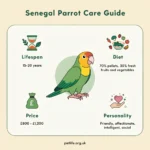
| Senegal Parrot | 25–30 Years |
A healthy diet, clean environment, exercise, and regular veterinary care can help parrots live longer lives.
What Do Small Parrots Eat?
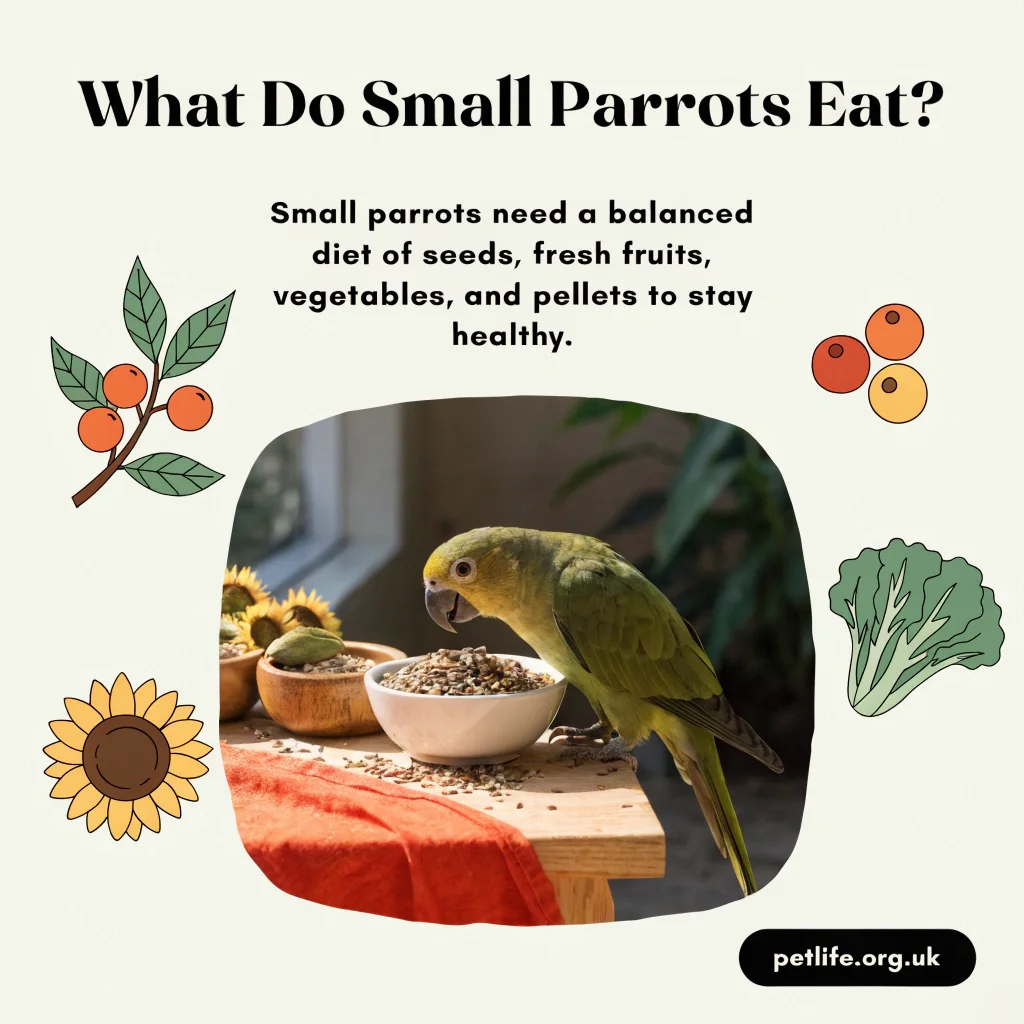
A balanced diet is one of the most important parts of bird care. Many health problems in pet parrots are linked to poor nutrition.
Pellets
High-quality pellets should form the foundation of most pet parrot diets.
They provide balanced nutrition and help prevent vitamin deficiencies.
Fresh Vegetables
Vegetables should be offered daily.
Good choices include:
- Carrots
- Broccoli
- Bell peppers
- Spinach
- Kale
- Peas
Fresh Fruits
Fruit can be given in moderation.
Popular options include:
- Apples (without seeds)
- Mango
- Papaya
- Berries
- Bananas
Seeds
Seeds should be treated as part of the diet rather than the entire diet.
Many parrots love seeds, but excessive seed consumption can lead to obesity and nutritional problems.
Fresh Water
Clean drinking water should always be available.
Water dishes should be cleaned daily.
Foods Small Parrots Should Avoid
Never feed parrots:
- Avocado
- Chocolate
- Caffeine
- Alcohol
- Onion
- Garlic
- Fruit seeds and pits
- Salty foods
These foods can be dangerous or toxic to birds.
Small Parrot Care Guide
Small parrots may be easier to manage than large parrots, but they still require daily care and attention.
Cage Size Requirements
Birds need enough space to move, climb, and stretch their wings.
As a general rule:
- Wider cages are better than taller cages.
- Bar spacing should match the bird’s size.
- Multiple perches should be provided.
Exercise and Enrichment
Parrots are active and intelligent animals.
They need:
- Toys
- Climbing opportunities
- Foraging activities
- Supervised out-of-cage time
Without mental stimulation, parrots can become bored and develop unwanted behaviors.
Social Interaction
Most parrots are social birds.
Daily interaction helps maintain trust and prevents loneliness.
Talking, training, and playtime strengthen the bond between bird and owner.
Grooming
Basic grooming includes:
- Nail maintenance
- Bathing opportunities
- Feather checks
- Beak health monitoring
Many parrots enjoy mist baths or shallow dishes of water.
Training Tips
Positive reinforcement works best.
Reward desired behavior with:
- Praise
- Small treats
- Attention
Training sessions should be short and consistent.
Health Care
Watch for signs of illness, including:
- Reduced appetite
- Fluffed feathers
- Breathing problems
- Lethargy
- Changes in droppings
Birds often hide illness, so regular health checks are important.
Small Parrot Price Guide
The cost of a small parrot varies depending on species, color mutation, breeder reputation, and location.
| Species | Average Price Range |
| Budgie | $20–$100 |
| Lovebird | $50–$250 |
| Cockatiel | $80–$300 |
| Pacific Parrotlet | $100–$400 |
| Quaker Parrot | $300–$1,000 |
| Green-Cheeked Conure | $250–$800 |
Monthly Ownership Costs
Beyond the purchase price, owners should budget for:
- Food
- Toys
- Cage maintenance
- Veterinary care
- Perches and accessories
Most small parrot owners spend between $20 and $100 per month depending on the species and care requirements.
Where to Find Small Parrots for Sale
If you are looking for small parrots for sale, always prioritize bird welfare over price.
Reputable Breeders
Responsible breeders focus on:
- Healthy birds
- Proper socialization
- Clean environments
- Genetic diversity
Bird Rescues
Many wonderful parrots need new homes through rescue organizations.
Adoption can be a rewarding option for experienced and first-time owners alike.
Pet Stores
Some pet stores offer healthy birds, while others may not provide the same level of care.
Always inspect the bird’s condition and ask questions before purchasing.
Questions to Ask Before Buying
Before bringing a bird home, ask:
- How old is the bird?
- Has it been hand-raised?
- What diet is it eating?
- Has it received veterinary care?
- Is it comfortable around people?
Small Parrots in Australia
Australia is home to several famous small parrot species.
Budgies
Wild budgerigars originated in Australia and remain one of the country’s most recognized bird species.
Cockatiels
Cockatiels are native Australian parrots known for their distinctive crests and friendly personalities.
Bourke’s Parakeets
These attractive birds are found in arid regions of Australia.
Rosellas
Rosellas are colorful parrots commonly seen throughout different parts of Australia.
For people searching for Australian small parrots, these species are among the best-known examples.
Comparison of Popular Small Parrot Breeds
| Species | Size | Talking Ability | Noise Level | Lifespan | Beginner Friendly |
| Budgie | Small | Excellent | Low | 5–15 Years | Yes |
| Cockatiel | Small | Moderate | Moderate | 15–25 Years | Yes |
| Lovebird | Small | Limited | Moderate | 10–20 Years | Yes |
| Parrotlet | Very Small | Limited | Moderate | 15–20 Years | Moderate |
| Quaker Parrot | Medium-Small | Excellent | High | 20–30 Years | Moderate |
| Green-Cheeked Conure | Small | Moderate | Moderate | 20–30 Years | Yes |
Pros and Cons of Keeping Small Parrots
Every pet comes with responsibilities. Understanding both the benefits and challenges can help you make an informed decision.
Advantages
- Intelligent and trainable
- Colorful and attractive
- Strong bonds with owners
- Suitable for apartments
- Long lifespan
- Many species can talk
Challenges
- Require daily attention
- Can become noisy
- Need mental stimulation
- Veterinary care can be expensive
- Long-term commitment
Final Thoughts on Small Parrots
Small parrots offer the intelligence, personality, and companionship that bird lovers enjoy while requiring less space than many larger parrot species. From budgies and cockatiels to lovebirds, parrotlets, and conures, there is a small parrot suited to nearly every lifestyle.
Before choosing a bird, consider its lifespan, noise level, activity needs, and care requirements. The best small parrot is not necessarily the most colorful or the best talker. It is the one that matches your home, schedule, and experience level.
With proper nutrition, daily interaction, enrichment, and veterinary care, small parrots can become loyal companions for many years. Whether you are looking for a tiny parrot, a talking bird, or a family-friendly pet, these remarkable birds bring energy, intelligence, and companionship into any home.
Frequently Asked Questions
What are small parrots called?
Small parrots may be called parakeets, parrotlets, lovebirds, or companion parrots depending on the species.
Which small parrots talk the most?
Budgies and Quaker parrots are generally considered the best small talking parrots.
What is the smallest pet parrot?
The Pacific Parrotlet is one of the smallest parrots commonly kept as a pet.
Are small parrots good pets?
Yes. Small parrots can make excellent pets for people willing to provide proper care, social interaction, and enrichment.
How much does a small parrot cost?
Prices range from around $20 for a budgie to over $1,000 for some Quaker parrots and special color mutations.
What do small parrots eat?
A healthy diet includes pellets, fresh vegetables, fruits, seeds in moderation, and clean water.
How long do small parrots live?
Depending on the species, small parrots can live anywhere from 5 to 30 years.
Which small parrot is best for beginners?
Budgies and cockatiels are widely considered the best small parrots for first-time owners.
Are budgies considered small parrots?
Yes. Budgies are one of the most popular small parrot species in the world.
What is the friendliest small parrot?
Many owners consider cockatiels and green-cheeked conures among the friendliest small parrots.