
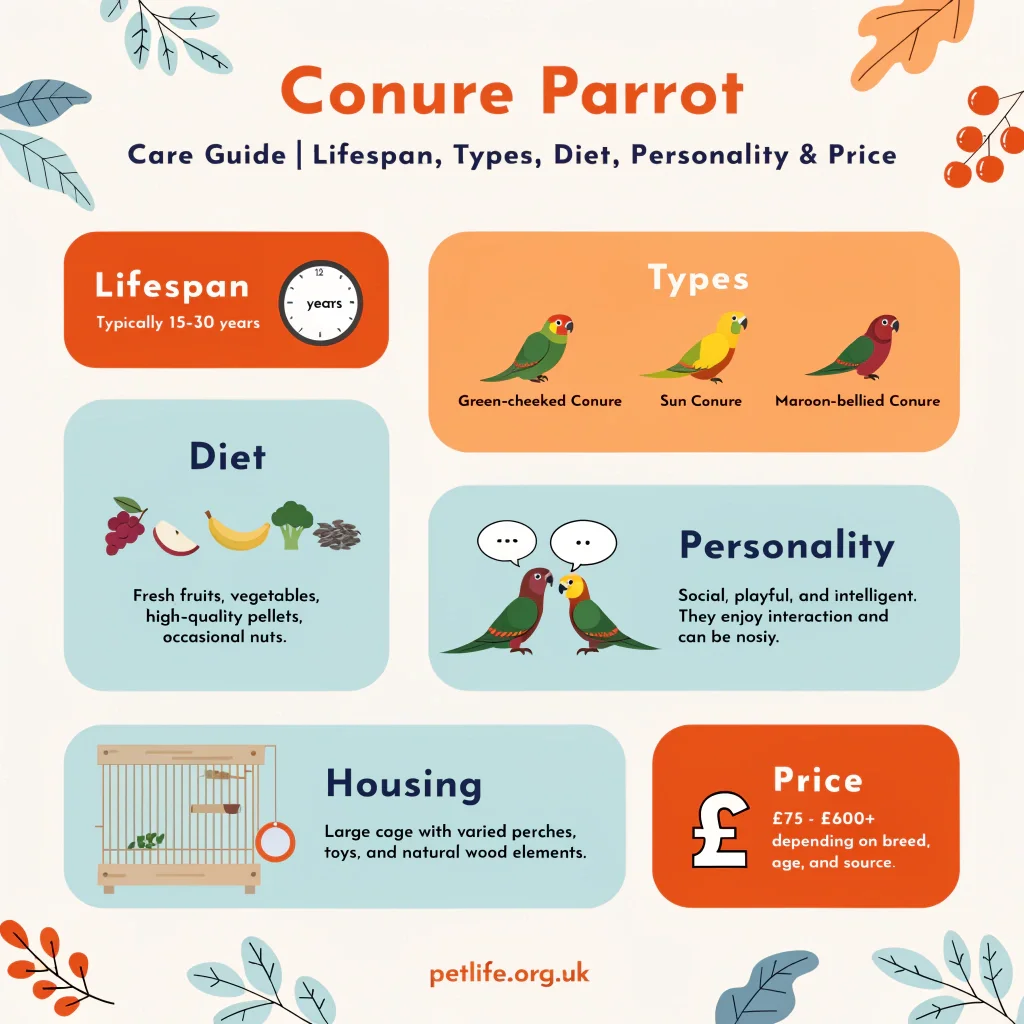
Conures are among the most popular pet parrots in the world. They are known for their playful personalities, bright colors, intelligence, and strong bond with their owners. Whether you are considering your first pet bird or adding another companion to your flock, a Conure Parrot can be a rewarding choice.
These birds are active, curious, and full of energy. Many conures enjoy learning tricks, spending time with people, and exploring their surroundings. While they are generally smaller than large parrots like macaws Parrots and cockatoos Parrots, they still require daily attention, proper nutrition, and mental stimulation to thrive.
This guide covers everything you need to know about conures, including their lifespan, personality, diet, different Parrots species, talking ability, and care requirements. It is designed to help you make informed decisions and provide the best possible life for your bird.
Quick Facts About Conure Parrots
| Feature | Details |
| Common Name | Conure |
| Scientific Group | Pyrrhura, Aratinga, Psittacara, Eupsittula and related genera |
| Origin | Central and South America |
| Size | 9 to 18 inches |
| Weight | 60 to 300 grams |
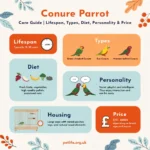
| Lifespan | 15 to 30+ years |
| Talking Ability | Moderate |
| Temperament | Social, playful, intelligent |
| Difficulty Level | Beginner to Intermediate |
| Best For | Families, singles, active bird owners |
What Is a Conure Parrot?
A Conure Parrot is a group of small to medium-sized parrots native to Central and South America. The word “conure” is commonly used to describe several parrot species belonging to different genera, including Pyrrhura, Aratinga, Psittacara, and Eupsittula.
These birds are recognized for:
- Long tails
- Bright feather colors
- Playful personalities
- Strong social behavior
- Active nature
- High intelligence
Unlike some larger parrots, conures are often easier to manage while still providing many of the same enjoyable qualities bird owners love.
Conure Parrot Pronunciation
Many new bird owners wonder about the correct Conure Parrot pronunciation.
The word Conure is usually pronounced:
“Kuh-NYOOR”
Some regions may pronounce it slightly differently, but this is the most commonly accepted pronunciation among bird enthusiasts and avian professionals.
Why Are Conures So Popular?
Conures have become one of the most popular companion birds because they combine intelligence, affection, and manageable size.
Owners often appreciate them because they are:
- Friendly
- Curious
- Interactive
- Easy to train
- Smaller than many large parrots
- Available in many beautiful color variations
Many conures enjoy spending time on their owner’s shoulder, participating in family activities, and learning simple tricks.
Origin and Natural Habitat
Conures naturally live throughout parts of Central and South America.
Depending on the species, they may be found in:
- Brazil
- Argentina
- Bolivia
- Paraguay
- Peru
- Ecuador
- Venezuela
- Colombia
Their natural habitats include:
- Tropical rainforests
- Woodlands
- Forest edges
- Savannas
- Palm groves
Wild conures spend much of their day searching for food, interacting with flock members, and flying between feeding and nesting areas.
Life in the Wild
Conures are highly social birds.
In nature, they usually live in pairs or small flocks. These groups help protect birds from predators and provide opportunities for communication and social bonding.
Wild conures spend their day:
- Flying
- Foraging
- Climbing trees
- Grooming
- Communicating through calls
- Caring for mates and young birds
This active lifestyle explains why pet conures need regular exercise and enrichment.
Conure Appearance
One of the reasons people are attracted to conures is their colorful appearance.
While different species vary in color, most conures share several common features.
Common Physical Characteristics
Most conures have:
- Long pointed tails
- Strong curved beaks
- Bright eyes
- Compact bodies
- Zygodactyl feet (two toes forward and two backward)
- Excellent climbing ability
Their feet allow them to grip branches, toys, and food items with remarkable precision.
Conure Parrot Size
The Conure Parrot size varies depending on the species.
Some conures remain fairly small, while others grow noticeably larger.
| Species | Average Length |
| Green-cheek Conure | 10 inches |
| Maroon-bellied Conure | 10 inches |
| Crimson-bellied Conure | 10 inches |
| Sun Conure | 12 inches |
| Jenday Conure | 12 inches |
| Blue-crowned Conure | 14 to 15 inches |
| Patagonian Conure | 17 to 18 inches |
Smaller species generally require less cage space than larger conures, although all species benefit from spacious housing and daily exercise.
Conure Colors
Conures are available in a wide range of natural and selectively bred color variations.
Common colors include:
- Green
- Yellow
- Orange
- Red
- Blue
- Black
- Grey
Some species display multiple colors on the same body, creating a vibrant appearance.
For example:
Conure Parrot Green
Many people search for Conure Parrot Green, which usually refers to species such as:
- Green-cheek Conure
- Maroon-bellied Conure
- Blue-crowned Conure
These birds feature green plumage as their primary feather color.
Color Mutations
Captive breeding has produced several attractive color mutations, especially in Green-cheek Conures.
Popular mutations include:
- Pineapple
- Cinnamon
- Turquoise
- Yellow-sided
- Mint
- Suncheek
These color varieties affect appearance but do not significantly change personality or care requirements.
Common Characteristics of Conures
Although there are many Conure Parrot Types, most species share several traits.
Intelligence
Conures are smart birds that learn quickly through positive reinforcement training.
Social Behavior
They enjoy spending time with people and often seek attention from family members.
Playfulness
Many conures love climbing, chewing toys, solving puzzles, and exploring new environments.
Curiosity
These birds constantly investigate their surroundings and benefit from regular enrichment.
Energy Level
Conures are active birds that need daily exercise and interaction.
Are Conures Suitable for Apartment Living?
Many smaller conure species can adapt well to apartment living when properly trained and socialized.
However, prospective owners should remember that:
- Conures can be vocal.
- They require daily attention.
- They need mental stimulation.
- They enjoy interacting with people.
Species such as the Green-cheek Conure are often considered quieter than larger species like the Sun Conure.
Why Understanding Natural Behavior Matters
A conure’s natural behavior provides important clues about its care needs.
For example:
- Birds that fly frequently need exercise.
- Social birds need interaction.
- Curious birds need toys and enrichment.
- Foraging birds benefit from food puzzles.
Providing opportunities for these natural behaviors helps keep pet conures physically healthy and mentally stimulated.
When their needs are met, conures often become affectionate, entertaining companions that fit well into many households.
Types of Conure Parrots
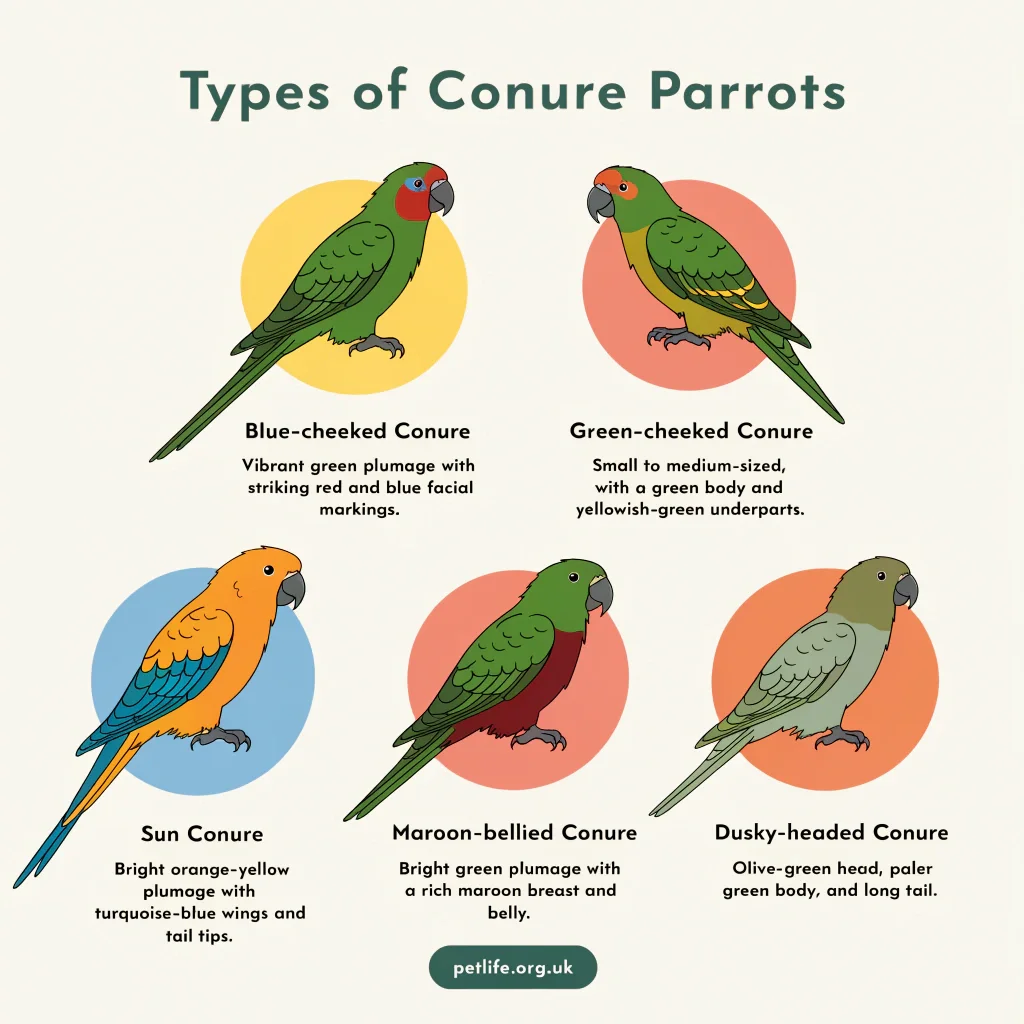
There are more than 40 conure species found across Central and South America. They belong to several scientific groups, including Pyrrhura, Aratinga, Psittacara, and Eupsittula. While each species has its own appearance and personality, all conures are known for being active, social, and intelligent birds.
Some conures are quiet and gentle, while others are more energetic and vocal. Choosing the right species depends on your experience, lifestyle, and the amount of time you can spend with your bird.
Below are some of the most popular Conure Parrot types kept as companion birds.
Green-cheek Conure
The Green-cheek Conure (Pyrrhura molinae) is one of the most popular pet conures. It is known for its playful personality, manageable size, and relatively quiet voice compared to many other conures.
Many first-time bird owners choose this species because it is affectionate, intelligent, and easier to care for than larger parrots.
Green-cheek Conure Quick Facts
| Feature | Details |
| Scientific Name | Pyrrhura molinae |
| Size | About 10 inches (25 cm) |
| Weight | 60–80 grams |
| Lifespan | 20–30 years |
| Talking Ability | Moderate |
| Noise Level | Low to Moderate |
Green-cheek Conure Lifespan
The average Green-cheek Conure lifespan is 20 to 30 years with proper care. A balanced diet, daily exercise, regular veterinary checkups, and plenty of social interaction all contribute to a longer, healthier life.
Green-cheek Conure Personality
Green-cheek Conures are:
- Friendly
- Curious
- Playful
- Gentle
- Affectionate
- Intelligent
They enjoy climbing, solving puzzles, and spending time with their owners.
Green-cheek Conure Talking
Many owners ask whether Green-cheek Conure talking is good.
While they are not the best talkers among parrots, many birds learn:
- Simple words
- Short phrases
- Household sounds
- Whistles
Their voices are usually softer than larger parrots, making them suitable for homes where excessive noise is a concern.
Green-cheek Conure Diet
A healthy Green-cheek Conure diet should include:
- High-quality pellets
- Fresh vegetables
- Fresh fruits in moderation
- Healthy grains
- Small amounts of seeds and nuts
Providing a varied diet helps maintain healthy feathers, strong bones, and good energy levels.
Sun Conure
The Sun Conure (Aratinga solstitialis) is famous for its bright yellow, orange, and green feathers. It is one of the most colorful companion parrots and is loved for its outgoing personality.
Sun Conure Quick Facts
| Feature | Details |
| Size | About 12 inches |
| Weight | 100–130 grams |
| Lifespan | 20–30 years |
| Talking Ability | Moderate |
| Noise Level | High |
Sun Conure Lifespan
The average Sun Conure lifespan is 20 to 30 years with proper care.
Sun Conure Personality
Sun Conures are:
- Very social
- Highly energetic
- Curious
- Playful
- Confident
They enjoy interacting with people and need daily attention to stay happy.
Sun Conure Price
The Sun Conure price varies depending on the country, breeder, age, and whether the bird has been hand-raised. Birds from reputable breeders generally cost more because they receive proper care and early socialization.
Sun Conure Breeding
Responsible Sun Conure breeding should only be carried out by experienced breeders who understand genetics, nutrition, chick development, and legal requirements. Healthy breeding pairs require spacious housing, a balanced diet, and regular veterinary care.
Blue-crowned Conure
The Blue-crowned Conure is a medium-sized conure recognized by its bright blue head and green body.
Highlights
- Intelligent
- Friendly
- Moderate talking ability
- Calm temperament
- Lifespan of 25–35 years
Many people searching for a Blue Conure are referring to the Blue-crowned Conure.
Jenday Conure
The Jenday Conure, sometimes called the Jandaya Parakeet, is another colorful companion bird.
It features:
- Bright yellow head
- Orange face
- Green wings
- Blue flight feathers
Jenday Conures are energetic birds that enjoy climbing, flying, and interacting with people.
Crimson-bellied Conure
The Crimson-bellied Conure, also known as the Crimson-bellied Parakeet, belongs to the Pyrrhura group.
This species is admired for its:
- Green body
- Deep red belly
- Gentle personality
- Quiet nature
It is often recommended for owners who prefer a calmer conure.
Maroon-bellied Conure
The Maroon-bellied Conure closely resembles the Green-cheek Conure but has distinctive maroon coloring on its belly.
These birds are:
- Curious
- Friendly
- Intelligent
- Easy to train
They generally adapt well to family life when properly socialized.
Black-capped Conure
The Black-capped Conure is another member of the Pyrrhura genus.
It is recognized by:
- Dark head
- Green body
- Blue wing feathers
- Calm personality
Although less common than Green-cheek Conures, they make excellent companion birds.
Nanday Conure
The Nanday Conure is one of the larger conure species.
It features:
- Black face
- Bright green body
- Blue feathers on the wings
- White eye ring
Nanday Conures are highly intelligent but can be louder than many smaller conures.
Golden Conure
The Golden Conure, also called the Queen of Bavaria Conure, is one of the rarest and most striking conure species.
Its bright golden-yellow feathers make it highly recognizable, but because of conservation concerns and legal protections, it is less commonly available as a pet.
Patagonian Conure
The Patagonian Conure is one of the largest conure species.
Compared to smaller conures, it requires:
- A larger cage
- More exercise
- Stronger toys
- Additional space for flying
Experienced owners often appreciate its intelligence and playful personality.
Conure Species Comparison
| Species | Size | Lifespan | Talking Ability | Noise Level | Beginner Friendly |
| Green-cheek Conure | Small | 20–30 years | Moderate | Low–Moderate | ⭐⭐⭐⭐⭐ |
| Sun Conure | Medium | 20–30 years | Moderate | High | ⭐⭐⭐ |
| Blue-crowned Conure | Medium | 25–35 years | Good | Moderate | ⭐⭐⭐⭐ |
| Jenday Conure | Medium | 25–30 years | Moderate | High | ⭐⭐⭐ |
| Crimson-bellied Conure | Small | 20–30 years | Moderate | Low | ⭐⭐⭐⭐⭐ |
| Maroon-bellied Conure | Small | 20–30 years | Moderate | Low | ⭐⭐⭐⭐⭐ |
| Nanday Conure | Medium | 25–30 years | Good | High | ⭐⭐⭐ |
| Patagonian Conure | Large | 25–35 years | Moderate | High | ⭐⭐ |
Conure Personality and Temperament
One of the biggest reasons people choose a Conure Parrot is its engaging personality. These birds are naturally social and enjoy being part of everyday family life.
Most conures are:
- Affectionate
- Playful
- Curious
- Energetic
- Intelligent
- Social
- Confident
Many birds enjoy sitting on their owner’s shoulder, exploring new toys, and learning simple tricks through positive reinforcement.
Because they form strong bonds with people, conures should not be left alone for long periods on a regular basis. A lack of interaction can lead to boredom and unwanted behaviors.
Do Conures Talk?
One of the most common questions is, “Do conures talk?”
The answer is yes, but their talking ability varies between species and individual birds.
Many conures can learn:
- Common words
- Short phrases
- Family members’ names
- Whistles
- Doorbell sounds
- Phone notifications
While they generally do not develop vocabularies as large as African Grey Parrots, they are excellent mimics and enjoy communicating with their owners.
Tips for Teaching a Conure to Talk
- Start training while the bird is young.
- Repeat words consistently.
- Keep sessions short and enjoyable.
- Reward successful attempts with praise or healthy treats.
- Speak clearly using the same words every day.
Patience and consistency usually produce the best results.
Are Conure Parrots Good Pets?
Yes, Conure Parrots make excellent pets for many households, especially for owners who can provide daily interaction and enrichment.
They are a good choice if you want a bird that is:
- Friendly
- Intelligent
- Active
- Easy to train
- Smaller than many large parrots
However, they are not completely low-maintenance. Conures need attention, exercise, mental stimulation, and a balanced diet to stay healthy and happy.
Are Conures Good for Beginners?
Many people ask if conures are good for beginners.
Smaller species such as the Green-cheek Conure, Maroon-bellied Conure, and Crimson-bellied Conure are often recommended for first-time bird owners because they are generally quieter and easier to manage than larger conure species.
Before bringing any conure home, make sure you have enough time each day for training, playtime, and social interaction. A well-cared-for conure can become a loyal companion for many years.
Conure Parrot Lifespan
One of the biggest advantages of owning a Conure Parrot is that it can be a long-term companion. With proper care, many conures live for decades, making them an excellent choice for people who are ready for a lasting commitment.
The average Conure Parrot lifespan depends on the species, genetics, diet, exercise, and overall care.
| Conure Species | Average Lifespan |
| Green-cheek Conure | 20–30 years |
| Sun Conure | 20–30 years |
| Blue-crowned Conure | 25–35 years |
| Jenday Conure | 25–30 years |
| Crimson-bellied Conure | 20–30 years |
| Maroon-bellied Conure | 20–30 years |
| Nanday Conure | 25–30 years |
| Patagonian Conure | 25–35 years |
Some conures have lived longer than these averages when provided with excellent nutrition, regular veterinary care, and a safe, enriching environment.
What Affects a Conure’s Lifespan?
Several factors play an important role in helping a conure live a healthy life.
Balanced Nutrition
A varied diet supports healthy feathers, bones, muscles, and the immune system.
Daily Exercise
Flying, climbing, and playing help prevent obesity and keep muscles strong.
Mental Stimulation
Conures are intelligent birds that need enrichment every day. Puzzle toys, training sessions, and foraging activities help prevent boredom.
Veterinary Care
Routine checkups with an avian veterinarian allow health problems to be identified and treated early.
Safe Living Environment
A clean cage, fresh water, proper ventilation, and protection from household hazards all contribute to a longer life.
Conure Parrot Food
A healthy diet is one of the most important parts of caring for a Conure Parrot. In the wild, conures eat a wide variety of foods, including seeds, fruits, flowers, berries, nuts, and vegetation. Pet conures also benefit from a varied diet instead of eating only seeds.
A balanced diet should include:
- High-quality pellets
- Fresh vegetables
- Fresh fruits
- Whole grains
- Small amounts of seeds
- Healthy nuts as occasional treats
- Fresh drinking water
Feeding a variety of nutritious foods helps reduce the risk of vitamin deficiencies and supports long-term health.
Best Foods for Conures
High-quality pellets should form the foundation of your conure’s daily diet.
Fresh vegetables can include:
- Carrots
- Broccoli
- Bell peppers
- Kale
- Spinach
- Green beans
- Sweet potato
- Peas
- Squash
Fresh fruits can include:
- Apples (without seeds)
- Bananas
- Blueberries
- Strawberries
- Mango
- Papaya
- Pears
- Grapes
- Melon
Healthy grains include:
- Brown rice
- Oats
- Quinoa
- Cooked barley
Nuts such as almonds and walnuts can be offered in small amounts as training rewards.
Green-cheek Conure Food List
Owners often look for a simple Green-cheek Conure food list. The same balanced diet recommended for most conures also works well for Green-cheek Conures.
A healthy menu includes:
- Pellets
- Leafy vegetables
- Carrots
- Bell peppers
- Broccoli
- Sweet potato
- Fresh berries
- Apple slices
- Cooked grains
- Small portions of nuts
Offering different foods throughout the week encourages natural foraging behavior and provides a wider range of nutrients.
Foods Conures Should Avoid
Some foods are harmful or toxic to parrots and should never be offered.
Avoid feeding:
- Avocado
- Chocolate
- Caffeine
- Alcohol
- Onion
- Garlic
- Apple seeds
- Fruit pits
- Foods high in salt
- Sugary snacks
- Fried foods
Which Fruit Is Not Good for Parrots?
This is a common question from new bird owners.
Most fresh fruits are safe when offered in moderation. However, fruit pits and apple seeds should never be fed because they contain compounds that are toxic to birds. Always remove seeds and pits before serving fruit.
Sample Daily Feeding Schedule
A simple feeding routine helps keep your bird healthy.
Morning
- Fresh pellets
- Mixed vegetables
- Fresh water
Afternoon
- Foraging treats
- Leafy greens
Evening
- Small serving of fruit
- Healthy nuts as rewards during training
Remove uneaten fresh foods after a few hours to prevent spoilage.
Cage Requirements
Choosing the right cage is one of the most important parts of caring for a conure.
Your bird should have enough room to:
- Fully stretch its wings
- Climb comfortably
- Play with toys
- Move between perches
As a general rule, the largest cage you can safely accommodate is usually the best choice.
Look for a cage with:
- Strong metal construction
- Horizontal bars for climbing
- Secure locks
- Easy-to-clean tray
- Plenty of space for toys and perches
Cage Accessories
A well-equipped cage should include:
- Natural wood perches
- Rope perches
- Food and water bowls
- Chewing toys
- Foraging toys
- Swings
- Climbing ladders
- Bird-safe branches
Rotating toys every week helps keep your conure interested and mentally active.
Exercise and Enrichment
Conures are energetic birds that need daily exercise to stay healthy.
Most pet conures should spend at least two to four hours outside the cage each day in a safe, supervised area.
Daily activities can include:
- Flying
- Climbing
- Playing with toys
- Solving food puzzles
- Learning tricks
- Exploring bird-safe play stands
Regular exercise supports physical health while reducing boredom and stress.
Why Enrichment Matters
In the wild, conures spend much of the day searching for food and interacting with their flock.
Pet birds also need opportunities to use their minds.
Good enrichment ideas include:
- Puzzle feeders
- Cardboard boxes for shredding
- Untreated wood blocks
- Hanging ropes
- Bird-safe branches
- Paper cups with hidden treats
- Interactive training sessions
Changing toys regularly keeps your bird interested and encourages natural behaviors.
Grooming and Hygiene
Good grooming habits help keep your conure healthy and comfortable.
Although birds perform much of their own feather care, owners should still provide support through regular maintenance.
Bathing
Most conures enjoy bathing two or three times each week.
You can provide:
- A shallow bowl of clean water
- Gentle misting with a spray bottle
- A bird-safe shower perch
Bathing helps remove dust and supports healthy feather condition.
Nail Care
Long nails can make climbing difficult and may become caught on cage bars or toys.
Natural wood perches often help wear nails down naturally.
If trimming is necessary, it should be performed by an experienced bird groomer or an avian veterinarian unless you have been properly trained.
Beak Care
A healthy beak usually stays in good condition through normal chewing.
Provide plenty of safe chewing materials, including:
- Natural wood toys
- Bird-safe branches
- Foraging toys
Never trim your bird’s beak at home unless instructed by an avian veterinarian.
Feather Care
Healthy feathers are a good sign of overall health.
Regular bathing, balanced nutrition, and opportunities to preen naturally help maintain feather quality.
During molting, your bird may become more sensitive. Extra patience, proper nutrition, and bathing opportunities can make this period more comfortable.
Daily Care Routine
Following a consistent routine helps your conure feel secure and keeps daily care manageable.
Every day:
- Replace fresh food and water.
- Remove leftover fresh foods.
- Clean food and water bowls.
- Spend quality time with your bird.
- Provide supervised exercise.
- Offer enrichment and training.
- Check for any signs of illness or injury.
A predictable routine helps build trust and strengthens the bond between you and your conure.
Signs of a Healthy Conure
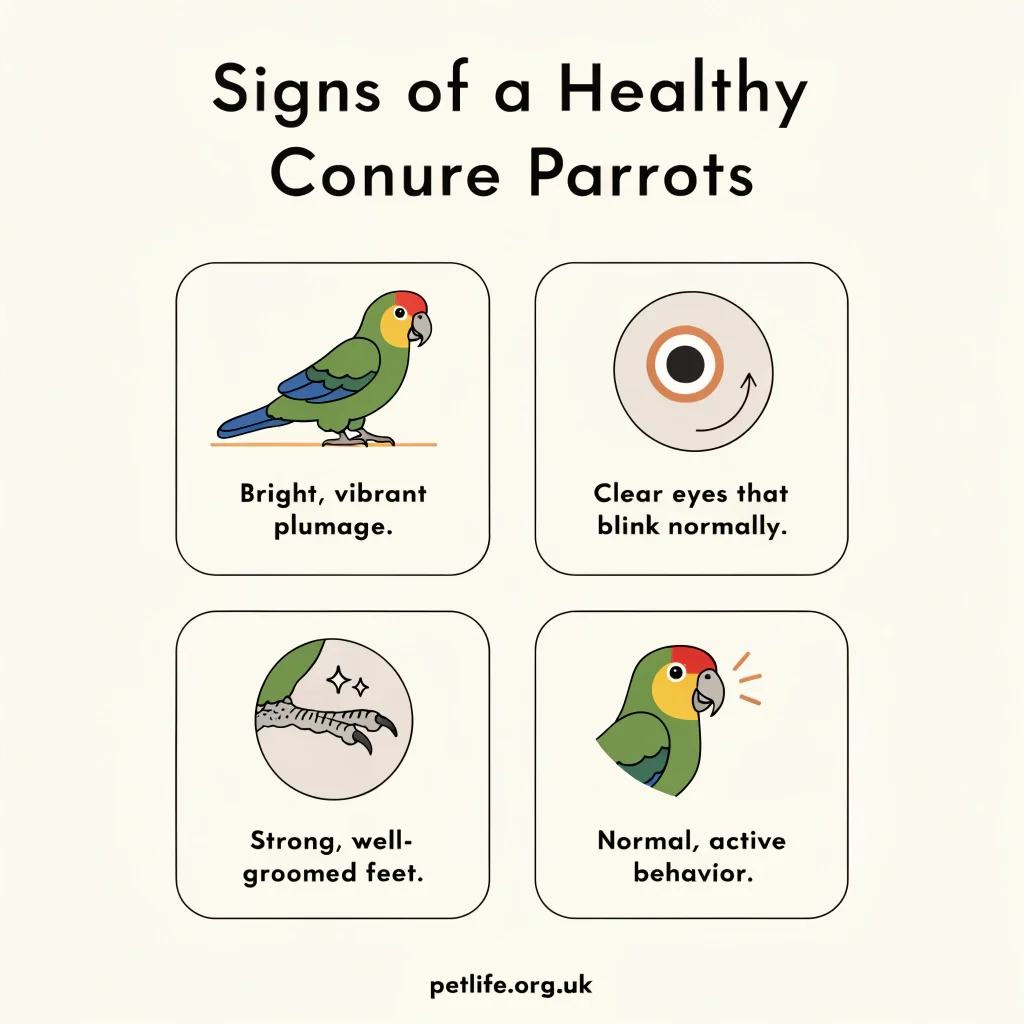
A healthy conure is usually:
- Bright and alert
- Curious about its surroundings
- Active and playful
- Eating and drinking normally
- Well-groomed
- Breathing quietly
- Producing normal droppings
If you notice changes in appetite, breathing, feather condition, droppings, or behavior, contact an avian veterinarian promptly. Birds often hide illness, so early diagnosis and treatment are important.
Common Health Problems in Conure Parrots
Conures are generally healthy birds when they receive proper nutrition, regular exercise, and routine veterinary care. However, like all companion parrots, they can develop health problems if their needs are not met.
Birds often hide signs of illness, so even small changes in behavior should be taken seriously. Regular checkups with an avian veterinarian and careful observation at home can help detect problems early.
Common Health Issues
| Health Problem | Common Signs | Prevention |
| Feather plucking | Damaged or missing feathers | Mental stimulation, balanced diet, regular interaction |
| Obesity | Weight gain, reduced activity | Healthy diet and daily exercise |
| Vitamin A deficiency | Poor feather quality, breathing issues | Feed vegetables rich in vitamin A |
| Calcium deficiency | Weak bones, muscle problems | Balanced nutrition and veterinary guidance |
| Respiratory infections | Sneezing, wheezing, nasal discharge | Clean cage and good ventilation |
| Psittacosis | Lethargy, breathing problems, loss of appetite | Routine veterinary care and proper hygiene |
| Beak and feather disease | Abnormal feathers or beak growth | Buy birds from reputable breeders and schedule health checks |
Most health problems can be reduced by providing proper daily care and seeking veterinary advice as soon as symptoms appear.
Signs Your Conure May Be Sick
Contact an avian veterinarian if your bird shows any of these signs:
- Loss of appetite
- Weight loss
- Sitting quietly for long periods
- Difficulty breathing
- Fluffed feathers throughout the day
- Changes in droppings
- Swollen eyes
- Discharge from the nose or eyes
- Loss of balance
- Sudden behavior changes
Early treatment usually leads to a better recovery.
Expert Tip
Conures naturally hide illness because this behavior helps protect them from predators in the wild. If your normally active bird suddenly becomes quiet or spends long periods sitting with fluffed feathers, don’t wait to see if the problem improves. Contact an avian veterinarian as soon as possible.
Conure Parrot Price
Many future bird owners ask, “How much does a Conure Parrot cost?”
The answer depends on several factors, including:
- Species
- Age
- Color mutation
- Hand-raised or parent-raised
- Breeder reputation
- Country
- Local demand
Rare color mutations and less common species usually cost more than standard varieties.
Average Conure Prices
| Species | Estimated Price (USD) |
| Green-cheek Conure | $300–$800 |
| Cinnamon Green-cheek Conure | $400–$900 |
| Pineapple Green-cheek Conure | $500–$1,000 |
| Sun Conure | $600–$1,500 |
| Jenday Conure | $600–$1,200 |
| Blue-crowned Conure | $800–$2,000 |
| Crimson-bellied Conure | $600–$1,200 |
| Maroon-bellied Conure | $500–$1,000 |
| Nanday Conure | $700–$1,500 |
| Golden Conure | Several thousand dollars where legally available |
These prices are estimates and can vary depending on location and availability.
Green-cheek Conure Price
The Green-cheek Conure price is usually lower than many larger conure species, making it one of the most affordable companion parrots.
Color mutations such as:
- Pineapple
- Turquoise
- Mint
- Suncheek
- Cinnamon
often cost more than birds with standard coloring.
Sun Conure Price
The Sun Conure price is generally higher because of its bright colors and strong demand among bird enthusiasts.
Hand-raised birds from responsible breeders usually cost more but are often better socialized and accustomed to human interaction.
Cost of Owning a Conure
Buying your bird is only the beginning.
You should also budget for:
- A spacious cage
- High-quality pellets
- Fresh vegetables and fruit
- Toys and enrichment
- Perches
- Travel carrier
- Routine veterinary visits
- Emergency medical care
Over the course of a conure’s lifetime, these ongoing costs often exceed the original purchase price.
Conure Parrot for Sale
Many people search online for a Conure Parrot for sale or Conure for sale. While there are many places to buy a conure, choosing a healthy, well-socialized bird is far more important than finding the lowest price.
Where to Buy a Conure
Good options include:
- Reputable breeders
- Licensed aviaries
- Bird rescue organizations
- Adoption centers
- Specialty bird stores with high welfare standards
A healthy conure should be alert, active, curious, and comfortable in its surroundings.
Questions to Ask Before Buying
Before purchasing a conure, ask the breeder or seller:
- How old is the bird?
- Has it been examined by an avian veterinarian?
- Is it hand-raised or parent-raised?
- What foods does it currently eat?
- Has it been socialized?
- Has it had any previous health problems?
- Can you provide health records?
These questions help you make an informed decision and reduce the risk of unexpected problems later.
Buying a Conure Online
If you are buying a bird online:
- Research the breeder carefully.
- Read customer reviews.
- Request recent photos and videos.
- Ask for veterinary records.
- Confirm legal ownership requirements in your country.
- Avoid offers that seem unusually inexpensive.
Responsible breeders are usually happy to answer questions and explain how their birds are raised.
Pros and Cons of Owning a Conure
Like any companion animal, conures have both advantages and challenges.
| Pros | Cons |
| Friendly and affectionate | Can be noisy, especially some species |
| Highly intelligent | Needs daily attention |
| Easy to train | Requires mental stimulation |
| Smaller than many parrots | Can chew household items |
| Long lifespan | Long-term commitment |
| Playful and entertaining | Needs regular cage cleaning |
| Strong bond with owners | May become lonely if ignored |
Understanding both sides helps you decide whether a conure fits your lifestyle.
Are Conures Messy?
Many prospective owners ask, “Are conures messy?”
Like most parrots, conures can create some mess during the day.
Common examples include:
- Food scattered around the cage
- Seed or pellet crumbs
- Molted feathers
- Shredded toys
- Water splashed from bowls
Cleaning the cage every day and using cage liners can make maintenance much easier.
Do Conures Get Lonely?
Yes.
Conures are highly social birds that naturally live in flocks. They enjoy regular interaction with people or other birds.
A conure that spends long periods alone without enrichment may become bored or stressed. This can lead to behaviors such as:
- Loud calling
- Feather plucking
- Chewing household objects
- Reduced activity
Daily playtime, training, and interactive toys help keep them mentally healthy.
Is a Conure Right for You?
A conure can be a wonderful companion if your lifestyle matches its needs.
A conure may be a good choice if you:
- Want an active, intelligent pet
- Have time for daily interaction
- Enjoy training and enrichment activities
- Can provide a spacious cage and bird-safe play area
- Are prepared for a commitment of 20 years or more
You may want to consider another bird if you:
- Spend most of the day away from home
- Prefer a quiet pet
- Cannot provide daily out-of-cage time
- Have limited space for a suitable enclosure
Choosing a bird that fits your lifestyle benefits both you and your future pet.
Responsible Conure Ownership
Owning a conure is a long-term responsibility. These birds rely on their owners for food, companionship, mental stimulation, and healthcare throughout their lives.
Responsible owners should:
- Learn about their chosen species before buying.
- Provide a balanced diet every day.
- Schedule routine veterinary checkups.
- Keep the cage clean and safe.
- Offer toys, climbing opportunities, and foraging activities.
- Spend quality time with the bird every day.
- Continue learning about parrot care as the bird grows.
Meeting these needs helps your conure remain healthy, confident, and emotionally secure.
Daily Care Checklist
Following a simple routine helps keep your Conure Parrot healthy, active, and emotionally secure. These birds thrive when they know what to expect each day.
Every Morning
- Replace drinking water with fresh, clean water.
- Serve high-quality pellets and fresh vegetables.
- Remove any leftover food from the previous day.
- Check that your bird is alert, active, and eating normally.
During the Day
- Allow 2 to 4 hours of supervised out-of-cage time whenever possible.
- Offer bird-safe toys, climbing opportunities, and foraging activities.
- Spend time talking, training, or playing with your conure.
- Watch for any unusual behavior or signs of illness.
Every Evening
- Offer a small serving of fresh fruit or healthy treats if appropriate.
- Clean food and water bowls.
- Remove spoiled fresh food.
- Cover the cage or dim the room if your bird is used to a regular bedtime.
Keeping a consistent routine helps reduce stress and builds trust between you and your conure.
Weekly Care Checklist
In addition to daily care, set aside time each week to keep your bird’s environment clean and enriching.
- Wash perches and toys.
- Clean the cage tray thoroughly.
- Rotate toys to keep your bird interested.
- Check the cage for loose parts or damage.
- Weigh your bird if possible to monitor its health.
- Inspect feathers, feet, nails, and beak for any changes.
Small routine checks often help identify health concerns before they become serious.
Frequently Asked Questions
Are Conure Parrots Good Pets?
Yes. Conure Parrots make excellent pets for people who can provide daily attention, training, and enrichment. They are intelligent, playful, affectionate, and enjoy spending time with their families. Smaller species, such as the Green-cheek Conure, are especially popular with first-time bird owners.
Do Conure Parrots Talk?
Yes, many conures can learn to say a few words and short phrases. Their vocabulary is usually smaller than that of some larger parrots, but they often mimic sounds, whistles, and everyday noises very well. Regular training and repetition improve their talking ability.
What Is the Lifespan of a Conure Parrot?
The average Conure Parrot lifespan ranges from 15 to 30 years, depending on the species and the quality of care. Some larger species may live even longer with proper nutrition, exercise, and regular veterinary care.
Which Fruit Is Not Good for Parrots?
Most fresh fruits are safe when fed in moderation. However, apple seeds and fruit pits from fruits such as peaches, cherries, apricots, and plums should never be given because they contain compounds that are toxic to birds.
What Do Conure Parrots Eat?
A healthy Conure Parrot food plan should include:
- High-quality pellets
- Fresh vegetables
- Fresh fruit in moderation
- Cooked whole grains
- Small amounts of seeds
- Healthy nuts as occasional treats
A varied diet provides the nutrients needed for healthy feathers, strong bones, and a healthy immune system.
How Big Does a Conure Parrot Get?
The Conure Parrot size depends on the species.
Most pet conures grow between 9 and 18 inches (23 to 46 cm) in length. Green-cheek Conures are among the smaller species, while Patagonian Conures are among the largest.
Are Conures Good for Beginners?
Yes, some species are. Green-cheek, Maroon-bellied, and Crimson-bellied Conures are often recommended for beginners because they are generally calmer and quieter than larger conures. Even so, every conure needs daily interaction, training, and proper care.
Are Conures Noisy?
Conures are naturally vocal birds. Their noise level depends on the species. Green-cheek Conures are usually quieter, while Sun Conures and Nanday Conures are much louder. Regular social interaction and mental stimulation can help reduce excessive calling.
Can a Conure Live Alone?
A single conure can live happily if it receives plenty of attention from its owner every day. Because these birds are highly social, they should not be left alone for long periods without interaction or enrichment.
How Often Should a Conure Visit the Veterinarian?
Healthy conures should have a wellness check with an avian veterinarian at least once a year. Young, senior, or birds with ongoing health concerns may need more frequent visits based on veterinary advice.
Final Thoughts
A Conure Parrot is much more than a colorful pet. It is an intelligent, social companion that depends on daily care, mental stimulation, and a strong bond with its owner. Whether you choose a playful Green-cheek Conure, a vibrant Sun Conure, or another species, understanding its needs will help you build a rewarding relationship that can last for decades.
Before bringing a conure home, take time to learn about its personality, lifespan, diet, housing, and long-term care requirements. A well-informed owner is better prepared to provide a safe, healthy, and enriching environment.
With a balanced diet, regular exercise, positive reinforcement training, routine veterinary care, and plenty of daily interaction, a conure can become a confident, affectionate member of your family for many years.