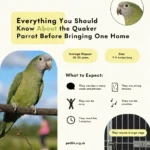

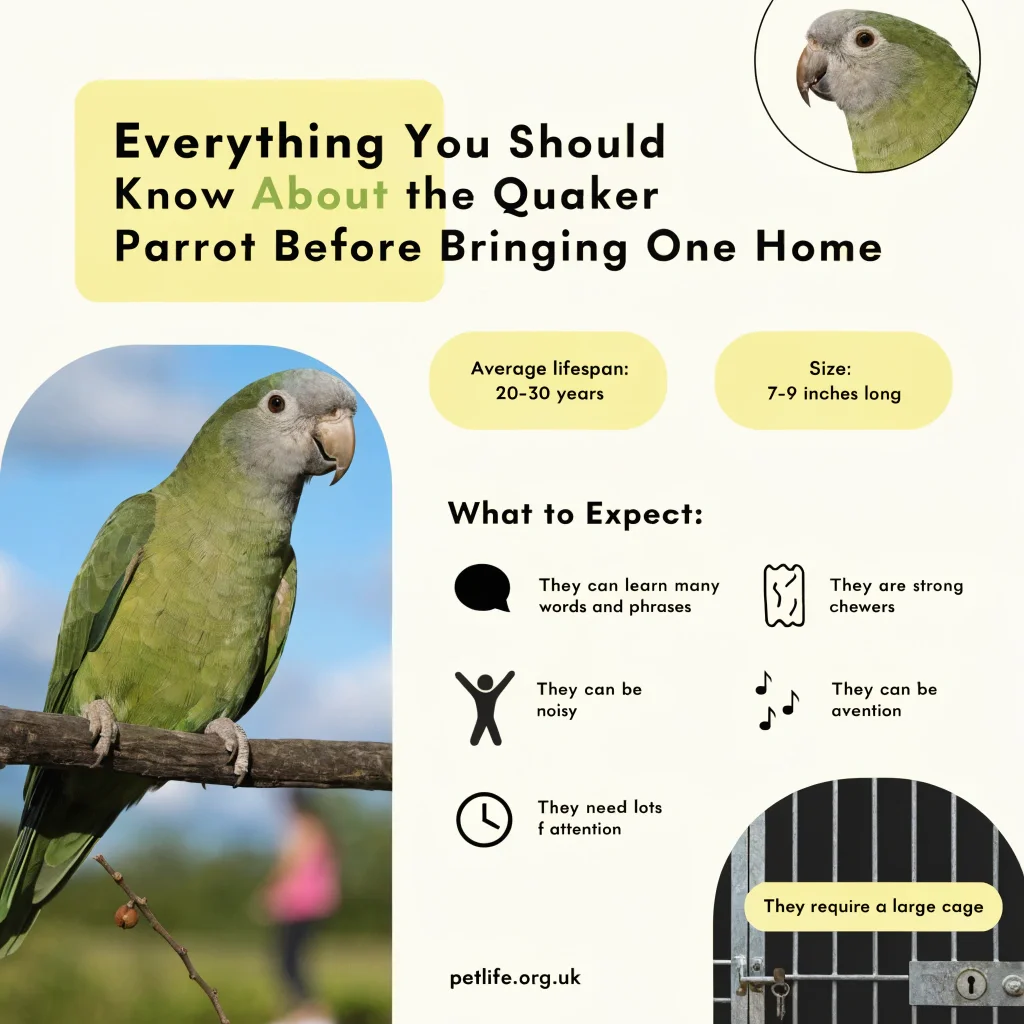
The Quaker parrot, also called the Quaker parakeet, Monk parakeet, or bird Quaker parrot, is one of the most intelligent and entertaining pet birds you can own. Known for its bright personality, clear talking ability, and strong bond with people, this small parrot has become a favorite among bird lovers worldwide.
Unlike many parrots, Quaker parrots are famous for building large stick nests in the wild. They are also excellent mimics and can learn dozens, or even hundreds, of words with regular training. Their playful nature and curiosity make them fun companions, but they also need daily attention, mental stimulation, and proper care to stay healthy and happy.
Before bringing one home, it’s important to understand their care needs, lifespan, behavior, diet, and local laws. In some areas, Quaker parrots are restricted because wild populations can affect agriculture and native wildlife.
This guide covers everything you need to know, whether you’re considering a Quaker parrot as a pet or simply want to learn more about this remarkable bird.
Quick Facts About the Quaker Parrot
| Feature | Details |
| Scientific Name | Myiopsitta monachus |
| Common Names | Quaker Parrot, Quaker Parakeet, Monk Parakeet, Monk Parrot |
| Family | Psittacidae |
| Origin | South America |
| Adult Size | 11 to 12 inches (28 to 30 cm) |
| Adult Weight | 90 to 140 grams |
| Lifespan | 20 to 30 years, sometimes longer |
| Talking Ability | Excellent |
| Noise Level | Moderate to High |
| Diet | Pellets, vegetables, fruits, seeds, and healthy grains |
| Temperament | Intelligent, social, playful, affectionate |
| Best For | Owners who can spend time interacting every day |
What Is a Quaker Parrot?
The Quaker parrot (Myiopsitta monachus) is a small to medium-sized parrot native to South America. It naturally lives in countries such as Argentina, Brazil, Uruguay, Paraguay, and Bolivia. Because of the bird trade and escaped pets, wild populations can now be found in parts of North America and Europe.
The name “Quaker” comes from the bird’s gentle shaking or trembling movements, which reminded early observers of members of the Quaker religious community. Another common name, Monk parakeet, refers to the gray feathers on its chest that resemble a monk’s robe.
Unlike most parrots that nest inside tree cavities, Quaker parrots build large nests using sticks and branches. These nests can house several pairs of birds and may continue growing year after year.
Thanks to their intelligence, adaptability, and friendly personality, Quaker parrots have become one of the most popular companion birds around the world.
Quaker Parrot Appearance
The Quaker parrot has a compact body, a long pointed tail, and a strong curved beak designed for cracking seeds and climbing.
Adult birds typically measure 11 to 12 inches (28 to 30 cm) from head to tail and weigh between 90 and 140 grams. Although they are considered small parrots, they are sturdy birds with plenty of energy.
Wild Quaker parrots are mostly bright green with a gray face, chest, and throat. Their wings show shades of green mixed with blue, while the flight feathers often have hints of dark blue. Their beak is pale orange, and their eyes are dark brown.
Captive breeding has produced many beautiful color mutations, giving bird owners a wide range of choices.
Quaker Parrot Colors
One reason many people choose a Quaker parrot is the variety of available colors. While the natural green Quaker parrot remains the most common, selective breeding has created several attractive mutations.
| Color | Description |
| Green | Natural wild color with gray chest |
| Blue | Bright blue body with gray face |
| Lutino | Yellow body with light-colored feathers |
| Albino | White feathers with red eyes |
| White | Mostly white plumage with dark eyes |
| Cinnamon | Soft brown and green shades |
| Opaline | Brighter feather patterns with lighter body colors |
| Pallid | Reduced dark pigmentation for a softer appearance |
| Violet | Rich violet-blue coloring |
| Yellow | Bright yellow mutation, often uncommon |
The blue Quaker parrot is among the most popular color varieties and is often more expensive than the standard green bird because of its high demand.
Although feather color changes the bird’s appearance, it does not affect personality, intelligence, or talking ability.
Quaker Parrot Size
Many first-time owners wonder, “How big does a Quaker parrot get?”
Quaker parrots stay much smaller than Amazon parrots, African Greys, or Macaws, making them suitable for homes with limited space.
Here is a quick comparison:
| Bird | Average Length |
| Budgie | 7 inches |
| Cockatiel | 12 to 13 inches |
| Quaker Parrot | 11 to 12 inches |
| Indian Ringneck | 16 inches |
| African Grey | 13 inches |
| Blue-fronted Amazon | 15 inches |
Despite their modest size, Quaker parrots are active climbers and flyers. They need a spacious cage with room to stretch their wings, climb, and play with toys.
Quaker Parrot Lifespan
One of the biggest advantages of owning a Quaker parrot is its long lifespan. With proper care, these birds can remain healthy companions for decades.
On average, a Quaker parrot lifespan ranges from 20 to 30 years in captivity. Some birds have lived beyond 30 years when provided with excellent nutrition, regular veterinary care, and a stimulating environment.
Wild Quaker parrots usually have shorter lives because they face predators, harsh weather, food shortages, and disease.
Factors That Affect Lifespan
Several factors influence how long Quaker parrots live, including:
- A balanced diet with high-quality pellets, fresh vegetables, fruits, and healthy grains
- Daily exercise and opportunities to fly or climb
- Mental stimulation through toys, training, and social interaction
- Regular checkups with an avian veterinarian
- A clean cage and fresh drinking water
- Enough sleep each night, usually 10 to 12 hours
Birds fed only seed diets are more likely to develop obesity, vitamin deficiencies, and fatty liver disease, which can shorten their lives.
Providing proper care from an early age greatly improves both the quality and length of a Quaker parrot’s life.
Quaker Parrot Personality and Behavior
The Quaker parrot is one of the most social and intelligent pet birds. It enjoys spending time with its family and often wants to be involved in daily activities. Many owners describe these birds as curious, playful, and full of confidence.
Quaker parrots are quick learners. They like to explore their surroundings, solve simple puzzles, and interact with toys. If they do not get enough mental stimulation, they may become bored and develop unwanted habits.
These birds form strong bonds with their owners. A hand-raised Monk parakeet often follows its favorite person around the house, calls for attention, and enjoys sitting on a shoulder or hand. While this close bond is rewarding, it also means Quaker parrots can become lonely if left alone for long periods.
Common Personality Traits
- Friendly and affectionate
- Highly intelligent
- Curious and active
- Confident and fearless
- Playful and entertaining
- Loyal to family members
- Fast learner
- Strong sense of routine
Every bird has its own personality. Early socialization, daily interaction, and positive training help shape a well-behaved companion.
Are Quaker Parrots Loud?
Many people ask if Quaker parrots are suitable for apartments or shared living spaces.
Compared to larger parrots, Quakers are smaller, but they are not quiet birds. They use different sounds to communicate, including whistles, chirps, chatter, and loud calls.
Most birds become noisier during the morning and evening. They may also call out when they want attention or hear unfamiliar sounds.
Although their voices are not as powerful as those of a Macaw or Cockatoo, regular vocalizations should be expected. Teaching your bird routines and providing enough enrichment can help reduce unnecessary screaming.
Do Quaker Parrots Bite?
Like all parrots, Quaker parrots may bite when they feel frightened, stressed, or protective of their space. Biting is usually a form of communication rather than aggression.
Common reasons include:
- Fear of unfamiliar people
- Sudden movements
- Protecting a favorite toy or nesting area
- Hormonal behavior during breeding season
- Lack of socialization
- Boredom or frustration
Instead of punishment, use positive reinforcement. Reward calm behavior with praise or a favorite treat. Building trust through gentle handling is the best way to reduce biting.
Can a Quaker Parrot Talk?
Yes. The Quaker parrot is widely known as one of the best talking small parrots.
Many birds begin copying simple words and sounds when they are only a few months old. With regular practice, some can build impressive vocabularies and clearly repeat short phrases.
Their speech is often easy to understand because they naturally imitate sounds with good clarity.
How to Teach a Quaker Parrot to Talk
Teaching a Quaker parrot requires patience and consistency.
Here are a few simple tips:
- Repeat the same words every day.
- Keep training sessions short, around 5 to 10 minutes.
- Reward successful attempts with praise or a healthy treat.
- Speak clearly using a cheerful voice.
- Reduce background noise during training.
- Practice at the same time each day.
Many Quaker parrots also copy household sounds such as doorbells, phone ringtones, microwave beeps, and laughter.
Do Male and Female Quaker Parrots Talk?
Both males and females can learn to speak.
Some owners believe males learn faster, but there is no strong scientific evidence showing a major difference. A bird’s personality, training, and daily interaction usually have a much greater impact than its sex.
A well-socialized female Quaker parrot can develop an excellent vocabulary just like a male.
Are Quaker Parrots Good Pets?
For many families, the answer is yes.
A Quaker parrot as a pet offers intelligence, companionship, and plenty of entertainment. These birds enjoy interacting with people and often become true members of the family.
However, they are not the right choice for everyone. Their social nature means they need daily attention and mental stimulation.
Quaker Parrots Are a Good Choice If You:
- Have time to interact every day
- Enjoy training birds
- Want a talking parrot
- Can provide a large cage and enrichment
- Plan to care for a bird for many years
They May Not Be the Best Choice If You:
- Spend long hours away from home
- Prefer a quiet pet
- Do not have time for daily interaction
- Live in an area where Quaker parrots are restricted
Understanding these needs before bringing a bird home helps create a happier life for both owner and parrot.
Quaker Parrot Diet
A healthy diet is one of the most important parts of Quaker parrot care. Good nutrition supports healthy feathers, a strong immune system, normal growth, and a long lifespan.
A common mistake is feeding only seeds. While Quaker parrots enjoy seeds, a seed-only diet lacks many essential nutrients and can lead to obesity and fatty liver disease.
A balanced diet should include a variety of foods.
| Food | Recommended Amount |
| High-quality pellets | 60–70% |
| Fresh vegetables | 20–25% |
| Fruits | 5–10% |
| Healthy seeds and nuts | Small amounts as treats |
Best Foods for Quaker Parrots
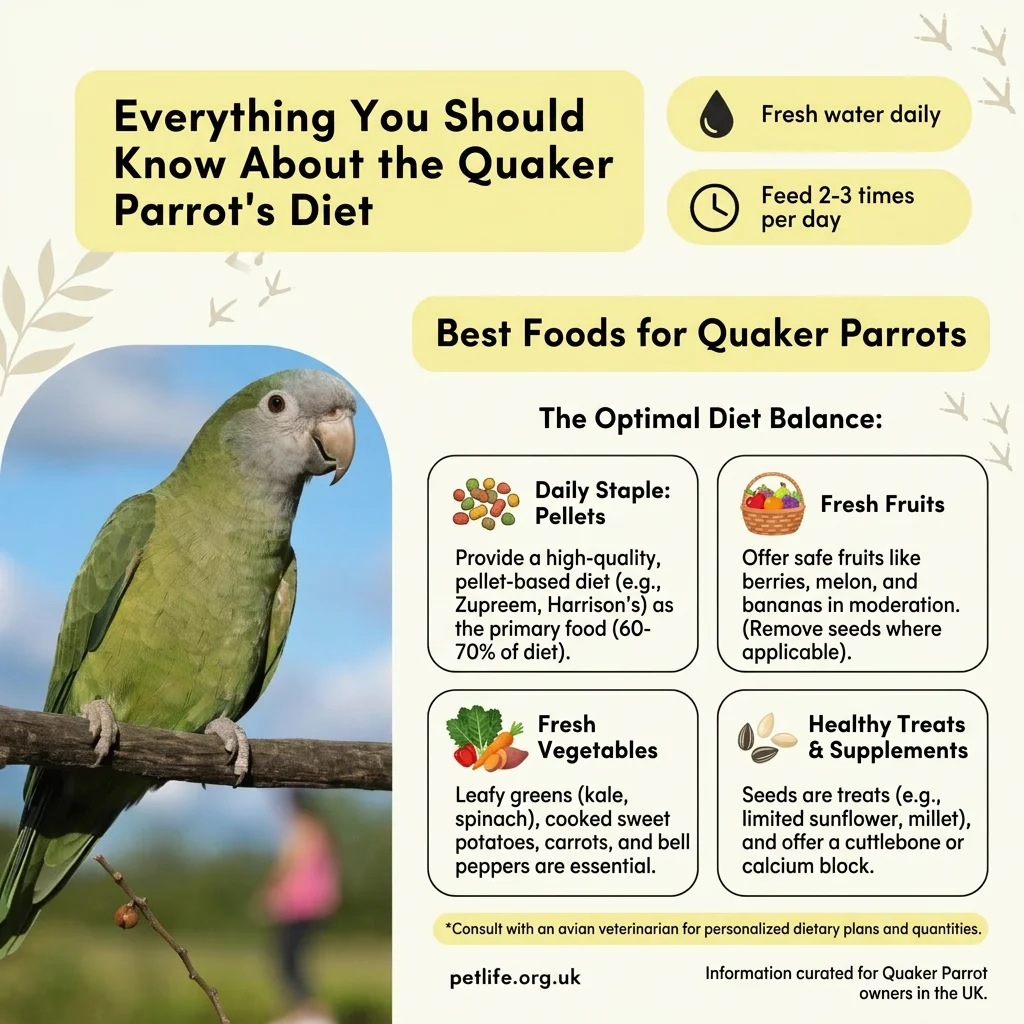
Offer fresh foods every day to provide important vitamins and minerals.
Good vegetables include:
- Carrots
- Broccoli
- Bell peppers
- Spinach
- Kale
- Green beans
- Peas
- Sweet potato
Healthy fruits include:
- Apples (without seeds)
- Bananas
- Blueberries
- Strawberries
- Mango
- Papaya
- Grapes (in moderation)
Whole grains such as cooked brown rice, quinoa, oats, and barley can also be added occasionally.
Fresh, clean water should always be available.
Foods Quaker Parrots Should Avoid
Some foods are dangerous and should never be offered.
Avoid giving your bird:
- Avocado
- Chocolate
- Caffeine
- Alcohol
- Onion
- Garlic
- Apple seeds
- Fruit pits
- Rhubarb
- Salty snacks
- Sugary foods
- Fried foods
These foods can cause serious health problems and, in some cases, may be toxic.
Daily Feeding Schedule
A simple feeding routine helps maintain good health.
Morning
- Fresh pellets
- Mixed vegetables
- Fresh water
Afternoon
- Small serving of fruit
- Foraging toy with healthy treats
Evening
- Small amount of seeds or nuts as a reward
- Replace water if needed
Remove uneaten fresh food after a few hours to keep it from spoiling.
Do Quaker Parrots Need Supplements?
A healthy bird eating a balanced diet usually does not need extra supplements.
However, an avian veterinarian may recommend calcium or vitamin supplements for birds recovering from illness, breeding females, or those with specific nutritional deficiencies.
Never give supplements without professional advice, as too much of certain vitamins can also cause health problems.
Quaker Parrot Cage Setup and Housing
A well-designed cage gives your Quaker parrot enough space to climb, play, and stay active. Even though these birds are small, they need room to move freely.
Choose a cage that is at least 24 × 24 × 30 inches (61 × 61 × 76 cm) for one bird. Bigger is always better, especially if your parrot spends several hours each day inside the cage.
What to Include in the Cage
A comfortable setup should have:
- Natural wood perches in different sizes
- Food and water bowls
- Climbing ropes and ladders
- Safe chewing toys
- Puzzle and foraging toys
- A swing or hanging perch
- A shallow dish for bathing
Place the cage in a bright room where your bird can see and interact with the family. Avoid direct sunlight for long periods, cold drafts, kitchens, and areas with smoke or strong fumes.
Quaker parrots also need 10 to 12 hours of uninterrupted sleep each night. Covering the cage or keeping it in a quiet room can help maintain a healthy sleep routine.
Exercise and Enrichment
Quaker parrots are energetic birds that need daily physical and mental activity.
Allow your bird to spend time outside the cage each day in a safe, bird-proofed room. Flying, climbing, and exploring help maintain a healthy weight and reduce boredom.
Good enrichment ideas include:
- Rotating toys every few weeks
- Puzzle feeders
- Foraging games
- Target training
- Teaching simple tricks
- Safe branches for chewing
Regular interaction strengthens the bond between you and your bird while helping prevent unwanted behaviors such as feather plucking or excessive screaming.
Common Health Problems
A healthy Quaker parrot can live for many years, but like all companion birds, it can develop certain health issues.
Common conditions include:
Obesity
Too many seeds and not enough exercise can lead to weight gain. A balanced diet and daily activity help prevent this problem.
Fatty Liver Disease
High-fat diets, especially seed-only diets, may cause liver disease. Feeding high-quality pellets with fresh vegetables lowers this risk.
Feather Plucking
Stress, boredom, illness, or poor nutrition may cause a bird to pull out its own feathers. If this behavior appears, consult an avian veterinarian to identify the cause.
Respiratory Infections
Dust, mold, cigarette smoke, and poor ventilation can affect a bird’s breathing. Keep the cage clean and avoid airborne chemicals.
Psittacosis
This bacterial infection can affect both birds and people. Signs include tiredness, breathing problems, reduced appetite, and eye or nasal discharge. Early veterinary care is important.
Signs Your Bird Needs a Vet
Contact an avian veterinarian if you notice:
- Loss of appetite
- Weight loss
- Fluffed feathers for long periods
- Trouble breathing
- Changes in droppings
- Less activity than usual
- Feather loss beyond normal molting
An annual wellness exam can help detect health problems before they become serious.
Quaker Parrot Price
The Quaker parrot price varies depending on color mutation, age, breeder, and location.
The table below shows typical price ranges.
| Type | Average Price (USD) |
| Green Quaker Parrot | $300 to $700 |
| Blue Quaker Parrot | $600 to $1,200 |
| Lutino or Albino Quaker | $800 to $1,500+ |
| Hand-Raised Baby Quaker | $500 to $1,200 |
In addition to the purchase price, plan for ongoing expenses such as:
- Quality pellets and fresh food
- A spacious cage
- Perches and toys
- Veterinary care
- Grooming supplies
- Travel carrier
Owning a Quaker parrot is a long-term commitment, so it is important to budget for its lifetime care rather than focusing only on the initial cost.
Why Are Quaker Parrots Illegal in Some Places?
One of the most common questions is, “Why are Quaker parrots illegal?”
The answer is not because they are dangerous pets.
In some regions, escaped or released Quaker parrots have formed wild populations. These birds build large stick nests on trees and utility poles, which can damage electrical equipment and sometimes cause power outages.
Large flocks may also feed on crops, creating concerns for farmers in certain agricultural areas.
Because of these issues, some states and countries regulate or restrict ownership. Rules can change over time, so always check your local wildlife or agriculture department before buying a Quaker parrot.
If Quaker parrots are legal where you live, buying from a responsible breeder or adopting from a rescue is the best choice.
Quaker Parrot vs. Indian Ringneck
Both species are intelligent and popular companion birds, but they have different personalities and care needs.
| Feature | Quaker Parrot | Indian Ringneck |
| Size | 11–12 inches | 16 inches |
| Talking Ability | Excellent | Excellent |
| Personality | Affectionate and social | Independent and curious |
| Noise Level | Moderate to high | Moderate |
| Lifespan | 20–30 years | 25–35 years |
| Best For | Owners seeking close interaction | Owners comfortable with a more independent bird |
Quaker parrots often seek more daily attention, while Indian Ringnecks may enjoy interacting on their own terms.
Pros and Cons of Quaker Parrots
Choosing the right pet bird means understanding both the advantages and the challenges.
Pros
- Excellent talking ability
- Intelligent and easy to train
- Strong bond with owners
- Playful and entertaining
- Long lifespan
- Suitable for many homes with proper care
Cons
- Can be noisy
- Needs daily attention
- May become territorial during breeding season
- Requires mental stimulation every day
- Ownership is restricted in some locations
- Long-term care commitment
Frequently Asked Questions
Q1. Are Quaker parrots good pets?
Yes. Quaker parrots make excellent pets for people who have time to provide daily interaction, training, and enrichment. They are intelligent, affectionate, and enjoy being part of family life.
Q2. Can a Quaker parrot speak?
Yes. Quaker parrots are among the best talking small parrots. With regular training, many learn words, short phrases, and household sounds.
Q3. How much does a Quaker parrot cost?
A healthy Quaker parrot usually costs between $300 and $1,200, depending on its color mutation, age, and whether it is hand-raised.
Q4. How long do Quaker parrots live?
With proper nutrition, exercise, and veterinary care, most Quaker parrots live 20 to 30 years, and some live even longer.
Q5. Are Quaker parrots loud?
They can be vocal, especially during the morning and evening. While not as loud as many larger parrots, they regularly communicate with whistles, chatter, and calls.
Q6. What is the best food for a Quaker parrot?
A balanced diet should include high-quality pellets, fresh vegetables, fruits in moderation, healthy grains, and small amounts of seeds or nuts as treats.
Q7. Can Quaker parrots live alone?
Yes, but they should not be left without social interaction for long periods. They need daily attention from their owners or another compatible bird to stay mentally healthy.
Final Thoughts
The Quaker parrot is a smart, social, and entertaining companion that brings energy and personality into a home. Its talking ability, playful nature, and strong bond with people make it one of the most popular pet parrots.
At the same time, this bird requires daily care, a balanced diet, regular exercise, and plenty of mental stimulation. Prospective owners should also check local regulations, as Quaker parrots are restricted in some areas because of concerns about wild populations.
If you can provide the time, attention, and long-term commitment these birds need, a Quaker parrot can become a loyal companion for decades.