
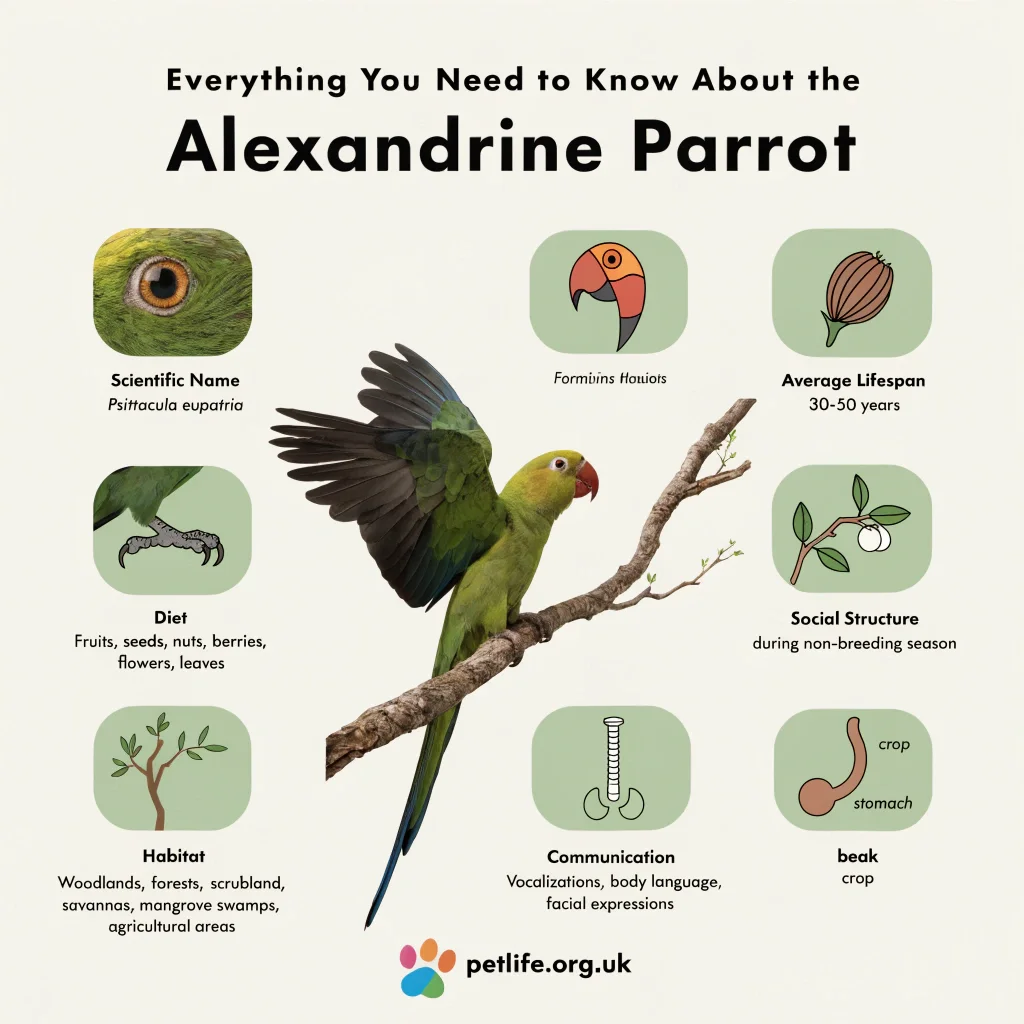
The Alexandrine parrot is one of the most beautiful and big pet parrot species. This intelligent bird is known for its bright green feathers, red shoulder patch and its calm temperament, it has been a favorite with bird lovers for centuries. It is also referred to as the Alexandrine parakeet, Alexander bird or Alexander parakeet.
This guide will tell you everything you need to know about this beautiful bird if you are thinking about adding an Alexandrine to your home, or just want to learn more about the bird. Here you’ll find information about the lifespan, size, personality, voice, menu, colors, care and price of the Alexandrine parrot. There are also insider secrets for selecting a male or female parrot, the proper cage and how to keep your pet parrot healthy for years.
If you’re a first-time bird owner or if you’ve encountered many different kinds of birds, you will learn how the Alexandrine parrot is one of the best companion birds.
Quick Facts About Alexandrine Parrots
| Feature | Details |
| Common Name | Alexandrine Parrot |
| Other Names | Alexandrine Parakeet, Alexandrine Bird, Alexander Bird, Alexander Parakeet |
| Scientific Name | Psittacula eupatria |
| Family | Psittaculidae |
| Genus | Psittacula |
| Bird Type | Medium-to-large Parakeet |
| Native Range | India, Sri Lanka, Pakistan, Nepal, Bangladesh, Myanmar, Laos, Thailand, Vietnam, Cambodia |
| Adult Size | 22–24 inches (56–62 cm) including tail |
| Weight | 200–300 g |
| Wingspan | Around 7–8 inches (18–20 cm) per wing |
| Lifespan | 25–40 years, sometimes longer with excellent care |
| Talking Ability | Very Good |
| Noise Level | Moderate |
| Temperament | Intelligent, calm, playful, affectionate |
| Difficulty Level | Moderate |
| Good for Beginners | Yes, with proper training and daily interaction |
| Diet | Pellets, seeds, fresh fruits, vegetables, nuts, and grains |
| Exercise | 2–4 hours outside the cage daily |
| Conservation Status | Near Threatened in parts of its native range due to habitat loss and illegal trapping |
What Is an Alexandrine Parrot?
The Alexandrine parrot (Psittacula eupatria) is a large Asian parakeet that belongs to the Psittacula family. It is closely related to the Indian Ringneck, but it is larger, heavier, and has a stronger beak. Because of its impressive size, it is often called the largest parakeet commonly kept as a pet.
This bird is believed to have been named after Alexander the Great, who is thought to have introduced these parrots from Asia to parts of Europe more than 2,000 years ago. Today, Alexandrine parrots remain popular because they are intelligent, attractive, and capable of forming strong bonds with their owners.
One feature that makes this bird easy to recognize is the dark red patch on its shoulders, often called the “maroon shoulder patch.” This marking is not found on Indian Ringneck parrots and is one of the easiest ways to tell the two species apart.
Species Overview
| Category | Information |
| Scientific Name | Psittacula eupatria |
| Common Names | Alexandrine Parrot, Alexandrine Parakeet, Alexander Bird |
| Order | Psittaciformes |
| Family | Psittaculidae |
| Genus | Psittacula |
| Average Lifespan | 25–40 years |
| Adult Size | 22–24 inches |
| Average Weight | 200–300 grams |
| Native Habitat | Forests, woodlands, farms, orchards, and open countryside |
| Temperament | Friendly, confident, intelligent |
| Talking Ability | Excellent with regular practice |
| Pet Suitability | Excellent for experienced owners and committed beginners |
Origin and Natural Habitat
The Alexandrine parrot is native to South and Southeast Asia. Wild populations are found in:
- India
- Pakistan
- Sri Lanka
- Nepal
- Bangladesh
- Myanmar
- Thailand
- Laos
- Cambodia
- Vietnam
These parrots live in forests, woodland edges, agricultural fields, orchards, and areas close to villages. They are highly adaptable birds and often feed in fruit trees, grain fields, and cultivated farmland.
In some countries outside their natural range, escaped or released birds have formed small wild populations in parks and urban areas.
Because habitat loss and illegal trapping continue to affect some wild populations, responsible breeding and legal ownership are important for the future of the species.
Alexandrine Parrot Appearance
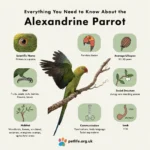
The Alexandrine parrot has a graceful body, a long tail, and a powerful red beak. Adults are mostly bright green with a slight bluish-gray shade on the cheeks and back of the neck.
One of its most recognizable features is the dark maroon patch on each shoulder. This shoulder patch helps separate the Alexandrine from the smaller Indian Ringneck.
Adult males also develop a black stripe that runs from the lower beak toward the neck, along with a pink ring around the back of the neck. Females usually do not have these markings, making it easier to tell males and females apart after they mature.
Young birds look similar to females until they reach maturity.
Key Physical Features
- Bright green body
- Large red beak
- Long pointed tail
- Maroon shoulder patches
- Yellow eyes
- Strong feet for climbing
- Black and pink neck ring in adult males
Alexandrine Parrot Size
Many people search for the Alexandrine parrot size before choosing one as a pet.
This bird is noticeably larger than an Indian Ringneck and is considered one of the largest parakeets kept in captivity.
Average Size
| Measurement | Size |
| Length | 22–24 inches (56–62 cm) |
| Weight | 200–300 grams |
| Tail Length | Up to 14 inches (35 cm) |
| Wingspan | Around 18–20 inches (46–51 cm) |
Their long tail makes them appear even larger than many other pet parrots, so they need a spacious cage and plenty of room to move comfortably.
Alexandrine Parrot Lifespan
The Alexandrine parrot lifespan is one of the reasons this bird is considered a long-term companion.
With proper care, balanced nutrition, regular exercise, and routine veterinary checkups, an Alexandrine can live between 25 and 40 years. Some well-cared-for birds have lived even longer.
Several factors affect lifespan, including:
- High-quality diet
- Clean living environment
- Daily exercise
- Mental stimulation
- Regular health care
- Stress-free surroundings
- Proper sleep every night
Owning an Alexandrine means making a long-term commitment, so it is important to be prepared before bringing one home.
Alexandrine Parrot Personality
The Alexandrine parrot is known for its calm nature, intelligence, and confidence. While every bird has its own personality, most Alexandrines are gentle, curious, and enjoy spending time with their owners once they build trust.
Compared to some smaller parrots, Alexandrines are often more independent. They like attention but usually do not demand constant interaction. This makes them a good choice for people who can spend quality time with their bird every day without being together every minute.
Early socialization plays a big role in shaping their behavior. A young Alexandrine that is handled regularly is more likely to grow into a friendly and well-mannered companion.
Personality Traits
- Intelligent and quick to learn
- Calm and confident
- Loyal to family members
- Curious and playful
- Can become strongly attached to one person
- Enjoys climbing and chewing toys
- Benefits from daily interaction
With patience and consistent handling, an Alexandrine parakeet can become a loving companion for many years.
Temperament
Many people ask whether an Alexandrine parakeet is suitable for families. In most cases, the answer is yes.
These birds are generally gentle, but they also have a confident personality. They appreciate routine and respond well to positive training. Like all parrots, they may become stubborn if they are bored, frightened, or not given enough attention.
A well-socialized Alexandrine usually enjoys interacting with adults and older children who know how to handle birds gently.
Are Alexandrine Parrots Good Pets?
Yes. Alexandrine parrots make excellent pets for owners who can provide:
- Daily social interaction
- A spacious cage
- Healthy food
- Safe toys for chewing
- Time outside the cage
- Mental stimulation
They are not the best choice for someone looking for a bird that can stay alone for long periods every day.
Are Alexandrine Parrots Aggressive?
One of the most common questions is:
Are Alexandrine parrots aggressive?
Healthy Alexandrine parrots are not naturally aggressive. They are usually calm and friendly when they are raised in a stable environment.
However, they may bite if they:
- Feel threatened
- Become frightened
- Are protecting their cage
- Experience hormonal behavior during breeding season
- Have not been socialized properly
Most behavior problems can be reduced through regular handling, positive reinforcement, and giving the bird enough exercise and enrichment.
Alexandrine Parrot Talking Ability
Many bird lovers choose this species because of its impressive Alexandrine parrot talking ability.
Alexandrines are among the better talking parakeets. They can learn dozens of words and short phrases with regular practice. Their voices are usually clear enough for familiar words to be understood.
Some birds also imitate:
- Doorbells
- Phone sounds
- Household noises
- Whistles
- Short melodies
Every bird learns at its own pace. Some become excellent talkers, while others prefer making natural parrot sounds.
Can Alexandrine Parrots Talk?
Yes. Alexandrine parrots can learn to talk and copy sounds.
Young birds usually begin mimicking simple words after they become comfortable in their new home. Repeating the same words every day and rewarding the bird with praise or treats can encourage learning.
Tips to Improve Talking Ability
- Speak clearly and slowly.
- Repeat the same words every day.
- Train in a quiet room.
- Keep sessions short.
- Reward positive behavior.
- Start training while the bird is still young.
Patience is important. Some birds learn quickly, while others take several months.
Alexandrine Parrot Female or Male
Many people wonder whether a male Alexandrine parrot or a female Alexandrine parrot is a better pet.
Both sexes can become affectionate companions when raised properly. Personality depends more on training and socialization than gender.
Male Alexandrine Parrot
Adult males usually develop:
- A black stripe below the beak
- A pink ring around the neck
- Slightly brighter facial markings
Males are often described as confident and outgoing, although each bird is unique.
Female Alexandrine Parrot
A female Alexandrine parrot normally does not develop the black and pink neck ring.
Females are often considered calm and gentle, but individual personalities vary just as much as males.
Male vs Female Alexandrine Parrot
| Feature | Male | Female |
| Neck Ring | Yes | No |
| Black Chin Stripe | Yes | No |
| Shoulder Patch | Yes | Yes |
| Talking Ability | Excellent | Excellent |
| Temperament | Friendly and confident | Calm and friendly |
| Pet Quality | Excellent | Excellent |
If you want to know the sex of a young bird before the neck ring develops, a DNA test is the most reliable option.
Alexandrine Parrot Colors
The natural Alexandrine parrot colors are beautiful and easy to recognize.
Wild Alexandrines are mostly bright green with:
- Maroon shoulder patches
- Red beak
- Bluish-gray neck feathers
- Yellow eyes
Selective breeding has also produced several attractive color mutations.
Popular color varieties include:
- Normal Green Alexandrine
- Blue Alexandrine Parrot
- Yellow Alexandrine Parrot
- Lutino Alexandrine
- Turquoise Alexandrine
- Cinnamon Alexandrine
- Pallid Alexandrine
Availability depends on the breeder and the country.
Blue Alexandrine Parrot
The blue Alexandrine parrot is one of the most sought-after color mutations.
Instead of the traditional green body, these birds display shades of blue with a lighter chest and grayish head. Their personality and care needs are the same as those of green Alexandrines.
Because they are less common, blue Alexandrines usually cost more than normal green birds.
Yellow Alexandrine Parrot
The yellow Alexandrine parrot is another rare mutation.
These birds have bright yellow feathers with lighter markings. Like other mutations, they require the same diet, housing, and daily care as standard Alexandrine parrots.
Their rarity often increases their market value.
Alexandrine Parakeet Mutations
Selective breeding has produced several Alexandrine parakeet mutations over the years.
Some of the best-known mutations include:
- Blue
- Lutino
- Yellow
- Turquoise
- Cinnamon
- Pallid
- White-headed combinations
- Violet combinations
These mutations affect feather color only. They do not significantly change the bird’s intelligence, lifespan, or care requirements.
Alexandrine Parrot vs Indian Ringneck
People often compare the Alexandrine parrot vs Indian Ringneck because both belong to the Psittacula genus.
Although they look similar, there are several important differences.
| Feature | Alexandrine Parrot | Indian Ringneck |
| Size | Larger | Smaller |
| Weight | Heavier | Lighter |
| Shoulder Patch | Present | Absent |
| Beak | Larger | Smaller |
| Tail | Longer | Slightly shorter |
| Talking Ability | Excellent | Excellent |
| Temperament | Calm and confident | Active and energetic |
| Space Needed | More | Less |
Which One Is Better?
Choose an Alexandrine parrot if you want:
- A larger companion bird
- A calmer personality
- A stronger bond over time
- A spacious aviary or cage
Choose an Indian Ringneck if you prefer:
- A smaller bird
- A more active personality
- Slightly easier housing requirements
Both species can become wonderful companions with proper care and training.
Diet and Nutrition
A healthy diet is one of the most important parts of Alexandrine parrot care. These birds need a balanced mix of pellets, fresh vegetables, fruits, seeds, and a small number of healthy nuts. Feeding only seeds may lead to obesity and vitamin deficiencies over time.
Fresh drinking water should always be available and changed at least once a day.
A varied diet helps support healthy feathers, a strong immune system, good energy levels, and a longer Alexandrine parrot lifespan.
Alexandrine Parrot Favourite Food
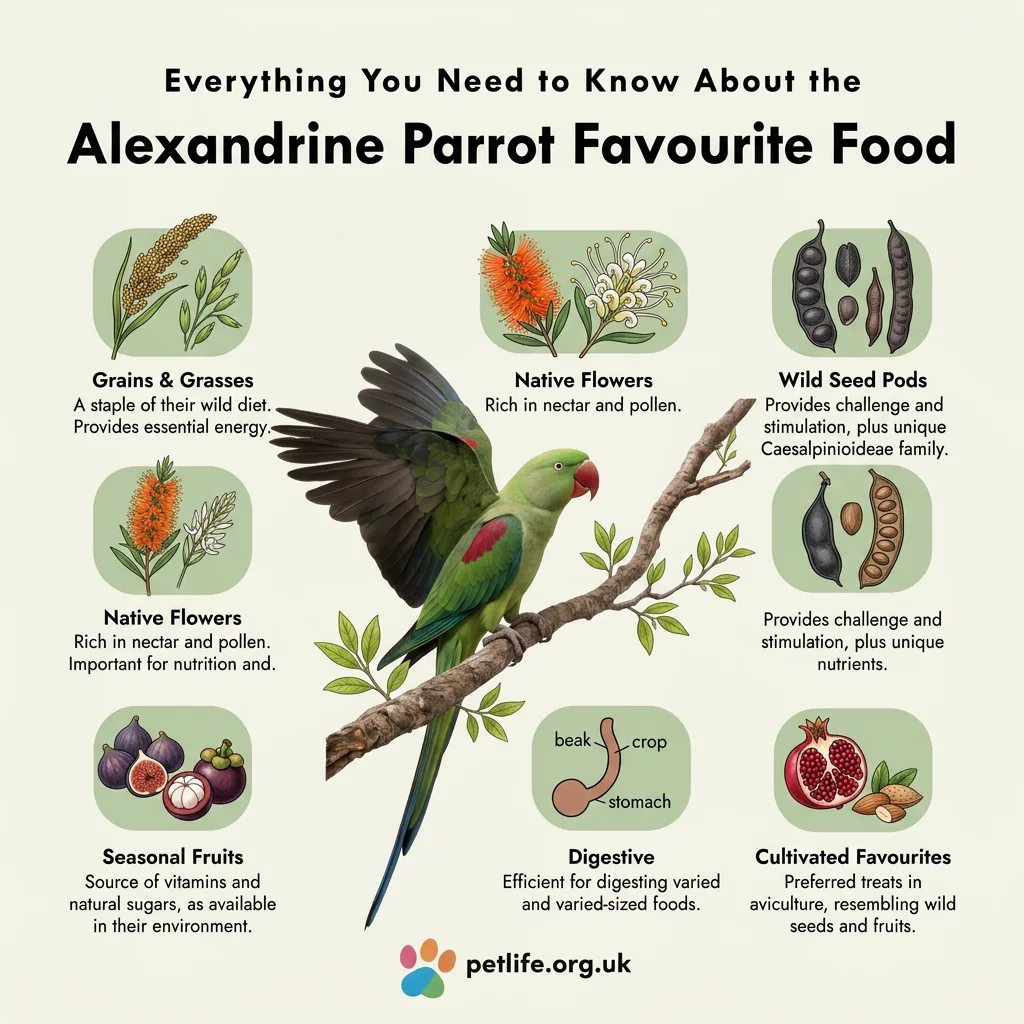
Many owners search for the Alexandrine parrot favourite food before bringing one home. While individual birds have their own preferences, most Alexandrines enjoy a wide variety of fresh foods.
Vegetables
Offer vegetables every day, such as:
- Carrots
- Broccoli
- Spinach
- Kale
- Bell peppers
- Green beans
- Peas
- Sweet corn
- Pumpkin
- Cucumber
Fruits
Fruits should be given in moderation because they contain natural sugar.
Good choices include:
- Apple (without seeds)
- Banana
- Mango
- Papaya
- Pomegranate
- Grapes
- Orange
- Pear
- Kiwi
- Blueberries
Seeds and Nuts
Seeds and nuts are excellent treats but should not make up most of the diet.
Suitable options include:
- Sunflower seeds (limited)
- Safflower seeds
- Pumpkin seeds
- Almonds
- Walnuts
- Pistachios (unsalted)
Pellets
High-quality pellets should form the foundation of the daily diet because they provide balanced nutrition.
Foods to Avoid
Some foods are harmful or even toxic to parrots.
Never feed your Alexandrine:
- Avocado
- Chocolate
- Caffeine
- Alcohol
- Onion
- Garlic
- Fruit seeds or pits
- Apple seeds
- Salty snacks
- Sugary foods
- Fried foods
- Moldy food
If you are unsure whether a food is safe, it is better not to offer it.
Alexandrine Parrot Cage Size
Because of their long tail and active nature, Alexandrine parrots need a large cage with enough room to climb, stretch, and flap their wings.
Many first-time owners underestimate the Alexandrine parrot cage size, but providing enough space is essential for both physical and mental health.
Recommended Minimum Cage Size
| Bird | Minimum Cage Size |
| One Alexandrine Parrot | 36 × 24 × 48 inches (91 × 61 × 122 cm) |
| Pair of Alexandrines | Larger indoor aviary or outdoor flight aviary |
Bigger is always better if space allows.
Setting Up the Cage
A comfortable cage should include:
- Natural wood perches of different sizes
- Stainless steel food and water bowls
- Safe chewing toys
- Climbing ropes
- Swings
- Foraging toys
- A cuttlebone or mineral block
Place the cage in a bright room where the bird can see family activities, but avoid direct sunlight, cold drafts, and kitchen fumes.
Alexandrine Aviary
Many experienced bird keepers prefer housing Alexandrines in a spacious Alexandrine aviary.
An aviary allows the bird to:
- Fly naturally
- Exercise more
- Stay mentally active
- Build stronger muscles
- Reduce boredom
If you keep more than one Alexandrine, an aviary usually provides a healthier environment than a standard cage.
Exercise and Mental Stimulation
Alexandrines are active birds that need daily exercise.
Aim for 2 to 4 hours outside the cage every day in a safe, bird-proof room.
Without enough activity, they may become bored, overweight, or develop unwanted behaviors.
Good activities include:
- Flying
- Climbing
- Puzzle toys
- Foraging games
- Training sessions
- Supervised play with family members
Regular exercise helps maintain a healthy weight and keeps the bird mentally engaged.
Best Toys for Alexandrine Parrots
Alexandrines enjoy toys that challenge both their beak and their mind.
Good toy choices include:
- Wooden chew toys
- Rope toys
- Puzzle feeders
- Foraging boxes
- Coconut shells
- Hanging ladders
- Natural branches
- Stainless steel bells
- Bird-safe swings
Rotate toys every few weeks to keep your bird interested.
Training an Alexandrine Parrot
Training helps strengthen the bond between you and your bird while making daily care easier.
Alexandrines respond well to positive reinforcement.
Start with simple lessons such as:
- Step up
- Step down
- Come when called
- Target training
- Gentle handling
- Recall training
Keep sessions short, around 10 to 15 minutes, and reward good behavior with praise or a favorite treat.
Avoid punishment or yelling, as this can make the bird fearful and damage trust.
Grooming and Hygiene
Regular grooming helps keep an Alexandrine healthy.
Grooming Checklist
- Trim nails when needed
- Provide regular bathing opportunities
- Clean food bowls every day
- Replace drinking water daily
- Wash perches and toys regularly
- Remove droppings from the cage each day
- Deep-clean the cage every week
Most Alexandrines enjoy misting with clean water or bathing in a shallow dish several times each week.
Common Health Problems
A healthy Alexandrine can live for decades, but like all parrots, it can develop health problems if its needs are not met.
Common issues include:
- Vitamin A deficiency
- Calcium deficiency
- Obesity
- Feather plucking
- Respiratory infections
- Psittacosis
- Beak overgrowth
- Parasites
- Fungal infections
Watch for signs such as:
- Loss of appetite
- Weight loss
- Sleeping more than usual
- Difficulty breathing
- Fluffed feathers for long periods
- Changes in droppings
- Feather loss outside normal molting
If you notice any of these signs, consult an avian veterinarian as soon as possible.
Daily Care Routine
A simple daily routine helps keep your Alexandrine healthy and happy.
Morning
- Replace fresh water
- Offer pellets and vegetables
- Remove leftover food
- Check the bird’s general condition
Afternoon
- Supervised exercise
- Social interaction
- Short training session
Evening
- Offer fresh fruit or healthy treats
- Clean food bowls
- Cover the cage if needed
- Ensure 10 to 12 hours of quiet sleep
A consistent routine reduces stress and helps your parrot feel secure.
Alexandrine Parrot Price
The Alexandrine parrot price varies depending on the bird’s age, color mutation, breeder reputation, level of taming, and location. Hand-raised birds and rare color mutations, such as the blue Alexandrine parrot, usually cost more than the standard green variety.
Average Alexandrine Parrot Price
| Type | Average Price (USD) | Average Price (GBP) |
| Baby Alexandrine Parrot | $500–$900 | £400–£700 |
| Young Alexandrine Parrot | $700–$1,200 | £550–£950 |
| Adult Alexandrine Parrot | $900–$1,800 | £700–£1,400 |
| Blue Alexandrine Parrot | $1,500–$3,000+ | £1,200–£2,400+ |
| Yellow Alexandrine Parrot | $1,500–$3,000+ | £1,200–£2,400+ |
Note: Prices vary depending on the breeder, location, color mutation, training, and availability. Always buy from a reputable breeder or consider adopting from a trusted bird rescue when possible.
Alexandrine Parrot Price in Other Countries
Approximate prices may include:
- India: Prices vary by state and local wildlife laws. In some areas, keeping native parrots is restricted or prohibited.
- United States: Around $800 to $2,500 USD, depending on age, color mutation, and breeder.
- United Kingdom: Around £600 to £1,500, depending on availability.
- Australia: Availability may be limited because of import and wildlife regulations.
Before purchasing, always check the laws in your country regarding ownership and trade.
Alexandrine Parrot for Sale
If you are looking for an Alexandrine parrot for sale, choose a seller who:
- Provides healthy, active birds
- Allows you to see the bird before purchase
- Shares health records if available
- Answers questions honestly
- Keeps birds in clean conditions
Avoid buying birds from illegal wildlife traders or sellers who cannot explain where the bird came from.
If adoption is available in your area, it can be a rewarding option for both you and the bird.
Baby Alexandrine Parrot Care
A baby Alexandrine needs extra attention during its first months.
Young birds should be:
- Fed a balanced diet appropriate for their age
- Kept warm in a safe environment
- Handled gently every day
- Introduced to different toys and people
- Allowed to develop confidence gradually
If the bird is not yet weaned, feeding should only be done by someone with proper knowledge. Incorrect feeding techniques can cause serious health problems.
Alexandrine Parrot Age Chart
The following chart provides a general guide to the growth stages of an Alexandrine parrot.
| Age | Development |
| 0–4 weeks | Nestling, fully dependent on parents or breeder |
| 1–3 months | Feather growth, beginning to explore |
| 3–6 months | Weaning, learning to fly and play |
| 6–12 months | Juvenile stage, increased activity |
| 1–3 years | Young adult, continued training and socialization |
| Around 3 years | Adult plumage develops, males begin showing the neck ring |
| 25–40+ years | Healthy adult lifespan with proper care |
Growth rates vary slightly between individual birds.
Breeding
Alexandrine parrots usually reach breeding maturity at around 3 years of age.
During the breeding season, they require:
- A compatible pair
- A spacious aviary
- A suitable nest box
- A nutritious diet rich in calcium and protein
- A quiet environment with minimal stress
The female usually lays 2 to 4 eggs, and incubation lasts for about 24 to 28 days.
Breeding should only be attempted by experienced keepers who can provide proper care for both the parents and the chicks.
Conservation Status
The Alexandrine parrot is listed as Near Threatened in parts of its native range.
The main threats include:
- Habitat loss
- Illegal trapping for the pet trade
- Forest degradation
- Human population growth
Supporting responsible breeders and avoiding illegally traded birds can help reduce pressure on wild populations.
Pros and Cons of Keeping an Alexandrine Parrot
Pros
- Intelligent and quick to learn
- Good talking ability
- Long lifespan
- Strong bond with owners
- Beautiful appearance
- Calm and confident personality
- Suitable for experienced and committed beginners
Cons
- Needs daily attention
- Requires a large cage
- Can be noisy at times
- Strong beak may damage furniture or toys
- Long-term commitment of several decades
- Veterinary care can be expensive
Frequently Asked Questions
Q1. How much is an Alexandrine parrot in Pakistan?
The price usually ranges from PKR 25,000 to PKR 90,000 or more, depending on age, color, training, and availability. Rare mutations may cost significantly more.
2. Can Alexandrine parrots talk?
Yes. Alexandrine parrots are good talkers and can learn many words, short phrases, and household sounds with regular training and daily interaction.
Q3. Do Alexandrine parrots make good pets?
Yes. They are intelligent, friendly, and loyal birds. They do best with owners who can provide daily interaction, a spacious cage, and mental stimulation.
Q4. Are Alexandrine parrots aggressive?
No. They are not naturally aggressive. However, they may bite if they are frightened, stressed, or not properly socialized. Gentle handling and positive training usually help prevent unwanted behavior.
Q5. What is the average Alexandrine parrot lifespan?
Most Alexandrine parrots live between 25 and 40 years, although some may live even longer with excellent care.
Q6. What is the difference between an Alexandrine parrot and an Indian Ringneck?
Alexandrines are larger, heavier, and have distinctive maroon shoulder patches. Indian Ringnecks are smaller and do not have these shoulder markings. Both species are intelligent and can become excellent companion birds.
Final Thoughts
The Alexandrine parrot is a smart, beautiful, and rewarding companion for people who are prepared for the responsibility of caring for a long-lived bird. Its calm personality, strong talking ability, and striking appearance have made it one of the most popular parakeets kept around the world.
Whether you are interested in its lifespan, size, colors, favorite food, or talking ability, the key to success is providing proper nutrition, regular exercise, daily interaction, and a safe environment.
Before bringing home an Alexandrine, take time to learn about its care needs and local ownership laws. Choosing a healthy bird from a responsible breeder or adopting from a trusted rescue can help ensure a positive experience for both you and your new companion.