
Large parrots are among the most intelligent and impressive pet birds in the world. Their bright colors, strong personalities, and ability to interact with people make them popular among bird enthusiasts.
However, owning a large parrot is a serious commitment. These birds need plenty of space, daily attention, mental stimulation, and proper nutrition. Some species can live for several decades, making them lifelong companions.
In this guide, you’ll learn about the largest parrot species, their care needs, prices, cage requirements, and whether a large parrot is the right pet for you.
What Is a Large Parrot?
A large parrot is generally a parrot species that measures more than 15 inches (38 cm) in length. Many large parrots also have strong beaks, long tails, and high intelligence levels.
Unlike small parrots such as budgies or lovebirds, large parrots require more living space, stronger cages, and more daily interaction.
Size Range of Large Parrots
Large parrots usually fall into the following size range:
- Length: 15 to 40 inches (38 to 100 cm)
- Weight: 400 grams to over 1.5 kilograms
- Wingspan: Up to 5 feet in some species
The exact size varies depending on the species.
Traits Shared by Large Parrot Species
Most large parrots share several characteristics:
- Strong curved beaks
- High intelligence
- Long lifespans
- Excellent problem-solving skills
- Strong social bonds
- Need for mental stimulation
- Ability to learn words and sounds
These traits make them rewarding pets but also require dedicated care.
Large Parrots vs Medium and Small Parrots
Large parrots often need:
- Bigger cages
- More expensive food
- Larger toys
- More out-of-cage time
- Greater social interaction
While small parrots can be easier for beginners, large parrots are often preferred by experienced bird owners who enjoy interactive pets.
Largest Parrot Species in the World
Several large parrot species are known for their impressive size and beauty.
Hyacinth Macaw
The Hyacinth Macaw is widely recognized as the largest flying parrot in the world. Its deep blue feathers and powerful beak make it one of the most striking birds on the planet.
Average size:
- Length: Up to 40 inches
- Weight: 1.2 to 1.7 kg
Palm Cockatoo
The Palm Cockatoo is famous for its large crest, dark feathers, and red facial patches. It is considered one of the most unique cockatoo species.
Average size:
- Length: Up to 24 inches
- Weight: Around 1 kg
Green-Winged Macaw
Often called the gentle giant of the macaw family, the Green-Winged Macaw is known for its calm temperament and colorful plumage.
Scarlet Macaw
The Scarlet Macaw features bright red, blue, and yellow feathers. It is one of the most recognizable large parrots in the world.
Blue and Gold Macaw
This species combines intelligence, beauty, and a friendly personality. It remains one of the most popular large parrots kept as pets.
Moluccan Cockatoo
Known for its pinkish-white feathers and affectionate behavior, the Moluccan Cockatoo requires significant social interaction.
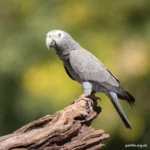
African Grey Parrot
Although smaller than most macaws, the African Grey Parrot is famous for its intelligence and exceptional talking ability.
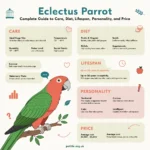
Eclectus Parrot
The Eclectus Parrot stands out because males and females have completely different feather colors.
What Is the Largest Parrot in the World?
The Hyacinth Macaw holds the title of the largest parrot in the world among flying parrots.
Hyacinth Macaw Size
Adult birds can reach approximately 40 inches (100 cm) in total length from beak to tail.
Weight and Wingspan
Many adults weigh more than 1.5 kilograms and have an impressive wingspan that helps them travel long distances in the wild.
Natural Habitat
Hyacinth Macaws are native to parts of South America, where they live in forests, savannas, and palm-rich habitats.
What Is the Second Largest Parrot in the World?
The Palm Cockatoo is often considered the second largest parrot species.
Palm Cockatoo Characteristics
This bird has:
- A large black beak
- Dark gray feathers
- A dramatic crest
- Strong vocalizations
How It Compares With the Hyacinth Macaw
While the Palm Cockatoo is shorter than the Hyacinth Macaw, it remains one of the heaviest and most powerful parrot species.
Most Popular Large Parrot Breeds Kept as Pets
Not all large parrots make suitable pets. Some adapt better to life with humans than others.
African Grey Parrot
Known for:
- Advanced intelligence
- Strong vocabulary
- Excellent mimicry
Many experts consider it one of the smartest bird species in the world.
Eclectus Parrot
Popular because of:
- Calm personality
- Beautiful colors
- Strong learning ability
Amazon Parrot
Amazon parrots are energetic, social, and often enjoy learning words and songs.
Cockatoo Species
Cockatoos are highly affectionate but demand a great deal of attention from their owners.
Macaw Species
Macaws are among the largest and most colorful parrots. They often form strong bonds with family members.
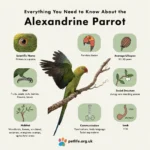
Alexandrine Parakeet
The Alexandrine Parakeet is known for its elegant appearance, talking ability, and relatively manageable size.
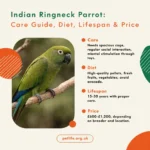
Ring-Necked Parakeet
These parrots are intelligent, active, and capable of learning many words and phrases.
Large Parrot Colors and Varieties
Large parrots come in many colors. Some are bright blue, while others are white, green, red, or a mix of several colors. Their appearance is one reason they are so popular among bird lovers.
Large Blue Parrots
Blue parrots are among the most eye-catching birds in the world.
Hyacinth Macaw
The Hyacinth Macaw is famous for its rich cobalt-blue feathers and yellow markings around the eyes and beak. It is the largest flying parrot species and one of the most sought-after exotic birds.
Blue and Gold Macaw
This large parrot combines bright blue wings with a golden-yellow chest. It is often recommended for experienced bird owners due to its intelligence and social nature.
Large White Parrots
White parrots are elegant and often have large crests that can be raised when excited.
Umbrella Cockatoo
The Umbrella Cockatoo has pure white feathers and a large crest that opens like an umbrella. It is known for being affectionate and highly social.
Moluccan Cockatoo
This large white parrot has a pinkish-white body and a salmon-colored crest. It forms strong bonds with its family and enjoys daily interaction.
Large Green Parrots
Green parrots are common in both wild and captive environments.
Amazon Parrots
Amazon parrots are mainly green with colorful markings around the head and wings. They are active, playful, and known for their talking ability.
Male Eclectus Parrot
Male Eclectus parrots display bright green plumage with touches of blue and orange. Their vibrant appearance makes them easy to recognize.
Colorful Large Parrots
Some parrots display multiple colors across their feathers.
Examples include:
- Scarlet Macaw
- Green-Winged Macaw
- Blue and Gold Macaw
- Sun-colored Amazon species
These parrots often attract attention because of their striking appearance.
Large Parrot Lifespan and Intelligence
One of the most important things potential owners should understand is how long large parrots can live.
How Long Do Large Parrots Live?
Many large parrots have exceptionally long lifespans.
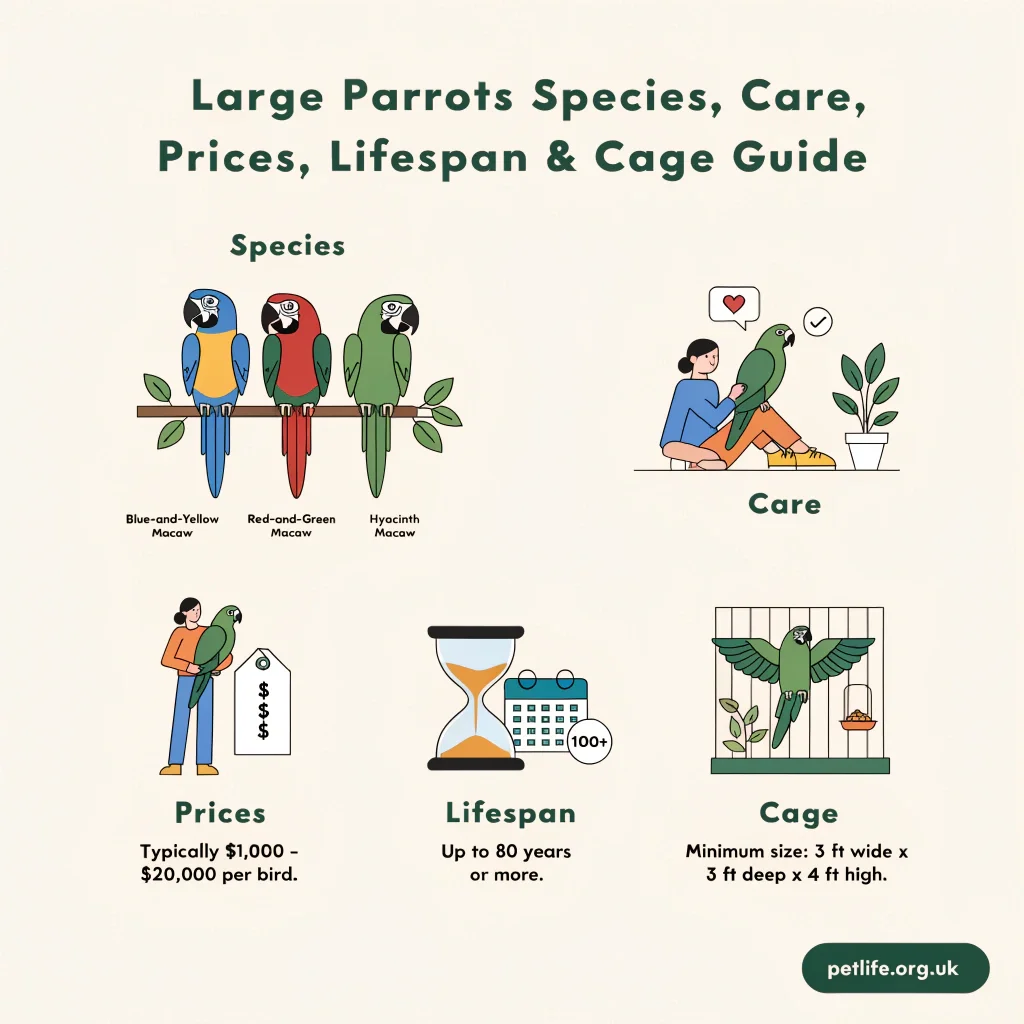
Average lifespans include:
| Species | Average Lifespan |
| African Grey Parrot | 40–60 years |
| Amazon Parrot | 40–60 years |
| Eclectus Parrot | 30–50 years |
| Blue and Gold Macaw | 40–60 years |
| Cockatoo Species | 40–70 years |
| Hyacinth Macaw | 50+ years |
Proper nutrition, veterinary care, and mental stimulation can help parrots live longer.
Which Large Parrot Talks Best?
Several large parrot species are excellent talkers.
Top talking parrots include:
- African Grey Parrot
- Amazon Parrot
- Eclectus Parrot
- Alexandrine Parakeet
African Greys are often considered the best because they can learn extensive vocabularies and use words in context.
Smartest Large Parrot Species
Large parrots are highly intelligent animals.
The smartest species often include:
- African Grey Parrot
- Hyacinth Macaw
- Amazon Parrot
- Cockatoo
- Eclectus Parrot
Many can solve puzzles, recognize routines, and learn complex behaviors.
Large Parrot Price Guide
The cost of a large parrot can vary greatly depending on species, age, breeder reputation, and location.
Big Parrot Price by Species
Approximate price ranges:
| Species | Typical Price Range |
| African Grey Parrot | $1,500–$4,000 |
| Eclectus Parrot | $1,000–$3,500 |
| Blue and Gold Macaw | $2,000–$5,000 |
| Scarlet Macaw | $2,500–$6,000 |
| Cockatoo Species | $1,500–$5,000 |
| Hyacinth Macaw | $10,000+ |
Prices vary by country and availability.
Cost of Ownership
Buying the bird is only part of the expense.
Owners should budget for:
- Cage
- Food
- Veterinary care
- Toys
- Perches
- Cleaning supplies
Monthly Care Expenses
Many owners spend between $50 and $300 or more each month depending on the species and care requirements.
Why Some Large Parrots Cost More
Factors that influence price include:
- Rarity
- Breeding difficulty
- Demand
- Lifespan
- Size
- Training level
Large Parrots for Sale: What Buyers Should Know
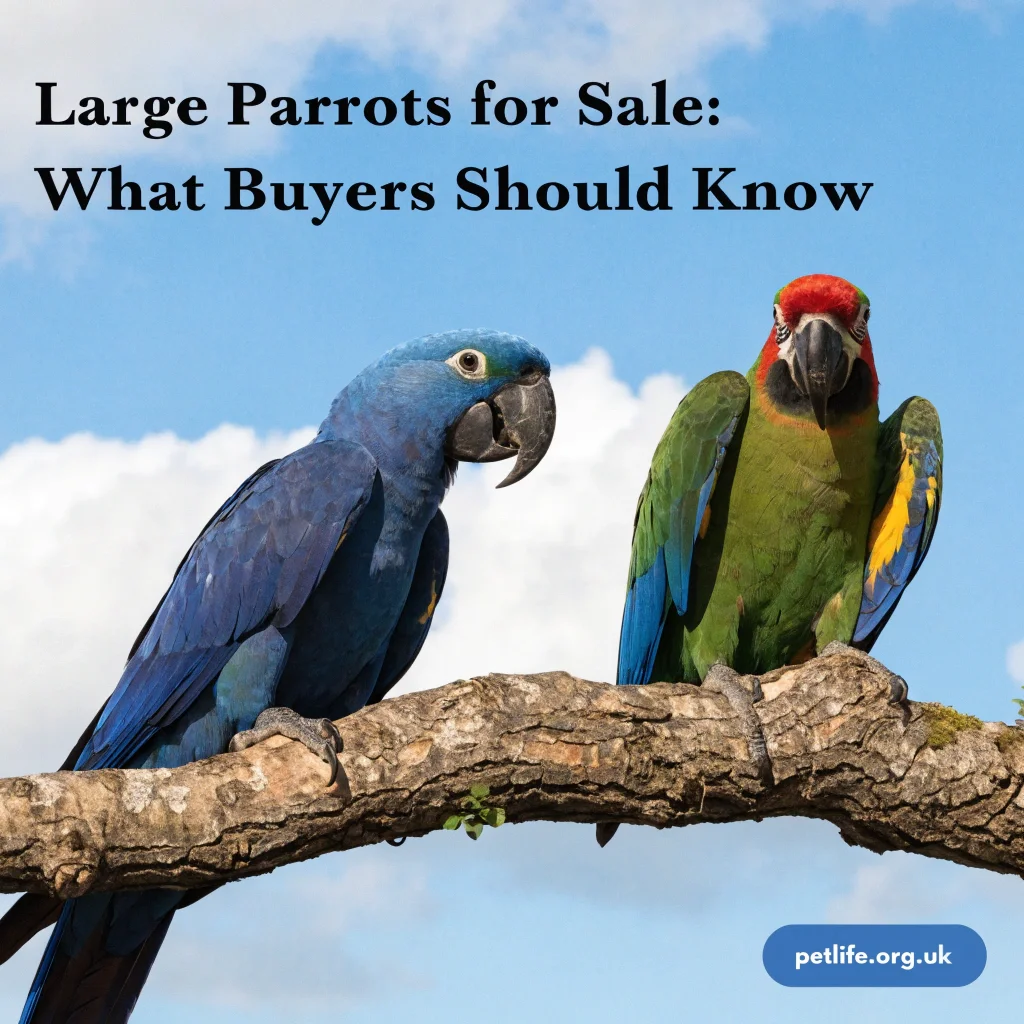
Before searching for large parrots for sale, it is important to understand the responsibility involved.
Choosing a Responsible Breeder
A reputable breeder should:
- Provide health records
- Answer questions openly
- Allow you to see the bird’s environment
- Prioritize bird welfare
Adoption and Rescue Options
Many large parrots need new homes due to changes in their owners’ circumstances.
Adoption can be a good option for experienced bird keepers.
Questions to Ask Before Buying
Consider asking:
- How old is the bird?
- What diet does it eat?
- Has it received veterinary care?
- Is it socialized?
- Does it have behavioral issues?
Choosing the Best Large Parrot Cage
A large parrot cage is one of the most important purchases you will make.
Large parrots need enough room to stretch their wings, climb, and play comfortably.
Minimum Cage Size Requirements
The cage should allow the bird to:
- Fully extend both wings
- Move between perches
- Play safely with toys
Bigger is almost always better when choosing a cage.
Features of a Safe Large Parrot Cage
Look for:
- Strong metal construction
- Secure locks
- Non-toxic materials
- Easy cleaning access
- Multiple feeding stations
Extra Large Parrot Cage Options
Extra large parrot cages provide additional space for:
- Large macaws
- Cockatoos
- Hyacinth Macaws
- Multiple parrots
These cages are especially useful for birds that spend significant time indoors.
Large Parrot Cages for Sale
When comparing cages, consider:
- Bar spacing
- Interior space
- Durability
- Ease of maintenance
- Safety features
Essential Supplies for Large Parrots
Beyond the cage, parrots need accessories that support physical and mental health.
Large Parrot Toys
Toys help prevent boredom and destructive behaviors.
Popular toy types include:
- Puzzle toys
- Foraging toys
- Wooden chew toys
- Rope toys
- Activity toys
Large Parrot Stands
A large parrot stand provides a safe place outside the cage for exercise and interaction.
Food and Water Stations
Heavy-duty bowls are often best for large species because they are more difficult to tip over.
Perches and Climbing Areas
Using different perch sizes helps support healthy feet and encourages natural movement.
Diet and Nutrition for Large Parrots
A healthy diet is one of the most important parts of large parrot care. Good nutrition supports feather quality, energy levels, immune health, and overall lifespan.
Large parrots should eat a balanced diet rather than relying only on seeds.
Pellets
High-quality pellets should form the foundation of a large parrot’s diet. Pellets provide consistent nutrition and help reduce selective eating.
Many bird veterinarians recommend pellets as a primary food source because they contain balanced vitamins and minerals.
Fresh Fruits
Fresh fruits provide variety and important nutrients.
Popular choices include:
- Apples (without seeds)
- Bananas
- Mangoes
- Papayas
- Berries
- Grapes
Fruit should be offered in moderation because some varieties contain high levels of natural sugar.
Vegetables
Vegetables are an important daily food for large parrots.
Good options include:
- Carrots
- Bell peppers
- Broccoli
- Green beans
- Peas
- Leafy greens
Offering different vegetables helps keep meals interesting and supports better nutrition.
Nuts and Seeds
Many large parrots enjoy nuts and seeds. These foods can be excellent training rewards.
Suitable options include:
- Almonds
- Walnuts
- Pistachios
- Brazil nuts
Because nuts are high in fat, they should be offered as part of a balanced diet rather than the main food source.
Foods to Avoid
Some foods can be harmful or toxic to parrots.
Avoid feeding:
- Chocolate
- Avocado
- Caffeine
- Alcohol
- Onion
- Garlic
- Salty snacks
- Sugary foods
Fresh water should always be available and changed daily.
Common Health Problems in Large Parrots
Large parrots can live for decades when cared for properly. However, they may develop health problems if their needs are not met.
Feather Plucking
Feather plucking is one of the most common behavioral issues in parrots.
Possible causes include:
- Boredom
- Stress
- Lack of social interaction
- Poor diet
- Medical conditions
Providing mental stimulation and regular veterinary care can help reduce the risk.
Obesity
Large parrots that eat too many seeds and receive little exercise may become overweight.
Signs of obesity can include:
- Reduced activity
- Difficulty flying
- Excess body fat
A healthy diet and daily exercise are essential.
Respiratory Problems
Parrots have sensitive respiratory systems.
Common causes of respiratory issues include:
- Smoke
- Aerosol sprays
- Poor ventilation
- Dust buildup
Bird-safe environments help reduce these risks.
Nutritional Deficiencies
Poor nutrition can lead to:
- Weak feathers
- Low energy
- Poor immune function
A balanced diet with pellets, vegetables, fruits, and appropriate supplements can help prevent deficiencies.
Preventive Care
Routine care should include:
- Annual veterinary examinations
- Weight monitoring
- Nail and beak checks
- Clean housing
- Daily observation of behavior
Early detection often leads to better outcomes.
Are Large Parrots Good Pets?
Large parrots can be wonderful companions, but they are not the right choice for everyone.
Benefits of Owning a Large Parrot
Many owners enjoy:
- Strong social bonds
- High intelligence
- Talking ability
- Entertaining personalities
- Long-term companionship
These birds often become active members of the household.
Challenges New Owners Should Expect
Large parrots also come with significant responsibilities.
Challenges may include:
- Loud vocalizations
- Long lifespan commitments
- Expensive care
- Daily attention requirements
- Potential property damage from chewing
Understanding these challenges before bringing a parrot home is important.
Best Large Parrots for Different Experience Levels
For intermediate owners:
- Eclectus Parrot
- Alexandrine Parakeet
- Amazon Parrot
For experienced owners:
- Macaw Species
- Cockatoo Species
- Hyacinth Macaw
Every bird is unique, so temperament and individual needs should always be considered.
Large Parrot Names
Choosing a name is one of the fun parts of bringing home a new bird.
Male Large Parrot Names
Popular male names include:
- Max
- Rocky
- Charlie
- Jasper
- Leo
- Rio
- Oscar
- Zeus
Female Large Parrot Names
Popular female names include:
- Luna
- Bella
- Coco
- Ruby
- Daisy
- Rosie
- Pearl
- Willow
Funny Large Parrot Names
If you enjoy humor, consider:
- Captain Feathers
- Squawkzilla
- Sir Chirps
- Mango
- Pickles
- Biscuit
Unique Exotic Bird Names
Unique options include:
- Azul
- Phoenix
- Nova
- Indigo
- Saffron
- Echo
- Orion
- Skye
Conclusion
Large parrots are among the most intelligent and fascinating birds in the world. Species such as the Hyacinth Macaw, African Grey Parrot, Eclectus Parrot, Amazon Parrot, and Palm Cockatoo each offer unique traits, personalities, and care requirements.
Before bringing a large parrot home, it is important to consider the long-term commitment involved. These birds need spacious housing, a healthy diet, mental stimulation, regular veterinary care, and daily interaction.
For owners who are prepared to meet their needs, large parrots can become loyal companions that remain part of the family for many years. Taking the time to choose the right species and provide proper care can help create a rewarding relationship for both bird and owner.
Frequently Asked Questions About Large Parrots
What is the largest parrot in the world?
The Hyacinth Macaw is widely recognized as the largest flying parrot in the world. It can reach around 40 inches (100 cm) in length and weigh more than 1.5 kilograms.
What is the second largest parrot in the world?
The Palm Cockatoo is generally considered the second largest parrot species due to its impressive size, weight, and powerful beak.
How much does a large parrot cost?
Large parrot prices vary by species. Common pet parrots may cost between $1,000 and $5,000, while rare species such as the Hyacinth Macaw can cost considerably more.
Which large parrot talks the best?
The African Grey Parrot is often considered the best talking parrot because of its large vocabulary and ability to mimic human speech clearly.
What size cage does a large parrot need?
A large parrot cage should allow the bird to fully extend its wings, climb comfortably, and move between perches without restriction. Larger cages generally provide a better quality of life.
Are large parrots suitable for beginners?
Some species may be manageable for dedicated beginners, but many large parrots are better suited to owners who have experience with bird care.
How long do large parrots live?
Depending on the species, large parrots can live anywhere from 30 to more than 70 years with proper care.
What is the smartest large parrot species?
Many experts consider the African Grey Parrot to be one of the smartest parrot species due to its problem-solving abilities and advanced communication skills.