
Pionus parrots are one of the most underrated companion birds in the parrot world. While many people know about African Greys, Amazons, and Macaws, the Pionus parrot often goes unnoticed despite having a calm personality, moderate noise level, and affectionate nature. These medium-sized parrots are intelligent, gentle, and easier to live with than many larger parrot species.
If you’re thinking about bringing home a Pionus parrot or simply want to learn more about these beautiful birds, this guide covers everything you need to know. You’ll learn about their natural habitat, different species, lifespan, personality, diet, care needs, and whether a Pionus is the right pet for your lifestyle.
Whether you’re a first-time bird owner or an experienced parrot enthusiast, this guide will help you understand what makes the Pionus parrot such a rewarding companion.
Quick Facts About Pionus Parrots
| Feature | Details |
| Common Name | Pionus Parrot |
| Scientific Genus | Pionus |
| Family | Psittacidae |
| Origin | Central and South America |
| Adult Size | 9 to 12 inches (23 to 30 cm) |
| Weight | 220 to 300 grams |
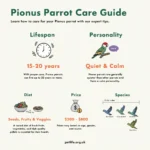
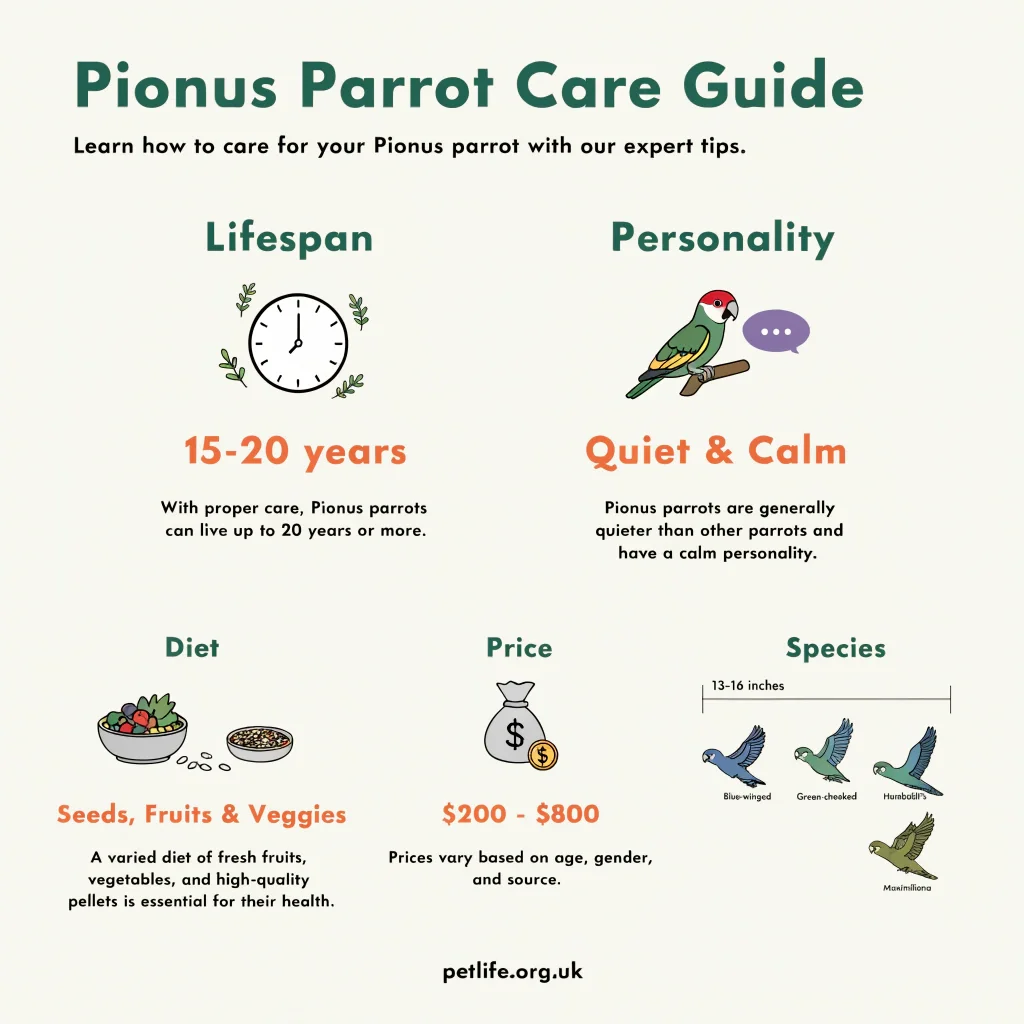
| Lifespan | 25 to 40 years |
| Talking Ability | Moderate |
| Noise Level | Quiet to Moderate |
| Temperament | Gentle, Intelligent, Calm |
| Suitable For | Families, Apartment Living, Beginners with Commitment |
What Is a Pionus Parrot?
The Pionus parrot is a group of medium-sized parrots that belong to the Pionus genus. These birds are native to forests across Central and South America, where they spend their days flying through tree canopies, feeding on fruits, seeds, blossoms, and berries.
Unlike some parrots that demand constant attention, Pionus parrots are known for being calm and independent. They enjoy spending time with their owners but are usually happy entertaining themselves for short periods. This balanced personality makes them an excellent choice for people who want an affectionate bird without the high energy level of some larger parrots.
One of the easiest ways to recognize a Pionus parrot is by the bright red feathers beneath its tail. Nearly every species has this distinctive marking, making it a signature feature of the genus.
These parrots also have a stocky body, short square-shaped tail, and expressive eyes that give them a gentle appearance.
Why Pionus Parrots Are Different from Other Parrots
Many bird owners compare Pionus parrots to Amazons because they share similar body shapes. However, Pionus parrots are generally quieter, less demanding, and more relaxed.
Here are a few qualities that set them apart:
- They are quieter than many popular pet parrots.
- They usually form strong bonds without becoming overly dependent.
- They adapt well to apartment living.
- They are intelligent but not overly loud.
- They tend to have fewer behavioral problems when properly cared for.
Because of these traits, many experienced bird owners consider the Pionus one of the best-kept secrets in aviculture.
Natural Personality
A healthy, well-socialized Pionus parrot is often:
- Gentle
- Curious
- Intelligent
- Calm
- Loyal
- Playful without being hyperactive
Although they may appear shy around strangers, they usually become affectionate once they trust their family. Building that trust takes patience, consistency, and daily interaction.
Native Region and Natural Habitat
Pionus parrots naturally live in tropical and subtropical forests throughout Central and South America. Different species occupy different regions, but they all depend on healthy forest ecosystems for food, shelter, and nesting.
Their range includes countries such as:
- Mexico
- Costa Rica
- Panama
- Colombia
- Ecuador
- Peru
- Venezuela
- Brazil
- Bolivia
- Paraguay
Some species prefer humid rainforests, while others live in mountain forests or woodland edges.
Forest Life
Wild Pionus parrots spend much of their day flying between trees in small flocks. They search for ripe fruits, seeds, flowers, berries, and tender plant shoots.
Unlike parrots that stay in large noisy groups all day, Pionus birds are often seen in smaller family groups, making them quieter in their natural environment.
Their strong beaks allow them to crack seeds, while their climbing feet help them move confidently through branches.
Climate
These parrots are adapted to warm climates with moderate to high humidity. In captivity, they should be protected from cold drafts and sudden temperature changes.
A stable indoor temperature combined with good ventilation helps keep them comfortable year-round.
Wild Diet
In nature, Pionus parrots eat a varied diet that includes:
- Wild fruits
- Seeds
- Nuts
- Berries
- Flower blossoms
- Leaf buds
- Fresh vegetation
This natural variety is one reason why captive Pionus parrots benefit from a balanced diet that includes pellets, fresh vegetables, and limited fruit.
Conservation Status
Most Pionus species are not currently considered endangered, but habitat loss continues to reduce suitable forest areas across their native range. Deforestation and illegal wildlife trade remain ongoing challenges in some regions.
Responsible breeders and ethical bird ownership help reduce pressure on wild populations by supporting captive-bred birds instead of wild-caught parrots.
Pionus Parrot Species
There are eight recognized species within the Pionus genus, although only a few are commonly kept as pets. Each species has its own appearance and personality, but all share the calm nature that makes Pionus parrots popular companion birds.
Blue-headed Pionus (Pionus menstruus)
The Blue-headed Pionus is the most common pet Pionus species.
It has a bright blue head, green body, and the characteristic red feathers beneath the tail. These birds are friendly, relatively quiet, and adapt well to family life.
Many owners consider the Blue-headed Pionus one of the easiest Pionus parrots to care for.
Key Features
- Bright blue head
- Green body feathers
- Moderate talking ability
- Gentle temperament
- Excellent family pet
Maximilian’s Pionus (Pionus maximiliani)
Also called the Scaly-headed Parrot, Maximilian’s Pionus has darker green feathers with a distinctive scalloped pattern around the head and neck.
These parrots are known for their calm personality and strong bond with trusted owners.
Key Features
- Olive-green body
- Purple-blue throat feathers
- Calm behavior
- Intelligent and observant
- Long lifespan
White-capped Pionus (Pionus senilis)
The White-capped Pionus is smaller than most other Pionus species.
It has a pale white forehead, green body, and blue throat, giving it a unique appearance. This species is active, playful, and enjoys exploring its surroundings.
Key Features
- White forehead
- Compact body
- Curious personality
- Active climber
Bronze-winged Pionus (Pionus chalcopterus)
The Bronze-winged Pionus is admired for the bronze-colored sheen on its wings.
Although slightly quieter than many parrots, it enjoys regular interaction with its family and benefits from daily enrichment.
Key Features
- Bronze-colored wings
- Deep blue facial feathers
- Calm personality
- Strong flyer
Dusky Pionus (Pionus fuscus)
The Dusky Pionus has darker plumage than other members of the genus.
While less common in captivity, it shares the same gentle temperament and enjoys spending time with familiar people.
Key Features
- Dark brown body
- Blue facial markings
- Quiet personality
- Loyal companion
Coral-billed Pionus (Pionus sordidus)
The Coral-billed Pionus is less frequently seen in the pet trade.
Its coral-colored beak and green body make it attractive, while its relaxed personality reflects the gentle nature typical of the Pionus family.
Key Features
- Coral-colored beak
- Green plumage
- Calm temperament
- Rare in captivity
Pionus Parrot Size
Pionus parrots are considered medium-sized parrots. They are larger than many conures but smaller than most Amazon parrots.
Their compact, sturdy body gives them a solid appearance without making them difficult to handle.
Average Height
Most adult Pionus parrots measure between 9 and 12 inches (23 to 30 cm) from head to tail.
Different species vary slightly in size, but the difference is usually small.
Average Weight
A healthy adult generally weighs between 220 and 300 grams.
Regular weight checks are important because Pionus parrots have a tendency to gain weight if they receive too many high-fat treats and not enough exercise.
Wing Structure
Their broad wings allow steady, controlled flight through forest habitats. In captivity, supervised flight or regular exercise helps maintain healthy muscles and overall fitness.
Growth Stages
Young Pionus parrots grow quickly during their first few months. As they mature, their adult feathers develop richer colors, and their personalities become more confident.
With proper nutrition and veterinary care, they usually reach full physical maturity within their first year.
Pionus Parrot Colors
One reason many bird lovers choose a Pionus parrot is its beautiful yet natural-looking plumage. Unlike some parrots with bright yellow or scarlet feathers, Pionus parrots display rich shades of green, blue, bronze, purple, and olive that blend beautifully together.
Every Pionus species has its own color pattern, but almost all share one distinctive feature: bright red feathers under the tail, often called the “red vent.” This colorful patch is one of the easiest ways to identify a Pionus parrot.
In addition to their striking colors, many Pionus parrots have subtle feather patterns that become more vibrant as they mature. Young birds may appear duller at first, but their adult plumage develops over time with proper nutrition and good health.
In the next section, we’ll look at the Pionus parrot’s personality, talking ability, lifespan, and housing requirements in detail.
Pionus Parrot Personality
One of the biggest reasons people choose a Pionus parrot is its calm and balanced personality. While every bird is unique, most Pionus parrots are gentle, intelligent, and easy to live with. They enjoy spending time with their families but usually do not demand constant attention.
Compared to many other pet parrots, Pionus parrots are less likely to become overly loud or overly attached to one person. They often build strong relationships with everyone in the household when they are socialized from a young age.
Temperament
A well-raised Pionus parrot is usually:
- Calm and relaxed
- Friendly with familiar people
- Curious about its surroundings
- Gentle during handling
- Independent without being distant
Many owners describe these birds as quiet observers. They enjoy watching daily activities before deciding to join in.
Intelligence
Pionus parrots are smart birds that learn through repetition and positive experiences. They quickly recognize routines, remember family members, and can solve simple foraging puzzles.
Although they may not perform as many tricks as some highly energetic parrots, they enjoy learning when training sessions are short and rewarding.
You can teach a Pionus parrot to:
- Step onto your hand
- Return to its cage on command
- Target train
- Turn around
- Wave
- Retrieve small objects
- Accept grooming calmly
Using praise and healthy treats works much better than punishment.
Bonding with Their Family
Pionus parrots form close bonds with their owners, but they usually do not become overly dependent.
They enjoy sitting nearby, riding on a shoulder, or quietly spending time with their favorite person. Because they are less demanding than some parrot species, many owners find them easier to fit into everyday life.
Early socialization helps prevent fear of strangers and encourages confidence around new people.
Are They Good Family Birds?
Yes. Pionus parrots can make excellent family pets.
Their gentle nature makes them suitable for households where everyone understands how to handle birds respectfully. Children should always be supervised to ensure interactions remain calm and safe for both the bird and the child.
They generally do well in homes where they receive:
- Daily attention
- Mental stimulation
- Regular exercise
- A predictable routine
Are Pionus Parrots Good for Apartment Living?
Many bird owners choose a Pionus parrot because it is quieter than many similarly sized parrots.
While every bird makes noise, Pionus parrots usually produce softer calls instead of frequent loud screams. This makes them a better choice for apartments, townhouses, and homes with close neighbors.
Keep in mind that no parrot is completely silent. Morning and evening vocalizations are normal parts of their daily routine.
Do Pionus Parrots Talk?
Many people ask whether Pionus parrots can talk. The answer is yes, but their talking ability is generally considered moderate rather than exceptional.
They are not known for building large vocabularies like African Grey parrots, yet many individuals learn words, short phrases, and household sounds with regular practice.
Talking Ability
Most Pionus parrots learn slowly but consistently.
Instead of repeating dozens of words, they often master a smaller vocabulary that they use clearly and at appropriate times.
Some birds may learn:
- Hello
- Good morning
- Good night
- Their name
- Family members’ names
- Simple greetings
The Blue-headed Pionus is often considered one of the better talkers within the genus, although each bird develops differently.
Sounds They Make
Pionus parrots communicate through a variety of natural sounds, including:
- Soft whistles
- Chirps
- Gentle squawks
- Contact calls
- Quiet growls
- Mimicked household noises
Many owners enjoy their pleasant whistles more than spoken words.
Noise Level
One of the strongest advantages of owning a Pionus parrot is its relatively low noise level.
Unlike some larger parrots that may scream for long periods, Pionus parrots are generally quieter. They still call out during the morning and evening, but prolonged loud vocalizations are less common when their physical and mental needs are met.
Providing toys, regular interaction, and enough out-of-cage time helps reduce unnecessary calling.
Pionus Parrot Lifespan
Bringing home a Pionus parrot is a long-term commitment. With proper care, these birds can remain loving companions for several decades.
Before adopting one, make sure you are prepared to meet its needs throughout its life.
Average Lifespan
Most healthy Pionus parrots live between 25 and 40 years in captivity.
Some individuals may live even longer when they receive excellent nutrition, regular veterinary care, and a safe environment.
Lifespan in the Wild
Wild Pionus parrots generally have shorter lives because they face natural predators, food shortages, habitat loss, and disease.
Even so, their natural adaptability helps many populations survive across a wide geographic range.
Factors That Affect Lifespan
Several factors influence how long a Pionus parrot lives:
- Balanced diet
- Daily exercise
- Clean living environment
- Mental stimulation
- Routine veterinary checkups
- Safe housing
- Stress-free surroundings
Birds that eat mostly seeds are more likely to develop obesity and nutritional deficiencies over time.
How to Help Your Pionus Live Longer
You can improve your bird’s quality of life by:
- Feeding high-quality pellets as the main diet
- Offering fresh vegetables every day
- Limiting sugary fruits and fatty seeds
- Providing plenty of exercise
- Rotating toys regularly
- Scheduling annual avian veterinary exams
- Watching for early signs of illness
Small daily habits often make the biggest difference over a bird’s lifetime.
Housing Requirements
A comfortable home helps keep a Pionus parrot healthy, active, and emotionally secure. Since these birds spend many years in captivity, their cage should provide enough space for movement, exercise, and enrichment.
Minimum Cage Size
Choose the largest cage your space and budget allow.
For most adult Pionus parrots, a cage measuring at least 30 inches wide, 24 inches deep, and 36 inches high is considered a good starting point. Larger cages are always better because they allow more natural movement.
Bar Spacing
Bar spacing should be around ¾ inch to 1 inch.
This spacing helps prevent injuries while allowing your bird to climb comfortably.
Cage Setup
A well-designed cage should include:
- Natural wood perches of different sizes
- Stainless steel food and water bowls
- Climbing ropes
- Swings
- Chewing toys
- Foraging toys
- Quiet resting areas
Changing toys every few weeks keeps your Pionus interested and mentally stimulated.
Cage Placement
Place the cage in an area where your family spends time so your bird feels included.
Avoid placing the cage:
- In direct sunlight all day
- Near air conditioners
- Next to heating vents
- In smoky environments
- Close to kitchens where non-stick cookware fumes may be present
A stable, well-lit room with regular family activity is usually the best choice.
Out-of-Cage Time
Pionus parrots need at least 3 to 4 hours of supervised out-of-cage time each day.
This allows them to:
- Stretch their wings
- Climb safely
- Play with toys
- Explore
- Interact with family members
- Burn excess energy
Regular exercise also helps reduce boredom and lowers the risk of obesity, which can be a common health concern in this species.
Pionus Parrot Diet
A healthy diet is one of the most important parts of caring for a Pionus parrot. These birds have a tendency to gain weight if they eat too many seeds and not enough fresh foods. A balanced diet supports healthy feathers, a strong immune system, and a long lifespan.
Instead of relying on one type of food, offer a variety of nutritious options every day.
Base Diet
A high-quality pelleted diet should make up about 60–70% of your Pionus parrot’s daily food. Pellets provide balanced nutrition and help reduce the risk of vitamin and mineral deficiencies.
Choose pellets made for medium-sized parrots and avoid products with artificial colors or excessive sugar.
Fresh food should make up most of the remaining diet.
Fresh Vegetables
Vegetables are an important source of vitamins, minerals, and fiber.
Safe vegetables include:
- Carrots
- Broccoli
- Bell peppers
- Kale
- Spinach (in moderation)
- Swiss chard
- Green beans
- Peas
- Sweet potato
- Pumpkin
- Zucchini
Offering different vegetables throughout the week keeps meals interesting and provides a wider range of nutrients.
Fruits
Fruit is a healthy treat but should be offered in moderation because it contains natural sugars.
Good choices include:
- Apples (without seeds)
- Blueberries
- Strawberries
- Mango
- Papaya
- Kiwi
- Grapes
- Pears
- Bananas
- Pomegranate
Wash all fruits thoroughly before serving.
Seeds and Nuts
Seeds and nuts should be treats rather than the main diet.
Healthy options include:
- Sunflower seeds (limited)
- Safflower seeds
- Pumpkin seeds
- Almonds
- Walnuts
- Pistachios (unsalted)
Using seeds as training rewards works well because most Pionus parrots enjoy them.
Calcium and Fresh Water
Calcium supports strong bones, healthy muscles, and egg production in breeding females.
Your bird can receive calcium through:
- Dark leafy greens
- Broccoli
- Commercial mineral blocks
- Cuttlebones
Fresh, clean water should always be available and changed at least once or twice a day.
Foods to Avoid
Some foods are dangerous for parrots and should never be offered.
Avoid feeding:
- Chocolate
- Avocado
- Onion
- Garlic
- Alcohol
- Caffeine
- Fruit pits
- Apple seeds
- Salty snacks
- Sugary candy
- Foods containing xylitol
When introducing new foods, offer small portions and watch for any signs of digestive upset.
Sample Daily Diet
A simple daily meal plan might include:
Morning
- High-quality pellets
- Chopped vegetables
Afternoon
- A small serving of fresh fruit
Evening
- Pellets
- A few healthy seeds or nuts as treats
Providing variety helps prevent picky eating and keeps your Pionus interested in its meals.
Exercise, Enrichment, and Training
Pionus parrots may be calmer than many other parrots, but they still need daily physical activity and mental stimulation. Without enough exercise, they can become overweight, bored, or develop unwanted behaviors.
Keeping your bird active is just as important as providing a healthy diet.
Daily Exercise
Aim for at least 3 to 4 hours of supervised out-of-cage time each day.
During this time, your bird can:
- Climb
- Fly in a safe room if flighted
- Explore bird-safe play stands
- Interact with family members
- Practice training exercises
Daily movement keeps muscles strong and supports a healthy weight.
Mental Stimulation
Pionus parrots enjoy solving simple challenges.
You can encourage natural behaviors by providing:
- Puzzle toys
- Foraging toys
- Wooden chew toys
- Rope climbers
- Swings
- Natural branches
Rotate toys every few weeks to keep them interesting.
Training
Training helps build trust and provides mental exercise.
Short sessions of 5 to 10 minutes usually work best.
Start with simple behaviors such as:
- Step up
- Step down
- Target training
- Turning around
- Coming when called
- Returning to the cage
Always reward desired behavior with praise or a favorite treat.
Avoid punishment, as it can damage trust and make training more difficult.
Socialization
Expose your Pionus parrot to different people, sounds, and safe experiences from an early age.
Regular socialization helps reduce fear and builds confidence.
Birds that interact with multiple family members are often less likely to become attached to only one person.
Preventing Boredom
A bored parrot may become noisy or destructive.
Simple ways to prevent boredom include:
- Rotating toys
- Hiding treats inside foraging toys
- Teaching new tricks
- Offering natural branches to chew
- Changing play areas occasionally
Even spending quiet time together while reading or watching television can strengthen your bond.
Pionus Parrot Health Problems
Pionus parrots are generally hardy birds, but like all parrots, they can develop health problems if their diet, environment, or care is not appropriate.
Learning to recognize early warning signs can make a big difference.
Wheezing
Pionus parrots are known for making a soft wheezing or snoring sound when they are excited, relaxed, or exercising.
In many cases, this is completely normal and is one of the unique traits of the species.
However, if wheezing is accompanied by:
- Difficulty breathing
- Tail bobbing
- Nasal discharge
- Loss of energy
- Open-mouth breathing
contact an avian veterinarian immediately.
Obesity
Obesity is one of the most common health concerns in captive Pionus parrots.
It often develops when birds eat too many seeds and receive too little exercise.
Signs include:
- Difficulty flying
- Heavy body weight
- Reduced activity
- Fat deposits around the chest
A balanced diet and regular exercise greatly reduce this risk.
Vitamin A Deficiency
A diet made up mostly of seeds may lead to vitamin A deficiency.
Symptoms can include:
- Poor feather condition
- Frequent infections
- Nasal discharge
- Breathing problems
- Reduced appetite
Feeding vegetables rich in vitamin A, such as carrots and sweet potatoes, helps support good health.
Aspergillosis
Aspergillosis is a fungal infection that affects the respiratory system.
Risk factors include:
- Damp cages
- Moldy food
- Poor ventilation
- Weak immune system
Keeping the cage clean and dry helps lower the risk.
Feather Plucking
Although less common in Pionus parrots than in some other species, feather plucking can occur.
Possible causes include:
- Stress
- Boredom
- Poor nutrition
- Lack of sleep
- Medical conditions
If your bird begins pulling out feathers, schedule a veterinary examination to identify the cause before assuming it is behavioral.
Signs of a Healthy Pionus Parrot
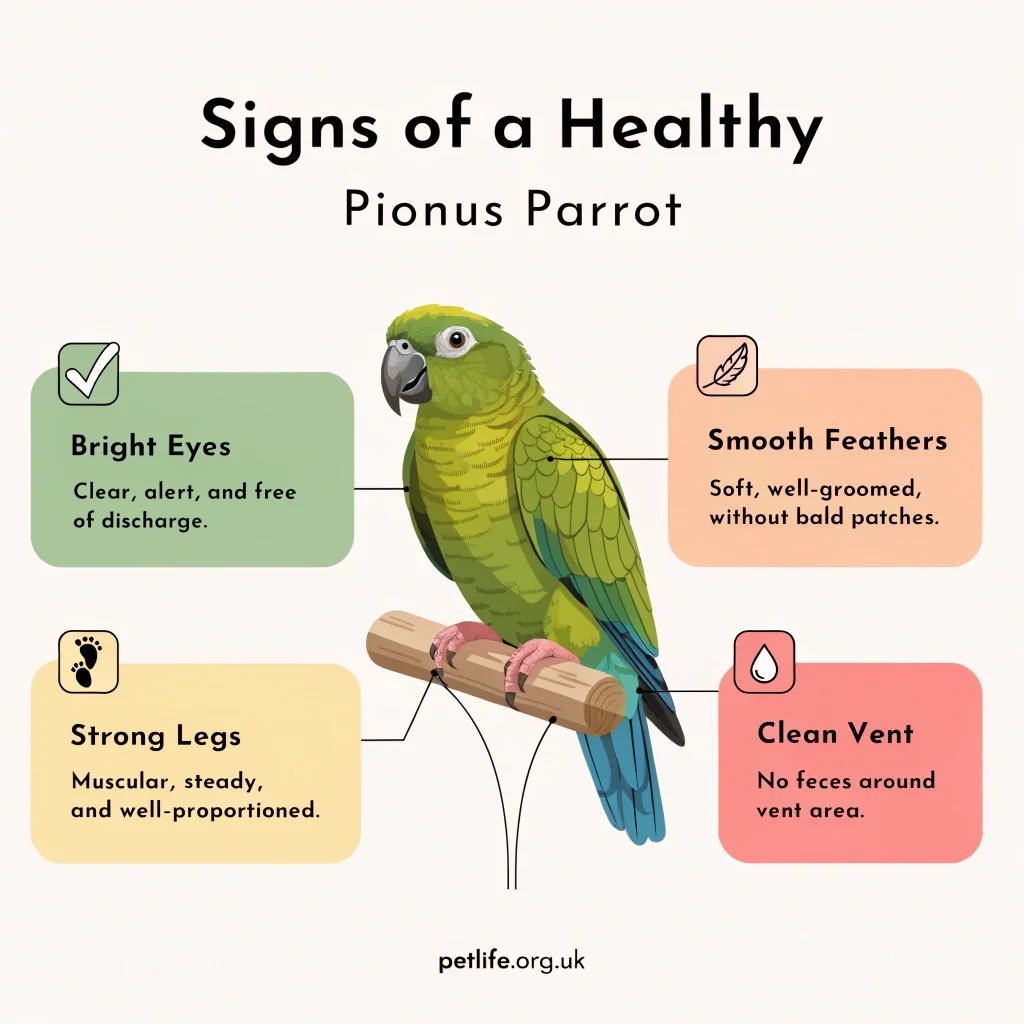
A healthy bird should have:
- Bright, clear eyes
- Smooth feathers
- Clean nostrils
- Strong appetite
- Regular droppings
- Good energy levels
- Normal breathing
Birds naturally hide illness, so even small changes in behavior should be taken seriously.
Schedule a wellness examination with an avian veterinarian at least once a year.
Grooming and Hygiene
Good grooming helps keep a Pionus parrot comfortable and healthy throughout its life.
Fortunately, these birds usually do an excellent job of caring for their own feathers, but they still benefit from regular support.
Bathing
Most Pionus parrots enjoy bathing.
You can offer:
- A shallow bowl of clean water
- A gentle mist from a spray bottle
- Supervised showers using lukewarm water
Bathing helps remove dust, supports healthy feathers, and encourages natural preening.
Nail Care
Overgrown nails can make climbing uncomfortable.
Provide natural wood perches with different textures to help wear nails down naturally.
If trimming is needed, it should be done carefully or by an experienced avian veterinarian or bird groomer.
Beak Care
A healthy beak usually stays in good condition through normal chewing.
Offer safe chewing materials such as:
- Natural branches
- Wooden toys
- Palm leaf toys
- Vegetable-tanned leather toys
If the beak becomes unusually long, cracked, or uneven, seek veterinary advice.
Feather Care
Healthy feathers are supported by:
- Good nutrition
- Regular bathing
- Clean housing
- Adequate sleep
During molting, your bird may appear slightly untidy while new feathers grow in. This is a normal part of the feather replacement process.
Dander
Pionus parrots produce a light feather dust known as dander.
Regular bathing, good ventilation, and routine cage cleaning help reduce dust around the home.
Natural Aroma
Many owners notice that Pionus parrots have a mild, sweet, musky scent. This natural aroma is normal and is often considered one of the charming characteristics of the species.
A healthy bird should never have a foul or unpleasant odor, as this could indicate poor hygiene or an underlying health problem.
Breeding and Reproduction
Breeding Pionus parrots requires experience, patience, and a strong understanding of their behavior and health. While these birds can breed successfully in captivity, breeding should only be attempted by responsible owners who can provide proper housing, nutrition, and veterinary care.
For most pet owners, the focus should be on providing a healthy and happy home rather than breeding.
Sexual Maturity
Most Pionus parrots reach sexual maturity between 3 and 5 years of age, although this can vary slightly depending on the species and the individual bird.
Even after reaching maturity, young birds may need additional time before they are ready to breed successfully.
Breeding Season
In the wild, Pionus parrots usually breed during the local rainy season when food is abundant.
In captivity, breeding may occur at different times of the year if conditions are suitable, including:
- A healthy diet
- Adequate daylight hours
- Proper nesting space
- A compatible pair
Nesting
Breeding pairs prefer a secure nesting box placed in a quiet area.
The nest should:
- Be large enough for both birds
- Stay clean and dry
- Provide privacy
- Be checked carefully without causing unnecessary stress
Too much disturbance during nesting can cause birds to abandon eggs or chicks.
Eggs and Chicks
A female Pionus parrot usually lays 3 to 5 eggs per clutch.
The eggs hatch after about 26 to 28 days, depending on the species and environmental conditions.
After hatching:
- Both parents help care for the chicks.
- Young birds remain in the nest for several weeks.
- Chicks become independent gradually as they learn to eat on their own.
Proper nutrition is especially important during this stage because parent birds need extra energy to raise healthy chicks.
Breeding Challenges
Breeding parrots should never be taken lightly.
Some common challenges include:
- Infertile eggs
- Poor chick growth
- Parent birds rejecting chicks
- Nutritional deficiencies
- Egg binding in females
- Stress-related breeding problems
Working with an experienced avian veterinarian is highly recommended before starting any breeding program.
Common Pionus Behaviors Explained
One of the reasons Pionus parrots are so interesting is their unique body language. Learning what these behaviors mean helps owners understand how their bird is feeling and respond appropriately.
The Pionus Strut
The Pionus strut is a playful display where the bird walks confidently with its chest held high while gently bobbing its head.
Many birds perform this behavior when they are:
- Excited
- Curious
- Showing confidence
- Greeting their favorite person
The strut is completely normal and is one of the most recognizable behaviors in the Pionus family.
Freeze Response
Pionus parrots sometimes become completely still when they are unsure about a new situation.
This “freeze” response allows them to observe their surroundings before deciding whether something is safe.
Common triggers include:
- New toys
- Visitors
- Loud sounds
- Changes in the room
Avoid forcing interaction during these moments. Give your bird time to become comfortable.
Wheezing
Many new owners become concerned when they hear a Pionus parrot making a wheezing or snoring sound.
Fortunately, this gentle wheeze is often a normal characteristic of the species. It is commonly heard when the bird is:
- Relaxed
- Excited
- Playing
- Exercising
However, wheezing should not be confused with signs of respiratory illness. If it is accompanied by labored breathing, nasal discharge, or unusual tiredness, consult an avian veterinarian.
Hormonal Changes
Like other parrots, Pionus parrots may experience hormonal behavior during breeding season.
You may notice:
- Increased territorial behavior
- Nest-seeking
- More vocalization
- Protective behavior
- Regurgitation toward favorite people
Providing a consistent routine, limiting nesting opportunities for pet birds, and ensuring adequate sleep can help manage seasonal hormones.
Pionus Parrot Price
The cost of a Pionus parrot depends on several factors, including the species, the bird’s age, its level of socialization, and where you live.
Some species are easier to find than others, which also affects price.
Average Purchase Price
In many countries, a healthy, captive-bred Pionus parrot generally costs between $800 and $2,000 USD.
Rare species or hand-raised babies may cost even more.
Prices vary depending on:
- Species
- Age
- Breeder reputation
- Location
- Health testing
- Hand-feeding experience
Ongoing Costs
Buying the bird is only part of the financial commitment.
You should also budget for:
- A large cage
- Food and pellets
- Fresh vegetables and fruit
- Toys
- Perches
- Annual veterinary checkups
- Emergency medical care
Over a lifetime of 25 to 40 years, these ongoing expenses are often much greater than the initial purchase price.
Adoption vs. Buying
Adopting a Pionus parrot can be a rewarding option.
Many bird rescues care for parrots that need new homes because their previous owners could no longer keep them.
Adoption often includes:
- Lower adoption fees
- Health evaluations
- Basic socialization
- Support from experienced rescue staff
Whether you adopt or buy, choose a bird that has been raised responsibly and receives proper care.
Where to Buy a Pionus Parrot
Choosing the right source is just as important as choosing the right species.
Healthy, well-socialized birds are more likely to become confident and enjoyable companions.
Reputable Breeders
Many people purchase Pionus parrots from experienced breeders.
A responsible breeder should:
- Raise healthy captive-bred birds
- Provide clean housing
- Answer your questions honestly
- Allow you to meet the birds when possible
- Share health records if available
- Explain the bird’s diet and care routine
Avoid sellers who cannot provide basic information about the bird’s background.
Bird Rescue Organizations
Bird rescues are an excellent place to find adult Pionus parrots looking for permanent homes.
Rescued birds often make wonderful companions, especially for owners willing to spend time building trust.
Staff members can usually help match you with a bird whose personality fits your lifestyle.
Specialty Bird Stores
Some specialty bird stores work directly with responsible breeders and maintain high standards of care.
Before purchasing, observe:
- Clean cages
- Bright, alert birds
- Fresh food and water
- Healthy feathers
- Active behavior
A healthy Pionus should appear curious and responsive rather than weak or inactive.
Questions to Ask Before Bringing a Bird Home
Before making a decision, ask:
- Is the bird captive-bred?
- What species of Pionus is it?
- How old is the bird?
- Has it been examined by an avian veterinarian?
- What foods does it currently eat?
- Has it been socialized with people?
- Does it step onto a hand willingly?
The answers to these questions can help you prepare for a successful transition into your home.
Is a Pionus Parrot a Good Pet?
For many bird lovers, the answer is yes.
A Pionus parrot combines intelligence, gentle behavior, moderate talking ability, and a quieter personality than many other medium-sized parrots. While no bird is perfect for every home, the Pionus is often an excellent choice for people who want a loyal companion without the constant noise and high energy associated with some larger parrot species.
With proper care, daily interaction, and a balanced diet, these birds can become affectionate family members for decades.
Pionus Parrot Compared to Other Popular Pet Parrots
Choosing the right parrot is about more than appearance. Every species has its own personality, noise level, care needs, and activity level. Comparing the Pionus parrot with other popular pet birds can help you decide whether it fits your lifestyle.
| Feature | Pionus Parrot | African Grey | Amazon Parrot | Eclectus Parrot | Quaker Parrot |
| Size | Medium | Medium-Large | Medium-Large | Medium-Large | Small-Medium |
| Noise Level | Quiet to Moderate | Moderate | Loud | Moderate | Loud |
| Talking Ability | Moderate | Excellent | Very Good | Good | Good |
| Personality | Calm, Gentle | Intelligent, Sensitive | Outgoing, Confident | Calm, Gentle | Energetic |
| Beginner Friendly | Yes, with research | Better for experienced owners | Moderate | Moderate | Yes |
| Apartment Friendly | Yes | Sometimes | Less suitable | Usually | Depends on noise tolerance |
| Lifespan | 25–40 years | 40–60 years | 40–60 years | 30–50 years | 20–30 years |
Overall, the Pionus parrot is an excellent choice for people looking for a quieter, affectionate companion that does not require constant attention throughout the day.
Frequently Asked Questions
Are Pionus parrots good pets?
Yes. Pionus parrots are known for their calm temperament, gentle nature, and moderate noise level. They form strong bonds with their families and are often easier to manage than many larger parrot species.
How long do Pionus parrots live?
With proper care, a healthy Pionus parrot typically lives 25 to 40 years. A nutritious diet, regular exercise, and routine veterinary care all contribute to a longer lifespan.
Can Pionus parrots talk?
Yes, but they are not among the best talking parrots. Most Pionus parrots learn a small vocabulary of words and phrases and enjoy whistling and mimicking everyday sounds.
Are Pionus parrots noisy?
Compared with Amazons, Cockatoos, and many Conures, Pionus parrots are relatively quiet. They still make normal contact calls, especially in the morning and evening, but they are generally considered apartment-friendly.
What do Pionus parrots eat?
A healthy diet should include:
- High-quality pellets
- Fresh vegetables
- Fresh fruits in moderation
- Limited seeds and nuts
- Fresh water every day
A varied diet helps support healthy feathers, a strong immune system, and long-term health.
How big do Pionus parrots get?
Most adult Pionus parrots grow to 9 to 12 inches (23–30 cm) in length and weigh 220 to 300 grams, depending on the species.
Which Pionus species is the most popular?
The Blue-headed Pionus (Pionus menstruus) is the most commonly kept pet species because of its friendly personality, beautiful blue head, and adaptable nature.
Other popular species include:
- Maximilian’s Pionus
- White-capped Pionus
- Bronze-winged Pionus
- Dusky Pionus
Do Pionus parrots like to be handled?
Many Pionus parrots enjoy gentle interaction with people they trust. They often like sitting on a shoulder or spending quiet time with their owners, but they usually do not demand constant physical attention.
Do Pionus parrots need another bird?
Not necessarily.
A single Pionus parrot can live a happy life if it receives daily social interaction, mental stimulation, and regular exercise. Owners who spend enough quality time with their birds can often meet their social needs.
Are Pionus parrots suitable for beginners?
Yes, provided the owner understands the long-term commitment involved. Their calm personality, moderate care requirements, and quieter nature make them one of the better choices for people buying their first medium-sized parrot.
Final Thoughts
The Pionus parrot may not receive as much attention as some of the more famous parrot species, but it has many qualities that make it an outstanding companion bird. Its gentle temperament, quiet personality, beautiful feather colors, and long lifespan have earned it a loyal following among bird enthusiasts around the world.
Whether you choose a Blue-headed Pionus, Maximilian’s Pionus, White-capped Pionus, Bronze-winged Pionus, Dusky Pionus, or another member of the Pionus family, you are bringing home a bird that thrives on patience, consistency, and positive interaction.
Like every parrot, a Pionus requires a balanced diet, a spacious cage, daily exercise, mental enrichment, and regular veterinary care. In return, it can become a loyal companion for decades.