
The Eclectus Parrot is one of the most striking and intelligent pet birds in the world. Known for its bright colors, calm personality, and excellent talking ability, this species has become a favorite among bird lovers. Unlike many parrots, male and female Eclectus parrots look completely different, making them one of the best examples of sexual dimorphism in birds.
Whether you are considering bringing home a baby Eclectus parrot or simply want to learn more about this fascinating species, understanding its care needs is essential. These parrots require a balanced diet, daily interaction, mental stimulation, and a suitable living environment to stay healthy and happy.
In this guide, you’ll learn about the Eclectus parrot’s lifespan, habitat, personality, diet, size, care requirements, and more.
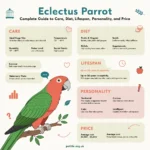
Quick Facts About the Eclectus Parrot
| Feature | Details |
| Common Name | Eclectus Parrot |
| Scientific Name | Eclectus roratus |
| Family | Psittaculidae |
| Origin | New Guinea, Solomon Islands, Australia, Indonesia |
| Size | 14 to 20 inches |
| Weight | 350 to 600 grams |
| Lifespan | 30 to 50 years or more |
| Talking Ability | Excellent |
| Noise Level | Moderate |
| Difficulty Level | Intermediate |
| Suitable for Families | Yes, with proper socialization |
What Is an Eclectus Parrot?
The Eclectus Parrot is a medium-to-large tropical parrot native to rainforests across New Guinea, northeastern Australia, the Solomon Islands, and nearby islands.
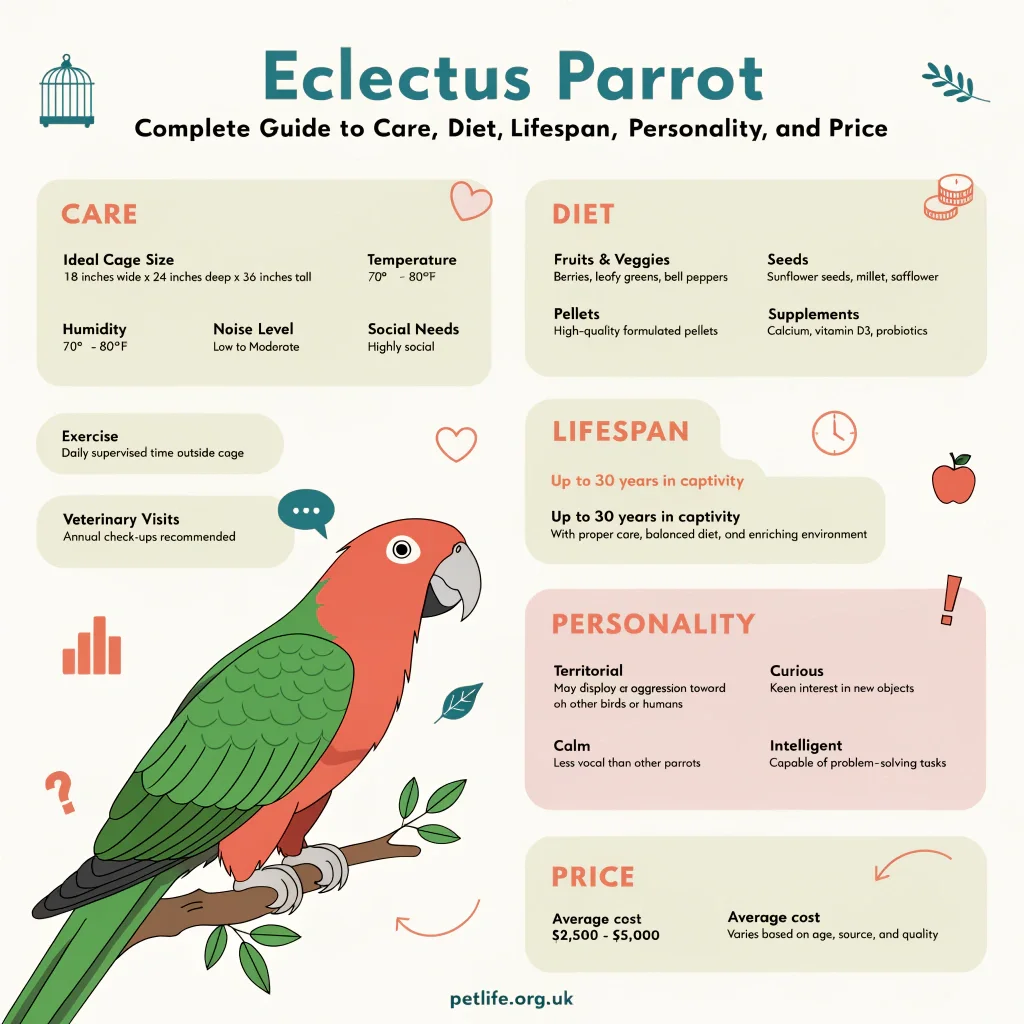
The Parrot species is famous for its dramatic color differences between males and females. The male Eclectus parrot is mostly bright green with orange and blue highlights, while the female Eclectus parrot displays rich red and purple plumage.
This unique appearance once caused scientists to believe males and females were separate species.
Today, Eclectus parrots are widely kept as companion birds due to their intelligence, gentle nature, and strong ability to mimic human speech.
Eclectus Parrot Taxonomy
- Kingdom: Animalia
- Phylum: Chordata
- Class: Aves
- Order: Psittaciformes
- Family: Psittaculidae
- Genus: Eclectus
- Species: Eclectus roratus
Popular Eclectus Parrot Subspecies
Several subspecies exist across different islands and regions.
Solomon Island Eclectus Parrot
One of the most common pet Life varieties. It is generally smaller and easier to find from breeders.
Grand Eclectus
Known for its larger body size and vibrant coloration.
Vosmaeri Eclectus Parrot
A beautiful subspecies featuring brighter feathers and a larger beak.
Red-Sided Eclectus
Among the most recognizable Eclectus parrots found in aviculture.
Origin and History of the Eclectus Parrot
The Eclectus parrot evolved in dense tropical rainforests where food remains available throughout much of the year. Their natural range includes:
- New Guinea
- Solomon Islands
- Indonesia
- Cape York Peninsula in Australia
For centuries, local communities observed these parrots living high in rainforest canopies. Due to their beauty and intelligence, they eventually became popular in aviculture worldwide.
Today, captive-bred Eclectus parrots are commonly kept as pets across many countries.
Natural Habitat
In the wild, Eclectus parrots prefer:
- Tropical rainforests
- Woodland edges
- Forest clearings
- Mangrove forests
They spend much of their time searching for fruits, flowers, seeds, nuts, and vegetation.
Conservation Status
Wild populations remain relatively stable across much of their range. However, habitat loss and illegal wildlife trade can affect local populations in some regions.
Responsible breeding and ethical ownership help reduce pressure on wild birds.
Eclectus Parrot Appearance
The appearance of the Eclectus parrot is unlike any other pet bird.
Male Eclectus Parrot
The male Eclectus bird is predominantly green with:
- Bright green body
- Orange upper beak
- Blue wing feathers
- Red patches beneath wings
- Yellow-orange tail highlights
This coloration helps males blend into rainforest foliage.
Female Eclectus Parrot
The female Eclectus parrot looks completely different.
Features include:
- Bright red head and body
- Deep blue or purple chest
- Black beak
- Red tail feathers
The female’s bold coloring helps her defend nesting sites and communicate with potential mates.
Why Male and Female Eclectus Look Different
This extreme difference between sexes is called sexual dimorphism.
Few parrots show such dramatic visual differences. In the Eclectus species, scientists believe these colors evolved because males and females play different roles in reproduction and nest protection.
Eclectus Parrot Size
An adult Eclectus parrot size typically ranges from:
- Length: 14 to 20 inches
- Wingspan: Around 10 to 12 inches
- Weight: 350 to 600 grams
Subspecies may vary slightly in size.
Eclectus Parrot Personality and Temperament
One reason many owners love Eclectus parrots is their balanced personality.
Compared to some parrots that demand constant attention, Eclectus parrots often display a calmer and more thoughtful nature.
Are Eclectus Parrots Good Pets?
Yes. Eclectus parrots can make excellent pets for dedicated owners.
They are known for:
- High intelligence
- Strong memory
- Affectionate behavior
- Good talking ability
- Moderate noise levels
- Long lifespan
However, they require regular interaction and mental stimulation.
Intelligence
Eclectus parrots rank among the most intelligent companion birds.
Many can learn:
- Words
- Phrases
- Household sounds
- Commands
- Daily routines
Their ability to understand context often surprises owners.
Bonding With Family Members
An Eclectus may form a close bond with one person while still accepting other family members.
Early socialization helps prevent fearfulness and encourages confidence.
Relationship With Other Birds
Many Eclectus parrots tolerate other parrots well when introduced properly.
Still, every bird has its own personality, and supervised introductions are always recommended.
Eclectus Parrot Talking Ability
Many people search for “Eclectus parrot talking” because speech is one of this bird’s strongest traits.
Do Eclectus Parrots Talk?
Yes.
Many owners consider the Eclectus one of the best talking parrots available.
With consistent training, these birds can build impressive vocabularies.
Voice Quality
Unlike some parrots that produce rough sounds, Eclectus parrots often speak with surprising clarity.
Their words can be easy to understand, making them popular among bird enthusiasts.
Training Tips
To improve speech development:
- Use short phrases
- Repeat words consistently
- Reward positive behavior
- Train in quiet environments
- Speak clearly and naturally
Young birds often learn fastest, but adults can also expand their vocabulary.
Eclectus Parrot Sounds and Vocalizations
Although not the loudest parrot species, Eclectus parrots are still capable of making significant noise.
Typical Sounds
Common vocalizations include:
- Whistles
- Calls
- Mimicked speech
- Contact calls
- Excitement sounds
Noise Level
Most owners rate Eclectus parrots as moderate in noise compared with Macaws or Cockatoos.
They often vocalize most during:
- Morning hours
- Feeding times
- Evening routines
Excessive Screaming
Frequent screaming may indicate:
- Boredom
- Stress
- Lack of attention
- Poor environmental enrichment
- Health issues
Understanding the cause is important before attempting behavioral correction.
Caring for an Eclectus Parrot
Proper care directly affects your bird’s health, behavior, and lifespan.
Cage Requirements
Eclectus parrots need spacious housing.
A suitable cage should provide enough room for:
- Wing stretching
- Climbing
- Playing
- Moving between perches
Larger cages generally support better physical and mental health.
Perches
Provide a variety of perch sizes and textures to support healthy feet.
Natural wood perches are often preferred because they encourage normal foot exercise.
Toys and Enrichment
Mental stimulation is essential.
Popular options include:
- Puzzle toys
- Foraging toys
- Shreddable toys
- Climbing structures
- Interactive games
Regular rotation helps prevent boredom.
Daily Routine
Healthy Eclectus parrots benefit from:
- Fresh food daily
- Social interaction
- Out-of-cage exercise
- Training sessions
- Mental enrichment
A predictable routine often helps birds feel secure and confident.
Eclectus Parrot Diet
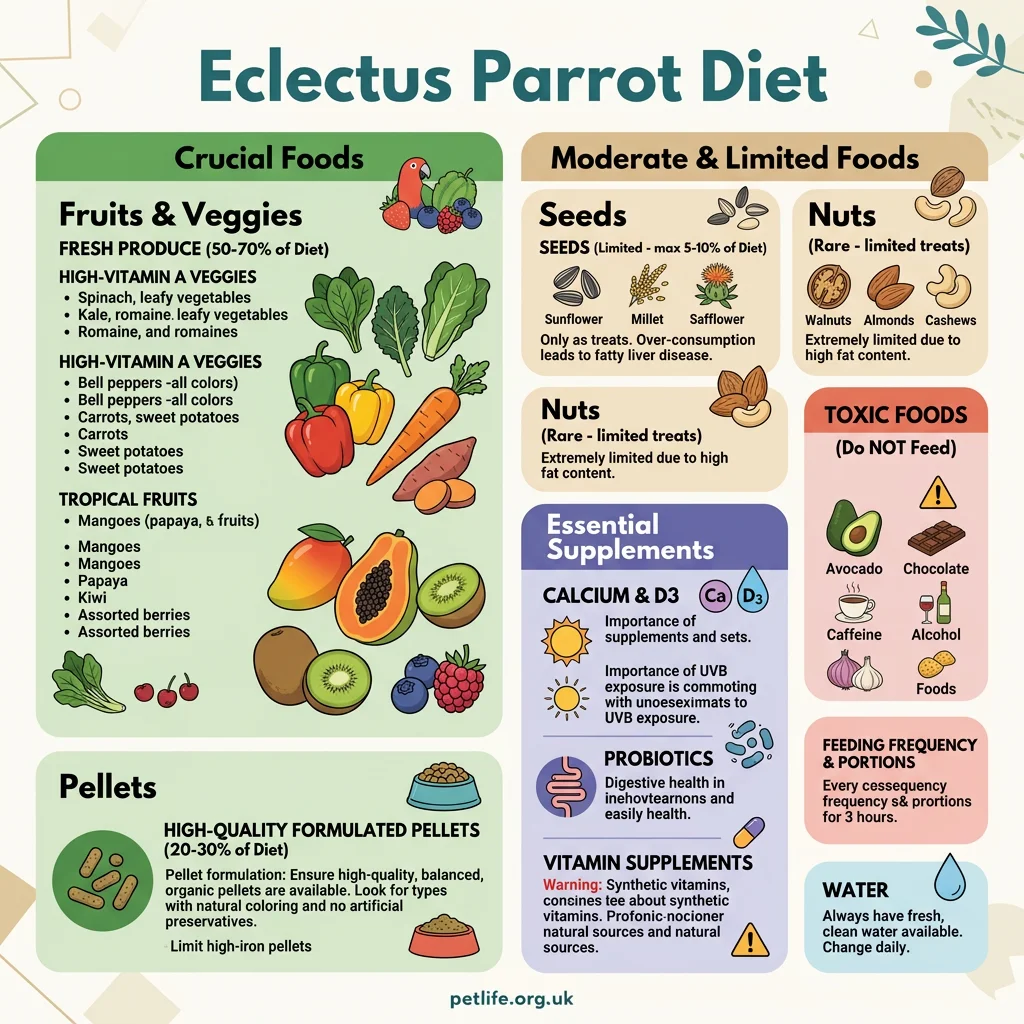
The Eclectus parrot diet is different from the diets of many other pet parrots. In the wild, these birds eat a wide variety of fruits, blossoms, leaf buds, seeds, and plant materials. Their digestive system is longer than that of many parrot species, which allows them to process high-fiber foods more efficiently.
A healthy diet is one of the most important parts of Eclectus parrots care. Poor nutrition can lead to feather problems, behavioral issues, and health concerns.
What Do Eclectus Parrots Eat?
A balanced Eclectus parrot diet should include:
- Fresh fruits
- Leafy vegetables
- Root vegetables
- Sprouted seeds
- Limited high-quality pellets
- Fresh water
Many avian experts recommend that fresh foods make up the largest portion of the diet.
Best Fruits for Eclectus Parrots
Healthy fruit choices include:
- Papaya
- Mango
- Pomegranate
- Apple
- Pear
- Kiwi
- Melon
- Berries
Fruit provides vitamins, minerals, and hydration.
Best Vegetables
Vegetables should be offered daily.
Good options include:
- Carrots
- Sweet potatoes
- Pumpkin
- Broccoli
- Kale
- Spinach
- Bell peppers
- Green beans
Vegetables are especially important because they provide fiber and vitamin-rich nutrition.
Pellets and Seeds
Pellets can be included in moderation, but many Eclectus owners avoid heavily colored or artificially preserved products.
Seeds should be treated as a supplement rather than the main food source.
Warning: Foods to Avoid
Some foods can be dangerous or toxic.
Never feed:
- Chocolate
- Avocado
- Alcohol
- Caffeine
- Onion
- Garlic
- Fruit pits
- Excess salt
- Excess sugar
If you are unsure about a food item, consult an avian veterinarian before offering it.
Exercise and Enrichment
Eclectus parrots need both physical exercise and mental stimulation.
A bored parrot may develop unwanted behaviors such as feather plucking, excessive vocalization, or destructive chewing.
Daily Exercise Needs
Most Eclectus parrots benefit from several hours outside the cage each day.
Activities may include:
- Climbing
- Flying in safe spaces
- Exploring play stands
- Training sessions
- Interactive games
Mental Stimulation
These intelligent birds enjoy solving problems and learning new tasks.
Ideas for enrichment include:
- Food puzzles
- Hidden treats
- Training exercises
- Foraging activities
- Safe shredding materials
Best Toys for Eclectus Parrots
Many birds enjoy:
- Wooden toys
- Rope toys
- Foraging toys
- Puzzle toys
- Natural chew toys
Rotating toys regularly helps keep activities interesting.
Common Health Problems in Eclectus Parrots
Like all companion birds, Eclectus parrots can experience health issues. Early detection and proper care can prevent many problems.
Feather Plucking
Feather plucking may occur because of:
- Stress
- Boredom
- Poor diet
- Lack of enrichment
- Medical conditions
Finding the underlying cause is important before treatment.
Obesity
Overfeeding seeds and high-fat foods may lead to obesity.
Maintaining a healthy diet and providing regular exercise can help prevent weight gain.
Vitamin Deficiencies
Poor nutrition can contribute to:
- Weak feathers
- Reduced immunity
- Poor overall health
Fresh vegetables and fruits are important sources of nutrients.
Beak and Feather Disease
This viral disease can affect parrots and may cause feather abnormalities and immune system problems.
Regular veterinary care helps support early diagnosis.
Stress-Related Problems
Changes in routine, lack of interaction, or an unsuitable environment may increase stress levels.
Signs may include:
- Aggression
- Feather damage
- Excessive screaming
- Reduced appetite
When to Visit an Avian Veterinarian
Schedule a veterinary visit if your bird shows:
- Weight loss
- Changes in droppings
- Breathing difficulties
- Feather loss
- Loss of appetite
- Unusual behavior
Annual health examinations are recommended even for healthy birds.
Eclectus Parrot Lifespan
One of the most common questions owners ask is, “How long do Eclectus parrots live?”
How Long Do Eclectus Parrots Live?
The average Eclectus parrot lifespan ranges from 30 to 50 years.
Many birds live beyond this range when provided with excellent care.
Factors That Affect Lifespan
Several factors influence longevity:
- Diet quality
- Exercise
- Veterinary care
- Genetics
- Mental stimulation
- Housing conditions
Tips for a Longer Life
To help your Eclectus reach its full lifespan potential:
- Feed a balanced diet
- Schedule regular veterinary visits
- Provide daily exercise
- Offer mental enrichment
- Maintain a clean environment
- Encourage social interaction
A healthy Eclectus can remain an active companion for decades.
Eclectus Parrot Breeding
Eclectus parrot breeding is a specialized area that requires knowledge, experience, and proper facilities.
Breeding Age
Most Eclectus parrots reach breeding maturity between two and five years of age.
Nesting Behavior
In the wild, females often spend long periods guarding nest cavities.
Suitable nesting sites are an important part of successful reproduction.
Egg Laying
A female Eclectus parrot typically lays between two and three eggs per clutch.
Incubation generally lasts around four weeks.
Raising Baby Eclectus Parrots
Baby Eclectus parrots require:
- Stable temperatures
- Proper nutrition
- Careful socialization
- Veterinary monitoring
Hand-feeding should only be performed by experienced individuals.
Eclectus Parrot Price
The Eclectus parrot price varies depending on age, location, subspecies, breeder reputation, and training level.
Eclectus Parrot Price Worldwide
In many countries, prices commonly range from:
- $1,000 to $4,000 USD for captive-bred birds
Rare subspecies and well-socialized birds may cost more.
Eclectus Parrot Price in Pakistan
The Eclectus parrot price in Pakistan can vary significantly based on availability, import costs, age, and training.
Factors affecting local prices include:
- Hand-tamed status
- Talking ability
- Age
- Health condition
- Breeder reputation
- Import documentation
Because availability changes frequently, buyers should compare multiple reputable sellers before making a purchase.
Initial Setup Costs
New owners should budget for:
- Cage
- Perches
- Toys
- Food
- Veterinary examinations
- Travel carriers
The initial setup may cost several hundred dollars in addition to the bird’s purchase price.
Where to Buy or Adopt an Eclectus Parrot
Finding a healthy bird is more important than finding the lowest price.
Choosing a Reputable Breeder
Look for breeders who:
- Prioritize bird welfare
- Provide health records
- Allow questions
- Offer proper socialization
- Maintain clean facilities
Adoption and Rescue
Some Eclectus parrots become available through rescue organizations and bird adoption programs.
Adoption can be a rewarding option for experienced bird owners.
What to Check Before Buying
Before bringing a bird home, check:
- Feather condition
- Eye clarity
- Activity level
- Appetite
- Breathing
- Social behavior
A healthy bird should appear alert and responsive.
Eclectus Parrot Pros and Cons
Advantages
- Excellent talking ability
- Beautiful appearance
- High intelligence
- Moderate noise level
- Strong bonds with owners
- Long lifespan
Disadvantages
- Requires daily interaction
- Needs a specialized diet
- Long-term commitment
- Can become stressed by routine changes
- Large cage requirements
Eclectus Parrot vs Other Popular Parrots
Eclectus vs African Grey
African Greys are often considered exceptional problem-solvers, while Eclectus parrots are known for their calmer temperament and colorful appearance.
Eclectus vs Macaw
Macaws Parrots are generally larger and louder. Eclectus parrots may be easier to manage in some households because of their moderate noise levels.
Eclectus vs Amazon Parrot
Amazon parrots are energetic and outgoing. Eclectus parrots are often described as gentler and more sensitive.
Eclectus vs Indian Ringneck
Indian Ringnecks are smaller and highly independent. Eclectus parrots typically require more space but often form deeper family bonds.
Is an Eclectus Parrot Right for You?
An Eclectus parrot may be a great choice if you:
- Have time for daily interaction
- Enjoy training birds
- Can provide a healthy diet
- Want a long-term companion
- Appreciate intelligent pets
This species may not be ideal for people seeking a low-maintenance pet.
With proper care, an Eclectus parrot can become a loyal companion for decades.
Frequently Asked Questions
Q1. Are Eclectus parrots good pets?
Yes, Eclectus parrots can make excellent pets for people who have the time and commitment to care for them properly. They are intelligent, affectionate, and known for their strong talking ability. However, they require daily interaction, mental stimulation, and a healthy diet to thrive.
Q2. Do Eclectus parrots talk?
Yes. Eclectus parrots are among the best talking parrot species. Many birds develop large vocabularies and can clearly mimic words, phrases, and household sounds. Their speech is often easy to understand compared to some other parrots.
Q3. Why are Eclectus parrots expensive?
Eclectus parrots are expensive because they are not as widely available as some other pet birds. Responsible breeding, veterinary care, hand-feeding, socialization, and transportation costs all contribute to their price.
Q4. What is the lifespan of an Eclectus parrot?
The average Eclectus parrot lifespan is between 30 and 50 years. With excellent nutrition, proper veterinary care, and a healthy environment, some birds may live even longer.
Q5. What is the difference between a male and female Eclectus parrot?
The male Eclectus parrot is bright green with orange and blue markings, while the female Eclectus parrot has red plumage with a blue or purple chest. This dramatic difference is known as sexual dimorphism.
Q6. How big does an Eclectus parrot get?
An adult Eclectus parrot usually reaches 14 to 20 inches in length and weighs between 350 and 600 grams, depending on the subspecies and individual bird.
Q7. What do Eclectus parrots eat?
A healthy Eclectus parrot diet includes fresh fruits, vegetables, leafy greens, sprouted seeds, and limited high-quality pellets. Fresh water should always be available.
Q8. Are Eclectus parrots friendly?
Most Eclectus parrots are friendly when properly socialized. They are known for their calm nature and can form strong bonds with family members while remaining gentle and observant.
Conclusion
The Eclectus parrot is one of the most unique and beautiful companion birds in the world. Its striking appearance, high intelligence, and impressive talking ability make it a popular choice among bird enthusiasts.
Unlike many parrots, the male Eclectus parrot and female Eclectus parrot have dramatically different colors, making this species easy to recognize. Beyond their appearance, these birds are valued for their gentle temperament, strong memory, and ability to build meaningful relationships with their owners.
Successful ownership depends on providing proper nutrition, regular exercise, mental enrichment, veterinary care, and daily social interaction. A balanced Eclectus parrot diet rich in fruits and vegetables plays a major role in maintaining health and supporting a long lifespan.
Before bringing home an Eclectus bird, it is important to understand the commitment involved. These parrots can live for several decades and require consistent care throughout their lives. For owners who are prepared for that responsibility, an Eclectus parrot can be a rewarding companion that brings years of enjoyment and companionship.