
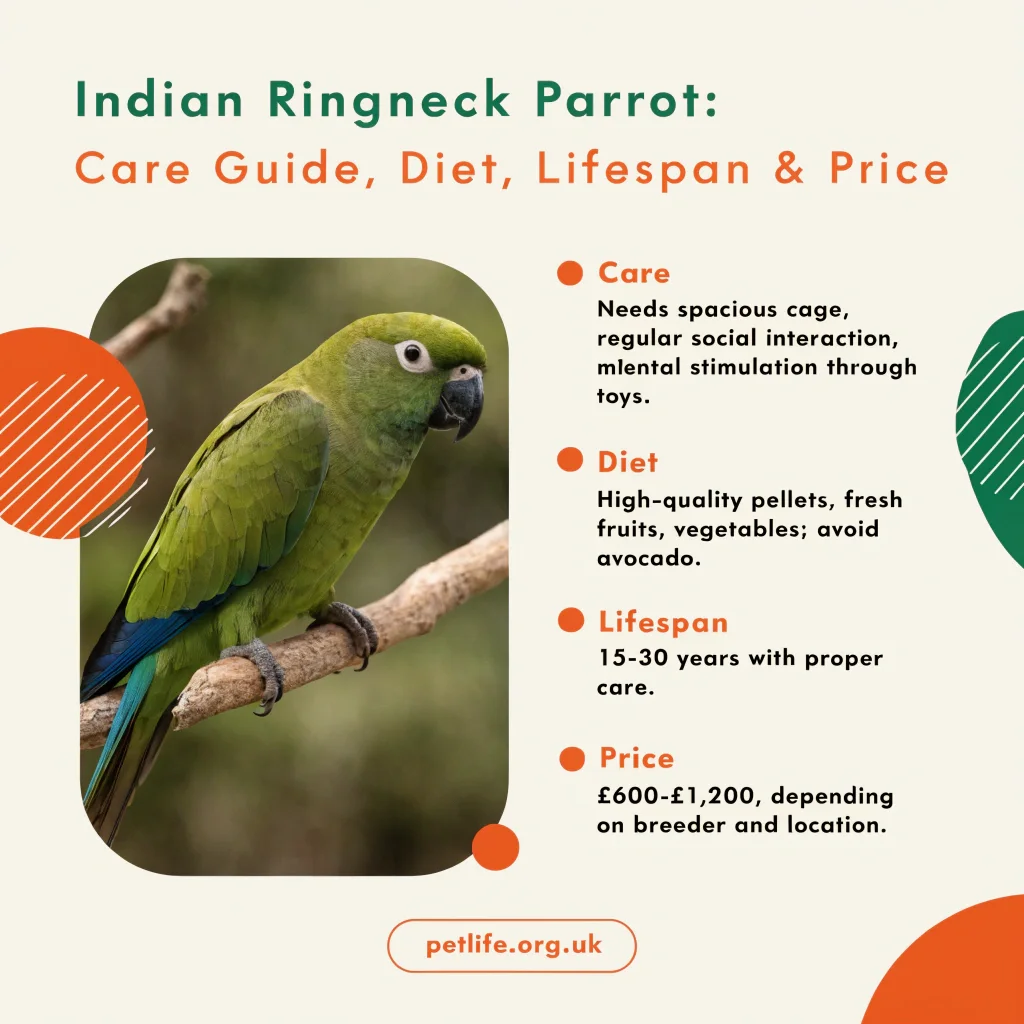
The Indian Ringneck Parrot is one of the most popular pet birds in the world. Known for its bright colors, intelligence, and talking ability, this bird has earned a special place among bird lovers. Whether you are considering your first Indian Ringneck or already own one, understanding its care, behavior, diet, and lifespan can help you provide a better Pet life for your feathered companion.
Also known as the Indian Ringneck Parakeet, this bird belongs to the species Psittacula krameri. It is closely related to the Rose-Ringed Parakeet and is native to parts of Asia and Africa. Over the years, selective breeding has produced many beautiful color mutations, making Indian Ringnecks even more popular in aviculture.
Quick Facts About Indian Ringneck Parrots
| Feature | Details |
| Common Name | Indian Ringneck Parrot |
| Other Names | Indian Ringneck Parakeet, Ring-necked Parakeet, Ring Neck Parrot |
| Scientific Name | Psittacula krameri |
| Family | Psittaculidae |
| Origin | India, Pakistan, Sri Lanka, and parts of Africa |
| Adult Size | 14–17 inches (35–43 cm) |
| Weight | 115–140 grams |
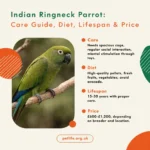
| Average Lifespan | 20–30 years (up to 35+ years with excellent care) |
| Talking Ability | Excellent; known for a clear vocabulary and mimicry |
| Temperament | Intelligent, curious, active, independent, and playful |
| Difficulty Level | Moderate |
| Diet | Pellets, fresh vegetables, fruits, seeds, and grains |
| Colors | Green (wild type), Blue, Lutino, Albino, Cinnamon, Grey, Violet, and other mutations |
| Best For | Experienced beginners and intermediate bird owners |
| Noise Level | Moderate to High |
| Exercise Needs | 2–4 hours of supervised out-of-cage time daily |
What Is an Indian Ringneck Parrot?
The Indian Ringneck Parrot is a medium-sized parakeet known for its long tail, graceful appearance, and remarkable ability to mimic human speech. Many people refer to it as a ringneck bird, ring neck parrot, or simply a ringneck.
The species is part of the parrot family and has been kept as a companion bird for hundreds of years. Today, Indian Ringneck birds are popular among both beginner and experienced bird owners.
Indian Ringneck Parrot or Parakeet?
Many people wonder whether the Indian Ringneck is a parrot or a parakeet.
The answer is both.
A parakeet is simply a type of small to medium-sized parrot with a long tail. Since the Indian Ringneck has a long tail and belongs to the parrot family, it is correctly called both an Indian Ringneck Parrot and an Indian Ringneck Parakeet.
Scientific Classification
- Kingdom: Animalia
- Class: Aves
- Order: Psittaciformes
- Family: Psittaculidae
- Genus: Psittacula
- Species: Psittacula krameri
The scientific name Psittacula krameri is often used in bird guides and breeding records.
Origin and Natural Habitat
Indian Ringnecks are native to:
- India
- Pakistan
- Sri Lanka
- Bangladesh
- Parts of Africa
In the wild, these birds live in forests, farmland, parks, and urban areas. They adapt well to different environments, which explains why populations of ringed parakeets can now be found in many countries outside their native range.
Rose-Ringed Parakeet and Indian Ringneck Relationship
The Indian Ringneck is a subspecies of the Rose-Ringed Parakeet. While the terms are often used interchangeably, bird enthusiasts usually use “Indian Ringneck” when discussing pet birds and captive breeding programs.
Indian Ringneck Parrot Appearance
One reason Indian Ringnecks are so popular is their elegant appearance.
Their slim bodies, long tail feathers, and bright colors make them stand out among companion birds.
Size and Weight
An adult Indian Ringneck typically reaches:
- Length: 14 to 17 inches
- Weight: 115 to 140 grams
- Wingspan: Around 6 to 7 inches
Most of their length comes from their long tail feathers.
Male vs Female Indian Ringneck
Male and female Indian Ringnecks can look very similar when young.
Adult males usually develop a distinct neck ring between 18 months and 3 years of age. This ring often appears black and rose-colored.
Female Indian Ringneck parrots generally do not develop a full ring. Some females may show a faint shadow around the neck, but it is much less noticeable than in males.
When Does the Neck Ring Appear?
The famous ring around the neck develops gradually as males mature.
Most male Indian Ringnecks begin showing signs of the ring between:
- 18 months
- 24 months
- 36 months
The timing varies from bird to bird.
Indian Ringneck Growth Stages
Hatchling Stage
Newly hatched chicks are completely dependent on their parents.
Baby Ringneck Stage
At this stage, feathers begin to develop and the bird becomes more active.
Juvenile Stage
Young birds learn social skills, flying, and feeding behaviors.
Adult Stage
Adult Indian Ringnecks reach full size and show mature coloration and behavior.
Indian Ringneck Parrot Colors
One of the biggest attractions of Indian Ringnecks is the wide range of colors available today.
Green Indian Ringneck
The green Indian Ringneck is the natural wild-type color. It features bright green feathers with a red beak and a striking neck ring in mature males.
Blue Indian Ringneck Parrot
The blue Indian Ringneck parrot is one of the most sought-after color mutations. Its bright blue plumage creates a stunning appearance that many bird owners love.
Yellow Indian Ringneck Parrot
Yellow Indian Ringnecks often display vibrant yellow feathers with red eyes depending on their genetic background.
White Indian Ringneck Parrot
The white Indian Ringneck parrot has an elegant appearance and is highly valued among breeders.
Violet Ringneck
The violet ringneck displays rich purple-blue coloration. This mutation is considered one of the more visually striking varieties.
Albino Ringneck Parrot
Albino Ringnecks have white feathers, red eyes, and a light-colored beak. They result from specific genetic combinations.
Rare Indian Ringneck Color Mutations
Some uncommon color mutations include:
- Cinnamon
- Pallid
- Grey
- Turquoise
- Lacewing
- Emerald
- Creamino
Because of their rarity, these birds often command higher prices.
Indian Ringneck Parrot Lifespan
The Indian Ringneck Parrot lifespan is one of the reasons many people choose this species.
With proper care, these birds can remain companions for decades.
Average Lifespan in Captivity
Most healthy Indian Ringnecks live between:
- 20 and 30 years
Some birds have exceeded 30 years when given excellent nutrition, veterinary care, and enrichment.
Lifespan in the Wild
Wild Indian Ringnecks generally have shorter lifespans due to:
- Predators
- Disease
- Harsh weather
- Food shortages
Indian Ringneck Parrot Lifespan Male vs Female
There is no significant difference between the lifespan of male and female Indian Ringnecks. Diet, genetics, housing, and healthcare have a much greater impact than gender.
Factors That Affect Lifespan
Several factors influence longevity:
- Balanced nutrition
- Clean housing
- Daily exercise
- Mental stimulation
- Regular veterinary care
- Safe living conditions
Birds that receive proper care often enjoy longer and healthier lives.
Indian Ringneck Personality and Behavior
Indian Ringnecks are known for their intelligence and independent nature.
Unlike some parrots that constantly seek attention, Ringnecks often enjoy interacting on their own terms.
Are Indian Ringnecks Good Pets?
Yes, Indian Ringnecks can make excellent pets for the right owner.
They are:
- Intelligent
- Curious
- Playful
- Entertaining
- Capable of learning many words
However, they also require daily interaction and mental stimulation.
People looking for a bird that enjoys learning tricks and communicating often find Indian Ringnecks rewarding companions.
Are Indian Ringnecks Easy to Tame?
Indian Ringnecks can be tamed successfully when handled consistently from a young age.
Patience is important.
Building trust through positive experiences usually produces better results than forcing interaction.
Bonding With Your Indian Ringneck
Developing a strong relationship takes time.
Helpful bonding activities include:
- Daily interaction
- Hand-feeding healthy treats
- Training sessions
- Talking calmly to your bird
- Respecting personal space
Trust grows gradually through positive experiences.
Do Indian Ringneck Parrots Talk?
One of the biggest reasons people choose an Indian Ringneck Parrot is its ability to talk. These birds are considered some of the best talking parakeets in the world.
Many Indian Ringnecks can learn dozens or even hundreds of words. Some birds also learn short phrases and use them in the correct context.
Talking Ability
Indian Ringneck parrots have clear speech compared to many other pet birds. Their voices are easy to understand, which makes them popular among bird owners.
Not every bird will become a great talker, but many develop impressive vocabularies with regular training.
At What Age Do Ringnecks Start Talking?
Most Indian Ringnecks begin learning words between:
- 8 months
- 12 months
- 18 months
Some birds start earlier, while others take longer.
Consistency is more important than age. Birds that hear words and phrases repeatedly are more likely to mimic them.
Ringneck Parrot Talking Training Tips
To encourage speech development:
- Repeat simple words daily
- Use the same phrases consistently
- Reward positive responses
- Keep training sessions short
- Speak clearly and calmly
Patience is important. Some birds learn quickly, while others need more time.
Understanding Indian Ringneck Sounds
Indian Ringnecks communicate through different sounds.
Common sounds include:
- Contact calls
- Attention-seeking calls
- Happy chirping
- Alarm calls
- Mimicked words and sounds
Learning your bird’s vocal patterns helps you better understand its needs and emotions.
Indian Ringneck Care Guide
Proper Indian Ringneck care plays a major role in health, behavior, and lifespan.
These active birds need more than food and water. They require exercise, mental stimulation, and daily interaction.
Cage Requirements
Indian Ringnecks need a spacious cage.
A good cage should allow the bird to:
- Fully spread its wings
- Climb comfortably
- Move between perches easily
Larger cages are always better because these birds are very active.
Cage Placement
Place the cage in a part of the home where the family spends time.
Avoid:
- Direct sunlight all day
- Drafty windows
- Kitchens with cooking fumes
- Areas with sudden loud noises
A stable environment helps reduce stress.
Daily Exercise Needs
Indian Ringnecks need daily out-of-cage time whenever it is safe.
Exercise helps:
- Maintain healthy weight
- Prevent boredom
- Improve muscle strength
- Reduce behavioral issues
Aim for several hours of supervised activity each day.
Toys and Enrichment
Mental stimulation is just as important as physical exercise.
Good toy options include:
- Puzzle toys
- Foraging toys
- Climbing ropes
- Swings
- Wooden chew toys
Rotating toys regularly helps prevent boredom.
Grooming Requirements
Basic grooming includes:
- Nail maintenance
- Occasional beak checks
- Regular bathing opportunities
- Feather inspections
Many Ringnecks enjoy mist baths or shallow bathing dishes.
Safe Environment Setup
Keep your bird away from:
- Toxic plants
- Open windows
- Ceiling fans
- Scented candles
- Smoke
- Non-stick cookware fumes
A safe home environment reduces the risk of accidents and illness.
Indian Ringneck Parrot Food Guide
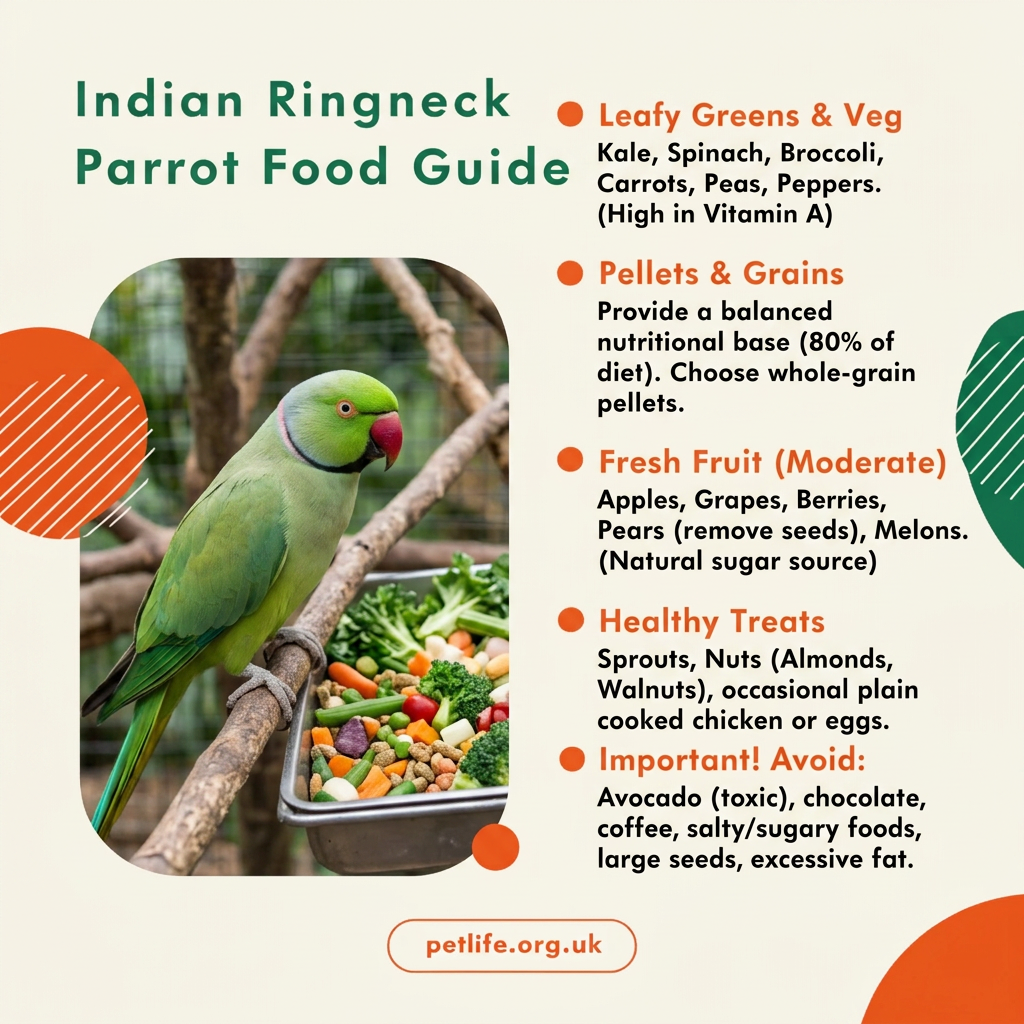
A balanced diet is one of the most important parts of Indian Ringneck care.
Poor nutrition can lead to obesity, vitamin deficiencies, and other health problems.
What Do Indian Ringnecks Eat?
In the wild, Indian Ringnecks eat a variety of foods, including:
- Seeds
- Fruits
- Berries
- Flowers
- Vegetation
- Grains
Pet birds should receive a similarly varied diet.
Best Food for Indian Ringneck Parrot
A healthy diet should include:
- High-quality pellets
- Fresh vegetables
- Fresh fruits
- Limited seeds
- Healthy grains
Pellets should form the foundation of the diet, while fresh foods provide variety and nutrition.
Indian Ringneck Food List
Safe foods include:
Vegetables
- Carrots
- Broccoli
- Bell peppers
- Green beans
- Spinach
- Kale
Fruits
- Apples
- Mango
- Papaya
- Blueberries
- Pomegranate
- Pears
Healthy Grains
- Brown rice
- Oats
- Quinoa
- Whole wheat pasta
Foods to Avoid
Never feed:
- Chocolate
- Avocado
- Alcohol
- Caffeine
- Onion
- Garlic
- Excessive salt
These foods can be dangerous or toxic to parrots.
Feeding Schedule
Most owners provide:
- Fresh food in the morning
- Pellets throughout the day
- Healthy treats during training
Remove spoiled fresh food after a few hours.
Training an Indian Ringneck Parrot
Indian Ringnecks are highly intelligent birds that respond well to positive reinforcement training.
How to Train a Baby Indian Ringneck
Start training early using:
- Gentle handling
- Short sessions
- Consistent rewards
Young birds often learn faster because they are still exploring their environment.
Step-Up Training
The step-up command teaches the bird to step onto your hand.
This basic behavior makes daily handling much easier.
Recall Training
Recall training teaches the bird to fly or walk to you when called.
This improves safety and strengthens trust.
Speech Training
Talking practice works best when:
- Words are repeated often
- Sessions remain positive
- The bird receives attention for participation
Socialization Tips
Expose your bird to:
- Different people
- Safe environments
- New toys
- Daily routines
Proper socialization helps create a confident companion.
Baby Indian Ringneck Care
Young birds need special care during their early development.
Caring for a Young Ringneck
Baby Indian Ringnecks require:
- Proper nutrition
- Warm housing
- Gentle handling
- Regular observation
Weaning Process
The weaning period is when chicks transition from formula to solid foods.
This stage should never be rushed.
A properly weaned bird usually develops better eating habits and confidence.
Early Socialization
Positive experiences during the first months help create a friendly and adaptable bird.
Common Mistakes New Owners Make
Common errors include:
- Forcing interaction
- Poor diet choices
- Inadequate cage size
- Lack of training
- Too little enrichment
Avoiding these mistakes improves long-term success.
Indian Ringneck Health and Common Diseases
Healthy birds are active, alert, and curious.
Recognizing problems early can improve treatment outcomes.
Signs of a Healthy Ringneck
A healthy bird typically has:
- Bright eyes
- Clean feathers
- Good appetite
- Normal droppings
- Active behavior
Common Health Problems
Potential issues include:
- Respiratory infections
- Feather plucking
- Nutritional deficiencies
- Obesity
- Parasites
- Beak abnormalities
When to Visit an Avian Vet
Seek veterinary care if you notice:
- Sudden weight loss
- Difficulty breathing
- Loss of appetite
- Changes in droppings
- Extreme lethargy
Early treatment is often more effective.
Preventive Care Tips
Good preventive care includes:
- Balanced nutrition
- Clean housing
- Routine health checks
- Exercise
- Mental stimulation
Indian Ringneck Breeding Guide
Indian Ringneck breeding is popular among experienced bird keepers.
Breeding Age
Most birds reach breeding maturity between:
- 2 years
- 3 years
Nesting Requirements
Breeding pairs need:
- A secure nest box
- Privacy
- Proper nutrition
- Clean housing
Egg Laying and Incubation
A female may lay several eggs per clutch.
Incubation generally lasts around three to four weeks.
Breeding Challenges
Breeders may encounter:
- Infertile eggs
- Poor parenting behavior
- Aggression
- Chick health concerns
Careful planning is important before breeding any parrots.
Indian Ringneck Parrot Price
Price varies significantly based on age, location, and color mutation.
How Much Does a Ringneck Parrot Cost?
The average price of an Indian Ringneck is a few hundred to several thousand dollars. This price depends on the mutation and the breeder’s reputation.
Indian Ringneck Price by Color
Generally:
- Green birds are often the most affordable
- Blue birds usually cost more
- Violet, albino, and rare mutations may command premium prices
Indian Ringneck Parrot Price in India
Prices in India vary by:
- City
- Mutation
- Breeder
- Availability
Rare colors often cost considerably more than standard green birds.
Factors Affecting Cost
Several factors influence price:
- Genetics
- Age
- Color mutation
- Tameness
- Breeding quality
Monthly Care Expenses
Owners should also budget for:
- Food
- Toys
- Veterinary care
- Cage maintenance
- Emergency expenses
Indian Ringneck Parrot for Sale
If you plan to buy an Indian Ringneck parrot, take time to research breeders carefully.
How to Choose a Healthy Bird
Look for:
- Bright eyes
- Clean feathers
- Active behavior
- Good appetite
Questions to Ask a Breeder
Ask about:
- Age
- Diet
- Health history
- DNA sexing
- Socialization
Adoption vs Buying
Adoption can be an excellent option.
Many healthy parrots need experienced homes and can make wonderful companions.
Red Flags to Avoid
Avoid sellers who:
- Refuse health information
- Keep birds in poor conditions
- Rush the sale process
Indian Ringneck Parrot vs Alexandrine
Many bird enthusiasts compare the Indian Ringneck Parrot and the Alexandrine Parakeet.
Size Comparison
The Alexandrine Parakeet is larger and heavier than the Indian Ringneck.
Personality Comparison
Indian Ringnecks tend to be more independent.
Alexandrines are often described as slightly calmer and more affectionate.
Talking Ability Comparison
Both species are capable talkers.
Indian Ringnecks are especially known for clear speech and large vocabularies.
Care Differences
Alexandrines require more space due to their larger size.
Diet and basic care requirements are similar.
Which Bird Is Better for Beginners?
Many first-time owners find Indian Ringnecks easier to manage because of their smaller size.
However, success depends more on the owner’s commitment than the species itself.
Indian Ringneck Parrots in the Wild
Wild populations continue to thrive in many regions.
Distribution Around the World
Ringed parakeets can be found in:
- India
- Pakistan
- Sri Lanka
- Africa
- Parts of Europe
- The Middle East
Habitat
They occupy:
- Forests
- Agricultural areas
- Parks
- Urban environments
Wild Diet
Wild birds eat:
- Fruits
- Seeds
- Flowers
- Grains
- Vegetation
Population Trends
The species remains widespread and adaptable.
Conservation Status
The Rose-Ringed Parakeet is currently considered a species of least concern due to its large global population.
Pros and Cons of Owning an Indian Ringneck
Advantages
- Excellent talking ability
- Beautiful colors
- Long lifespan
- High intelligence
- Entertaining personality
Challenges
- Requires daily interaction
- Can become noisy
- May develop behavioral problems when bored
- Long-term commitment
Who Should Own One?
Indian Ringnecks are best suited for people who can provide daily attention, proper housing, and long-term care.
Frequently Asked Questions
Q1. Is an Indian Ringneck Parrot a Good Pet?
Yes. Indian Ringnecks can be excellent pets for owners who understand their social and mental needs.
Q2. How Much Does a Ringneck Parrot Cost?
Prices vary widely depending on color, age, and breeder quality.
Q3. Do Indian Ringneck Parrots Talk?
Yes. They are among the best talking parakeets and can learn a large vocabulary.
Q4. Which Bird Is Price 1 Lakh?
Rare parrot mutations, premium breeding birds, and some exotic species can sometimes reach or exceed this price range.
Q5. How Long Do Indian Ringneck Parrots Live?
Most live between 20 and 30 years with proper care.
Q6. Can Indian Ringnecks Live Alone?
Yes, but they still need daily interaction and mental stimulation from their owners.
Q7. Are Indian Ringnecks Loud?
They can be vocal, especially during certain times of the day, but are generally quieter than many large parrots.
Q8. Can Indian Ringnecks Learn Tricks?
Yes. Their intelligence allows them to learn tricks, commands, and problem-solving activities.
Final Thoughts on the Indian Ringneck Parrot
The Indian Ringneck Parrot combines beauty, intelligence, and personality in a way few companion birds can match. The classic green Indian Ringneck is popular. It comes in beautiful blue, violet, white, and yellow mutations. These birds attract bird lovers all over the world.
With good nutrition and training, an Indian Ringneck can be a loyal friend. Socialization and vet care help, too. This bird can stay with you for many years. They talk well. They have a fun personality. Their looks are eye-catching. This makes them one of the best parrots for devoted owners.
Before bringing one home, make sure you understand the time, care, and commitment required. A well-cared-for Indian Ringneck is not just a pet. It can become a valued member of the family for many years.