
The Caique Parrot is one of the most playful and energetic pet birds you can own. Often called the “clown bird”, this colorful parrot is known for its funny personality, endless curiosity, and love of jumping, climbing, and playing. Unlike many other parrots, caiques spend more time hopping around than flying, making them entertaining companions for families and experienced bird owners.
Native to the rainforests of South America, caiques belong to the Pionites genus and are available in two main species: the Black-Headed Caique (Pionites melanocephalus) and the White-Bellied Caique (Pionites leucogaster). Both are intelligent, social, and active birds that need daily interaction and mental stimulation to stay healthy and happy.
Although they are not the best talking parrots, they make up for it with their playful behavior, strong bonds with their owners, and lively personalities. With proper care, a balanced diet, regular exercise, and routine checkups from an avian veterinarian, a caique can live for decades.
This guide covers everything you need to know about the Caique Parrot, including its personality, lifespan, diet, care requirements, cage setup, talking ability, and whether it is the right pet for your home.
Quick Facts About Caique Parrots
| Feature | Details |
| Common Name | Caique Parrot |
| Scientific Name | Pionites species |
| Other Names | Clown Bird |
| Family | Psittacidae |
| Adult Size | 9–10 inches (23–25 cm) |
| Weight | 150–170 grams |
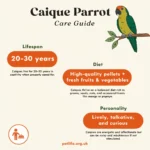
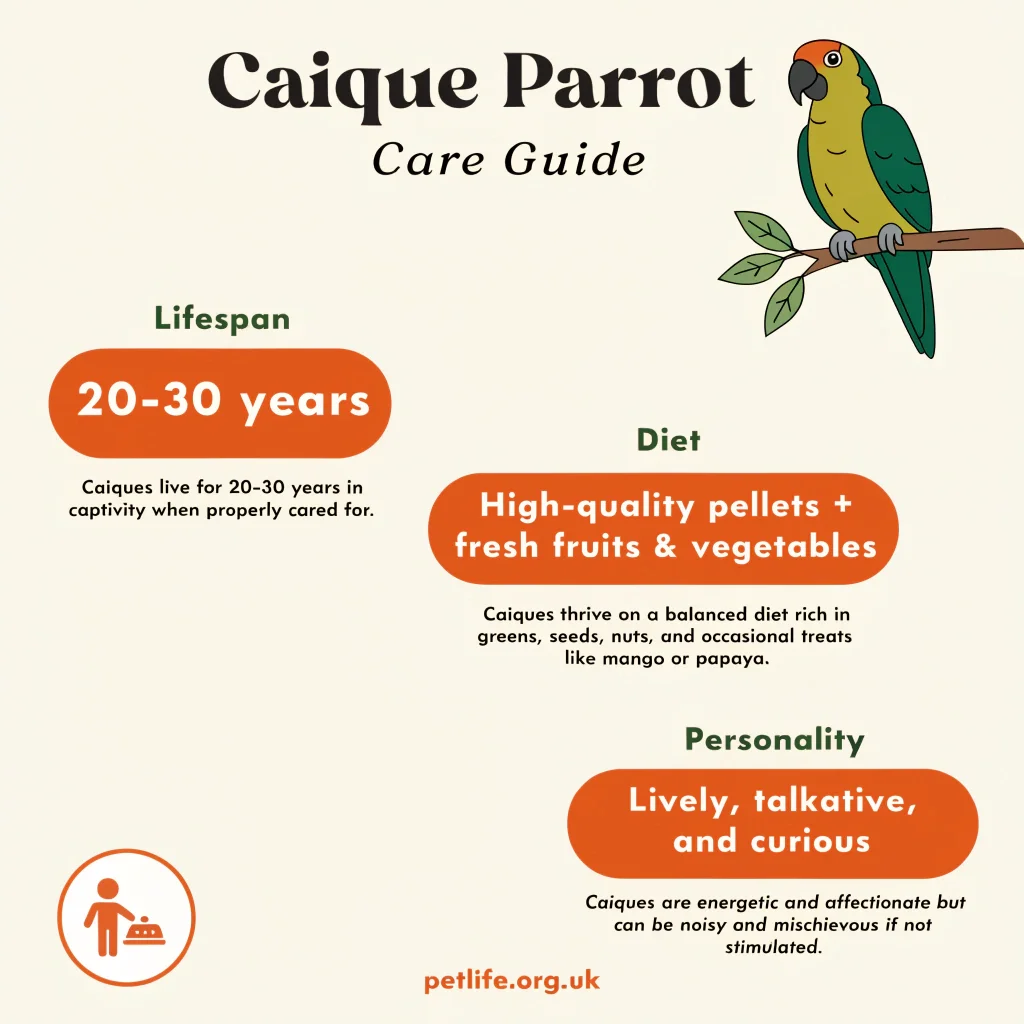
| Lifespan | 25–40 years with proper care |
| Talking Ability | Moderate |
| Noise Level | Moderate |
| Temperament | Playful, energetic, curious, social |
| Difficulty Level | Moderate |
| Best For | Experienced bird owners and active families |
What Is a Caique Parrot?
The Caique Parrot is a medium-sized parrot that comes from the tropical forests of South America. It is admired for its bright feathers, lively behavior, and playful nature. Caiques are highly social birds that enjoy spending time with people and need daily attention to stay mentally healthy.
One reason caiques are so popular is their unique way of moving. Instead of flying from place to place all the time, they often hop, climb, and bounce across branches, furniture, and play stands. Their funny movements have earned them the nickname “clown bird parrot.”
The word “caique” is commonly pronounced as “kah-eek.” If you’re searching for the caique pronunciation, this is the accepted English pronunciation used by bird experts.
These parrots are naturally curious and enjoy exploring everything around them. They love puzzle toys, climbing ropes, ladders, swings, and interactive games that challenge their minds.
Because of their active lifestyle, caiques require more daily playtime than many other pet birds. They are happiest in homes where they receive regular interaction, training, and opportunities to explore outside the cage.
Why Are Caiques Called Clown Birds?
Caiques have earned the nickname clown birds because they constantly entertain their owners with playful actions. Many enjoy rolling onto their backs, hopping across the floor, hanging upside down from toys, and inventing funny games. Their bold personalities make them one of the most entertaining companion parrots.
Types of Caiques
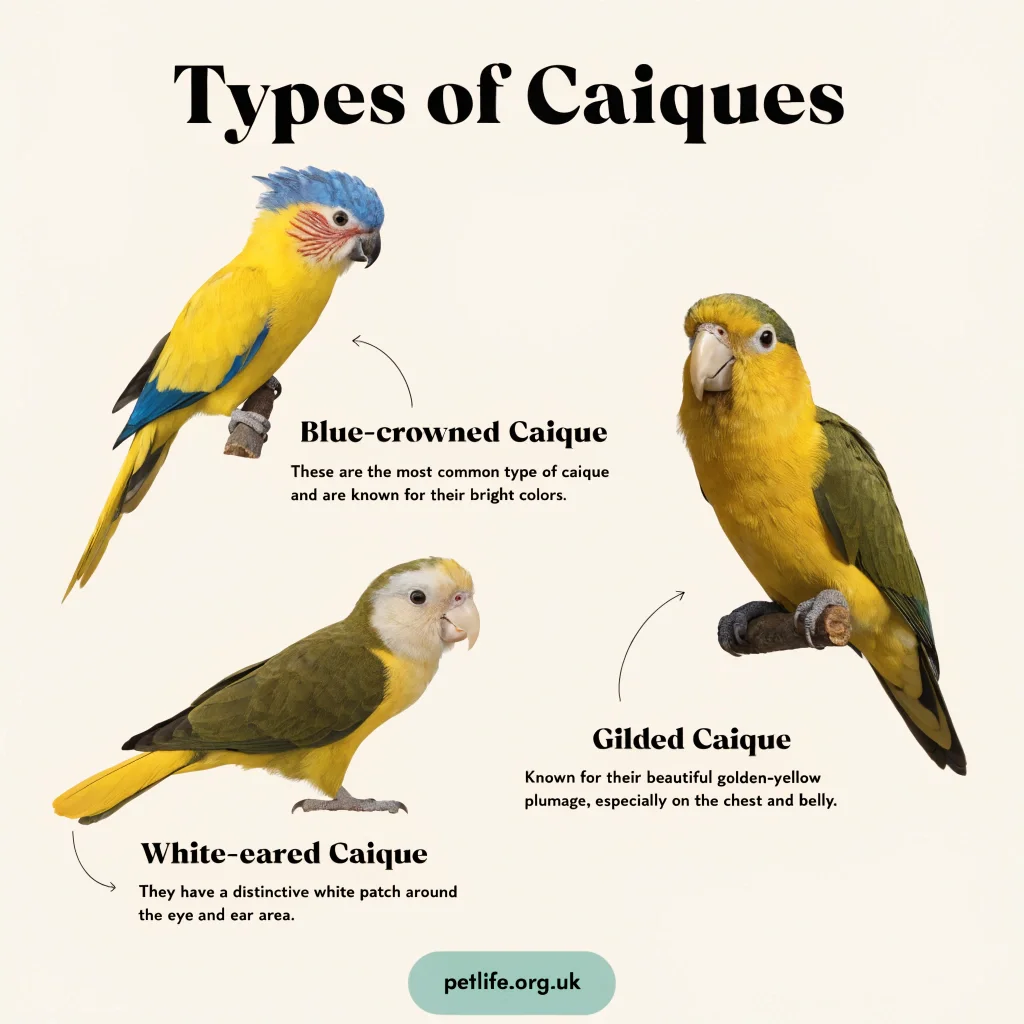
There are two main types of caiques commonly kept as pets. Both have similar care requirements but differ slightly in appearance and color.
White-Bellied Caique
The White-Bellied Caique (Pionites leucogaster) is one of the most colorful parrots available. It has a bright white chest and belly, green wings, orange-yellow legs, and a colorful head that may include shades of orange and yellow depending on the subspecies.
White-Bellied Caique at a Glance
- Bright white chest and belly
- Green wings and back
- Orange or yellow thighs
- Friendly and playful personality
- Lifespan of around 25 to 40 years with proper care
Many bird lovers choose the White-Bellied Caique because of its striking appearance and energetic nature.
Black-Headed Caique
The Black-Headed Caique (Pionites melanocephalus) is another popular pet bird. As its name suggests, it has a glossy black head with bright green wings, a white belly, and orange-yellow legs.
This species is equally playful, intelligent, and active. Many owners find the Black-Headed Caique slightly more common in the pet trade, although both species have very similar personalities.
Black-Headed Caique at a Glance
- Black head
- White chest
- Green wings
- Orange-yellow legs
- Highly social and curious
White-Bellied Caique vs Black-Headed Caique
| Feature | White-Bellied Caique | Black-Headed Caique |
| Scientific Name | Pionites leucogaster | Pionites melanocephalus |
| Head Color | Orange to yellow | Black |
| Belly | White | White |
| Wings | Green | Green |
| Personality | Playful and energetic | Playful and energetic |
| Lifespan | 25–40 years | 25–40 years |
| Care Needs | Similar | Similar |
For most owners, choosing between these two species comes down to personal preference, as both make wonderful companion parrots when properly cared for.
Caique Parrot Appearance
Caiques are compact, muscular parrots with bright plumage and expressive eyes. Their colorful feathers make them easy to recognize among other medium-sized pet birds.
Size
Adult caiques usually measure 9 to 10 inches (23–25 cm) from the beak to the end of the tail.
Weight
A healthy adult bird generally weighs between 150 and 170 grams, although slight differences are normal.
Feather Colors
Depending on the species, a caique may display:
- Bright green wings
- White chest and belly
- Orange or yellow thighs
- Black, yellow, or orange head
- Pale horn-colored beak
- Dark eyes surrounded by light feathering
Their short tail and sturdy body help them climb with confidence rather than relying only on flight.
Male vs Female
Male and female caiques look almost identical. Their feathers, body size, and coloration are so similar that visual identification is usually impossible.
The most reliable way to determine a bird’s sex is through DNA testing or examination by an experienced avian veterinarian.
Native Habitat and Distribution
Caiques are native to the tropical rainforests of South America. They spend much of their lives high in the forest canopy, where they forage for fruits, seeds, flowers, berries, and other plant material.
Wild populations are found in several countries, including:
- Brazil
- Peru
- Colombia
- Ecuador
- Venezuela
- Bolivia
- Guyana
- Suriname
- French Guiana
These parrots prefer humid forests near rivers and wooded regions with abundant food sources. They usually travel in pairs or small family groups and communicate through whistles and calls while moving through the trees.
Although many pet caiques today are captive-bred, protecting their natural habitats remains important for maintaining healthy wild populations.
Caique Personality and Temperament
The Caique Parrot is famous for its lively personality. If you are looking for a quiet bird that spends most of the day sitting still, a caique may not be the right choice. These parrots are constantly exploring, climbing, chewing, and looking for something fun to do.
Their playful nature has made them one of the most loved companion parrots around the world.
Personality Traits
- Extremely playful
- Curious about everything
- Highly intelligent
- Confident
- Social with family members
- Active throughout the day
- Loves climbing more than flying
- Enjoys puzzle toys and games
Caiques often form strong bonds with their favorite people. Daily interaction helps build trust and keeps them emotionally healthy.
Because they have plenty of energy, they also need regular enrichment. Without enough attention, exercise, and toys, they may become bored and develop unwanted behaviors such as excessive chewing or nipping.
Are Caique Parrots Good Pets?
Yes, caiques can make excellent pets for owners who have enough time to meet their social and physical needs.
They are best suited for people who:
- Want an active companion bird
- Can spend several hours interacting each day
- Enjoy training and enrichment activities
- Have experience caring for parrots or are willing to learn
They may not be the best choice for someone looking for a quiet, low-maintenance pet.
Can Caique Parrots Talk?
Caiques can learn to imitate a few words and short phrases, but they are not considered strong talking parrots like African Greys or Amazon Parrots.
Instead of building a large vocabulary, they are better known for their playful sounds, whistles, chirps, and funny vocal expressions.
Some caiques learn:
- Simple words
- Family names
- Short greetings
- Whistles
- Household sounds
Each bird is different. Some may learn several words with consistent training, while others prefer communicating through body language and playful vocalizations.
Using positive reinforcement, daily repetition, and short training sessions can help improve a caique’s ability to mimic sounds. Even if your bird never becomes a skilled talker, its energetic personality and entertaining behavior often become its biggest attraction.
Caique Parrot Lifespan
One of the biggest reasons people choose a Caique Parrot is its long lifespan. Bringing home a caique is a long-term commitment. With proper care, these birds can become lifelong companions and may even be part of your family for several decades.
Several factors affect a caique’s lifespan, including diet, exercise, genetics, housing, and veterinary care. Birds that receive a balanced diet, daily mental stimulation, and regular health checkups usually live much longer than those with poor care.
How Long Do Caique Parrots Live?
A healthy caique parrot lifespan is typically:
| Environment | Average Lifespan |
| In the Wild | 20–30 years |
| In Captivity | 25–40 years |
Many captive-bred caiques reach their 30s, and some live even longer when they receive excellent care throughout their lives.
How to Help Your Caique Live Longer
Simple daily habits can make a big difference in your bird’s health.
- Feed a balanced diet based on quality pellets.
- Offer fresh vegetables and fruits every day.
- Provide clean drinking water.
- Give at least two to four hours of supervised exercise outside the cage.
- Schedule routine checkups with an avian veterinarian.
- Keep the cage clean and dry.
- Provide mental enrichment with toys and training.
- Avoid cigarette smoke, toxic fumes, and non-stick cookware fumes.
Healthy birds are active, alert, curious, and maintain bright feathers and a healthy body weight.
Caique Diet and Nutrition
A healthy diet is one of the most important parts of caique care. These energetic parrots burn plenty of energy throughout the day, so they need nutritious food to support their active lifestyle.
In the wild, caiques eat a wide variety of fruits, seeds, blossoms, berries, nuts, and plant material. Pet birds should have a balanced diet that closely matches their nutritional needs.
What Should a Caique Eat?
A balanced daily diet should include:
- High-quality pelleted bird food
- Fresh vegetables
- Fresh fruits
- Healthy grains
- Cooked legumes
- Small amounts of nuts and seeds
- Fresh drinking water
Pellets should make up most of the diet because they provide complete nutrition.
Best Vegetables
Offer a variety of vegetables, such as:
- Carrots
- Broccoli
- Bell peppers
- Spinach
- Kale
- Green beans
- Sweet potato
- Peas
Rotate vegetables regularly to provide different vitamins and minerals.
Best Fruits
Fresh fruit should be served in moderation because it contains natural sugars.
Good choices include:
- Apples (without seeds)
- Mango
- Papaya
- Blueberries
- Strawberries
- Grapes
- Pears
- Bananas
Healthy Treats
Occasionally offer:
- Almonds
- Walnuts
- Pistachios (unsalted)
- Pumpkin seeds
- Sunflower seeds in moderation
Treats should not replace a balanced diet.
Foods to Avoid
Never feed your caique:
- Chocolate
- Avocado
- Onion
- Garlic
- Alcohol
- Caffeine
- Fruit pits
- Apple seeds
- Salty foods
- Sugary snacks
These foods can be dangerous or even toxic to parrots.
Sample Daily Feeding Schedule
| Time | Food |
| Morning | Pellets with fresh vegetables |
| Afternoon | Fruits and foraging treats |
| Evening | Pellets with a small amount of healthy seeds |
Fresh water should always be available and replaced daily.
Caique Cage Requirements
Because caiques are extremely active, they need plenty of space to climb, play, and exercise. A small cage can lead to boredom and frustration.
Choosing the right caique cage size is just as important as choosing the right food.
Recommended Cage Size
A single caique should have a cage that is at least:
- 24 inches wide
- 24 inches deep
- 36 inches tall
Larger cages are always better, especially if your bird spends several hours inside during the day.
Bar spacing should be about ½ to ¾ inch to prevent injury.
Cage Essentials
A well-equipped cage should include:
- Natural wood perches
- Rope perches
- Food and water bowls
- Climbing ladders
- Swings
- Chewing toys
- Foraging toys
- Shreddable toys
Rotating toys every few weeks helps keep your bird interested and mentally stimulated.
Cage Placement
Place the cage:
- In a bright room with natural daylight
- Away from direct drafts
- Away from kitchens and cooking fumes
- Where family members spend time
Caiques enjoy being part of daily household activities without being in constant high-traffic areas.
Cleaning Routine
A clean environment helps prevent illness.
Daily:
- Replace food and water
- Remove leftover fruits and vegetables
- Clean obvious droppings
Weekly:
- Wash bowls thoroughly
- Clean perches
- Wipe cage bars
- Disinfect toys when needed
Exercise and Mental Stimulation
Caiques are among the most energetic pet parrots. Their playful personality means they require daily exercise to stay healthy both physically and mentally.
Without enough activity, they can become bored and may develop unwanted behaviors.
Daily Exercise Needs
Aim for at least 2 to 4 hours of supervised time outside the cage every day.
During playtime, your caique should have opportunities to:
- Climb
- Hop
- Explore
- Fly safely if flighted
- Play with toys
- Interact with family members
Best Toys for Caiques
Because they love chewing and problem-solving, good toy choices include:
- Puzzle toys
- Wooden chew toys
- Foraging toys
- Bells
- Rope toys
- Climbing nets
- Activity gyms
Changing toys regularly helps prevent boredom.
Mental Enrichment
Mental stimulation is just as important as physical exercise.
Simple enrichment ideas include:
- Teaching new tricks
- Food puzzles
- Clicker training
- Hidden treats
- Rotating play stations
- Safe branches for climbing
These activities help keep an intelligent parrot engaged and confident.
Caique Grooming and Hygiene
Regular grooming helps your caique stay comfortable and healthy.
Fortunately, most grooming tasks are simple when done consistently.
Bathing
Many caiques enjoy bathing several times each week.
You can offer:
- A shallow dish of clean water
- Gentle misting with warm water
- A bird-safe shower perch
Allow feathers to dry naturally in a warm room.
Nail Care
A bird’s nails continue growing throughout its life.
Natural wood perches help wear them down, but some birds still need occasional trimming by an experienced avian veterinarian or trained bird groomer.
Beak Care
Healthy parrots usually keep their beaks in good condition by chewing natural wood, bird-safe branches, and toys.
An overgrown beak should always be examined by a veterinarian because it may indicate an underlying health problem.
Feather Care
Healthy feathers depend on:
- Good nutrition
- Regular bathing
- Proper humidity
- Adequate sleep
- Clean surroundings
A healthy caique should have bright, smooth feathers with minimal damage.
Common Health Problems
Although caiques are generally hardy birds, they can develop health issues if their diet, environment, or care is not suitable.
Recognizing problems early gives your bird the best chance of recovery.
Common Conditions
Some health problems seen in caiques include:
Obesity
Too many seeds and not enough exercise can cause unhealthy weight gain.
Vitamin Deficiencies
Poor diets lacking fresh vegetables and quality pellets may lead to nutritional deficiencies that affect feathers, bones, and overall health.
Feather Picking
Stress, boredom, illness, or lack of enrichment may cause some birds to damage their own feathers.
Respiratory Infections
Dust, poor ventilation, mold, or exposure to fumes can affect a bird’s breathing.
Psittacosis
This bacterial infection can affect parrots and requires prompt veterinary treatment.
Warning Signs
Contact an avian veterinarian if your caique shows:
- Loss of appetite
- Sitting quietly for long periods
- Difficulty breathing
- Fluffed feathers for extended periods
- Sudden weight loss
- Changes in droppings
- Balance problems
- Feather picking
- Unusual discharge from the eyes or nose
Birds naturally hide illness, so even small changes in behavior should be taken seriously.
Training a Caique Parrots
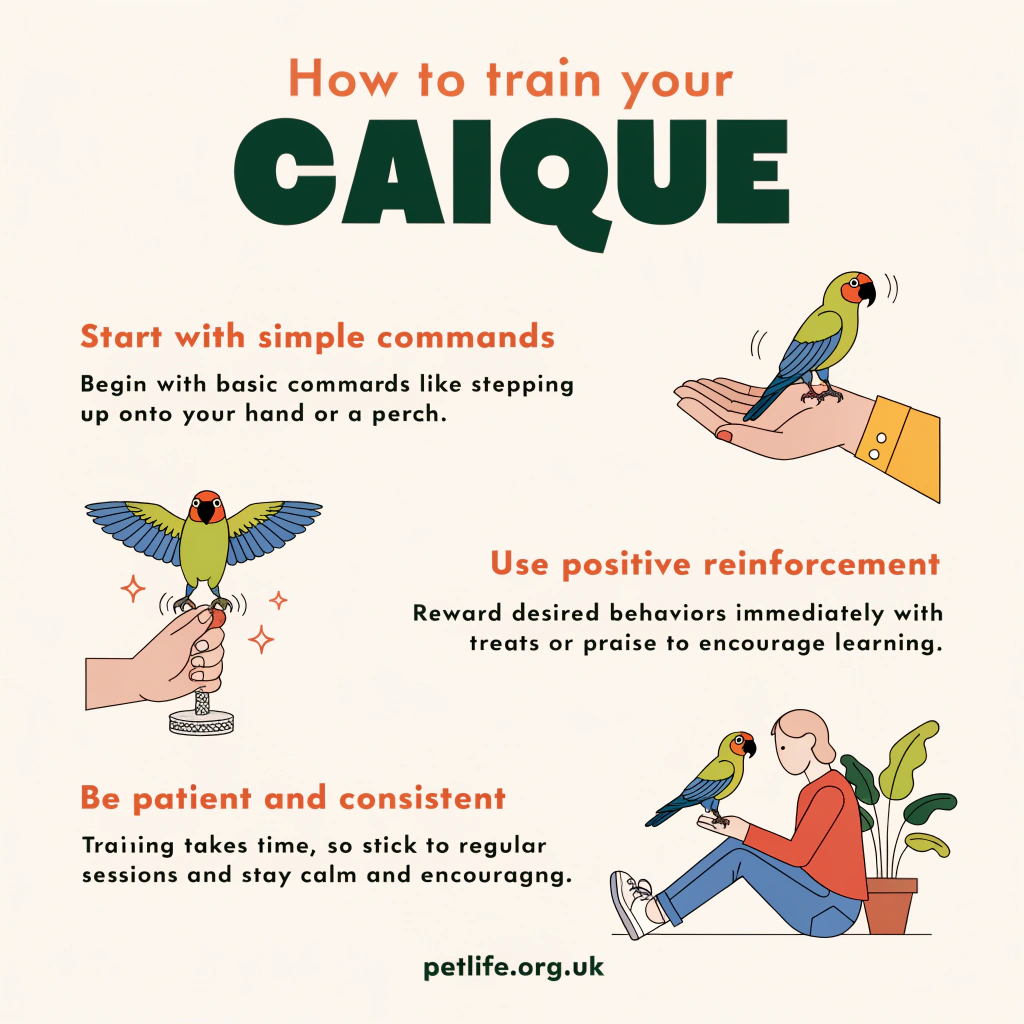
Caiques are intelligent birds that enjoy learning. Training not only teaches useful behaviors but also strengthens the bond between you and your pet.
Keep sessions short, fun, and rewarding.
Start with Basic Commands
Begin with simple skills like:
- Step Up
- Step Down
- Recall
- Target training
Reward good behavior with praise or a favorite healthy treat.
Positive Reinforcement
Always reward the behavior you want.
Avoid yelling or punishment, as this can damage trust and make training more difficult.
Consistency and patience produce the best results.
Preventing Biting
Young caiques may test boundaries by nipping.
To reduce biting:
- Learn your bird’s body language.
- Avoid forcing interaction.
- Give regular exercise.
- Provide plenty of toys.
- Reward calm behavior.
Most biting problems improve when birds receive enough attention and mental stimulation.
Breeding Caiques
Responsible breeding requires knowledge, planning, and proper care for both adult birds and chicks.
Most caique parrots reach breeding age between 3 and 5 years, although this can vary.
Breeding Basics
Successful breeding usually requires:
- A healthy bonded pair
- A spacious breeding cage or aviary
- A suitable nest box
- A nutritious breeding diet
- A quiet environment
The female typically lays 2 to 4 eggs, and incubation lasts around 24 to 27 days. Both parents usually help care for the chicks after they hatch.
Breeding should only be attempted by experienced keepers who can provide proper nutrition, veterinary care, and suitable homes for any young birds.
Caique Parrot Price
Before bringing home a Caique Parrot, it’s important to understand both the purchase price and the long-term cost of care. While caiques are not the most expensive pet parrots, they do require a significant financial commitment over their lifetime.
The price of a caique depends on several factors, including the bird’s age, species, breeder reputation, location, and whether it has been hand-raised and socialized.
Average Caique Parrot Price
| Country | Estimated Price Range |
| United States | $1,500–$3,000 |
| Canada | CAD 2,000–4,000 |
| United Kingdom | £1,200–£2,500 |
| India | ₹80,000–₹200,000+ |
| Pakistan* | Limited availability; prices vary depending on legal import status and breeder availability |
| Philippines | Prices vary based on breeder and availability |
Always check your local wildlife and import regulations before purchasing an exotic bird.
What Affects the Price?
Several factors can increase or decrease the cost of a caique.
- Bird species (White-Bellied or Black-Headed)
- Age
- Hand-fed or parent-raised
- DNA sexing
- Health records
- Breeder reputation
- Local demand
- Availability in your country
A well-socialized bird from a responsible breeder may cost more, but it often comes with better health, proper weaning, and early socialization.
Ongoing Costs
Owning a caique includes regular expenses beyond the initial purchase.
Expect to budget for:
- Quality pellets
- Fresh fruits and vegetables
- Cage and play stand
- Toys and enrichment
- Perches
- Routine veterinary care
- Emergency medical expenses
Planning for these costs helps ensure your bird receives proper care throughout its life.
Where to Buy or Adopt a Caique
If you decide a caique is the right bird for you, choose a trusted source rather than buying from an unknown seller.
Buy from a Responsible Breeder
A good breeder should:
- Raise healthy, well-socialized birds
- Answer your questions openly
- Provide health records when available
- Explain the bird’s diet and daily routine
- Allow you to see the bird’s living conditions when possible
Avoid buying a bird simply because it has the lowest price.
Bird Rescues and Adoption Centers
Many wonderful parrots need new homes due to changes in their owners’ lives.
Adopting from a bird rescue can:
- Give a bird a second chance
- Cost less than purchasing from a breeder
- Provide valuable support from rescue staff
Ask about the bird’s history, behavior, and medical needs before adopting.
Questions to Ask Before Bringing a Caique Home
Before making your decision, ask:
- Is the bird eating on its own?
- Has it been examined by an avian veterinarian?
- What foods does it currently eat?
- Has it been socialized with people?
- Does it have any known health concerns?
Taking time to ask these questions can help you find a healthy, well-adjusted companion.
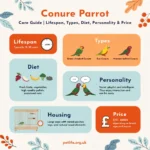
Caique vs Conure
Both caiques and conures are popular companion parrots. While they share some similarities, they have different personalities and care needs.
| Feature | Caique Parrot | Conure |
| Size | Medium | Small to medium |
| Energy Level | Very high | High |
| Talking Ability | Moderate | Low to moderate |
| Playfulness | Excellent | Excellent |
| Noise Level | Moderate | Moderate to high |
| Climbing Ability | Excellent | Good |
| Lifespan | 25–40 years | 20–30 years (varies by species) |
| Best For | Owners wanting an active, playful bird | Owners looking for an affectionate companion |
Which Bird Is Better?
There is no single “better” bird.
Choose a Caique Parrot if you want:
- A highly active bird
- Lots of playtime
- Interactive training
- A curious personality
Choose a conure if you prefer:
- A bird that enjoys cuddling
- A slightly easier introduction to parrot ownership
- A wider choice of species
The right choice depends on your lifestyle, experience, and the amount of time you can spend with your bird.
Pros and Cons of Owning a Caique Parrot
Every pet has strengths and challenges. Understanding both will help you make an informed decision.
Advantages
- Bright, beautiful colors
- Funny and entertaining personality
- Intelligent and easy to train
- Strong bond with family members
- Long lifespan
- Loves interactive play
- Enjoys learning tricks
- Active and engaging companion
Disadvantages
- Needs daily attention
- Requires regular mental stimulation
- Can become destructive when bored
- May nip during play
- Needs a spacious cage and quality toys
- Veterinary care can be expensive
- Long lifespan requires a long-term commitment
Owning a caique is rewarding, but it also requires time, patience, and consistent care.
Is a Caique the Right Pet for You?
A caique is not the right bird for everyone.
Before bringing one home, think honestly about your daily routine and whether you can meet its physical and emotional needs.
A Caique May Be Right for You If You:
- Have time to interact every day
- Enjoy training birds
- Want an active companion
- Can provide regular enrichment
- Are prepared for a long-term commitment
- Have enough space for a large cage and play area
A Caique May Not Be the Best Choice If You:
- Travel frequently
- Want a quiet pet
- Prefer a low-maintenance bird
- Cannot provide daily exercise
- Have very little free time
Choosing the right bird is about finding a species that fits your lifestyle rather than choosing the most colorful or popular one.
Frequently Asked Questions
Q1. Are Caique Parrots Good Pets?
Yes. Caiques are excellent pets for owners who can provide daily attention, enrichment, and regular interaction. Their playful personality makes them one of the most entertaining companion parrots.
Q2. Can Caique Parrots Talk?
Yes, but their talking ability is moderate. Most caiques learn a few words, short phrases, whistles, and everyday sounds rather than developing large vocabularies.
Q3. Are Caique Parrots Noisy?
They can be vocal, especially during the morning and evening. However, they are generally considered moderately noisy compared to larger parrots such as macaws or cockatoos.
Q4. Are Caiques Cuddly?
Some caiques enjoy close interaction with their favorite people, while others prefer playing, climbing, and exploring instead of sitting quietly for long periods. Every bird has its own personality.
Q5. How Long Do Caique Parrots Live?
With proper nutrition, exercise, and veterinary care, most pet caiques live between 25 and 40 years.
Q6. What Do Caique Parrots Eat?
A healthy diet includes high-quality pellets, fresh vegetables, fruits, cooked grains, legumes, and small amounts of healthy nuts and seeds. Fresh water should always be available.
Q7. Are Caiques Easy to Train?
Yes. Caiques are intelligent and usually respond well to positive reinforcement. Short, consistent training sessions help them learn basic commands and fun tricks.
Q8. Which Is Better: White-Bellied or Black-Headed Caique?
Both species have similar care needs and personalities. The main differences are their feather colors and appearance. Your choice will usually come down to personal preference.
Q9. Can Caiques Live with Other Birds?
Some caiques can live peacefully with other birds, but introductions should always be slow and carefully supervised. Because caiques can be bold and territorial, each bird should have its own cage and personal space.
Final Thoughts
The Caique Parrot is an energetic, intelligent, and colorful companion that brings excitement to any home. Its playful personality, curiosity, and strong bond with people have earned it the nickname “clown bird,” and it is easy to see why. Whether it is climbing across a play stand, solving a food puzzle, or entertaining the family with funny movements, a caique is rarely boring.
At the same time, owning a caique comes with responsibilities. These parrots need daily interaction, a nutritious diet, regular exercise, mental enrichment, and routine veterinary care to stay healthy throughout their long lives. They are best suited for owners who enjoy spending time with their pets and are prepared for a commitment that can last several decades.
If you can provide the attention, patience, and care a caique needs, you will gain a loyal and entertaining companion. By creating a safe environment, offering a balanced diet, and building trust through positive training, your caique can enjoy a happy, healthy life while becoming a valued member of your family.