
The Senegal Parrot is one of the most popular companion parrots for people who want an intelligent, affectionate, and medium-sized bird. Native to West Africa, this colorful parrot is known for its playful personality, strong bond with its owner, and impressive ability to learn words and sounds. Unlike some larger parrots, Senegal parrots are generally quieter, making them a good choice for many homes and apartments.
Whether you are thinking about bringing home your first bird or adding another feathered friend to your family, learning about the Senegal parrot’s lifespan, personality, diet, care needs, and price can help you decide if this species is the right match for your lifestyle.
This guide covers everything you need to know, from their natural habitat and appearance to their daily care, life expectancy, and what it takes to keep them healthy and happy for many years.
Senegal Parrot at a Glance
| Feature | Details |
| Common Name | Senegal Parrot |
| Other Names | African Senegal Parrot, Senegal Bird |
| Scientific Name | Poicephalus senegalus |
| Genus | Poicephalus |
| Family | Psittacidae |
| Native Range | West Africa |
| Adult Size | 9 to 10 inches (23 to 25 cm) |
| Weight | 120 to 170 grams |
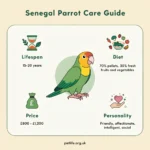
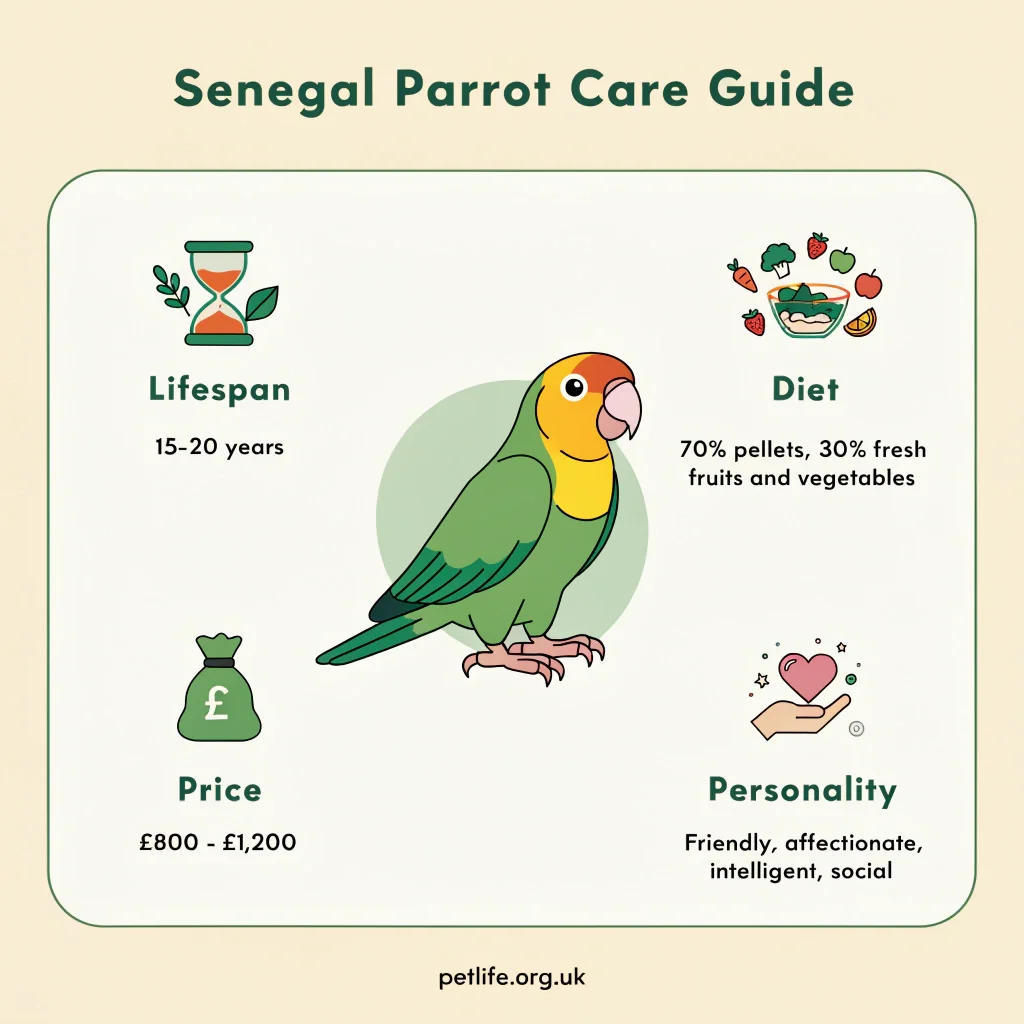
| Lifespan | 25 to 30 years, sometimes longer with excellent care |
| Talking Ability | Moderate to Good |
| Temperament | Intelligent, loyal, playful, curious |
| Noise Level | Low to Moderate |
| Diet | High-quality pellets, fresh vegetables, fruits, seeds in moderation |
| Difficulty Level | Beginner to Intermediate |
| Suitable For | Families, singles, experienced bird owners, committed beginners |
What Is a Senegal Parrot?
The Senegal parrot is a small to medium-sized African parrot belonging to the Poicephalus genus. It is admired for its bright green feathers, gray head, and vibrant yellow to orange chest. These birds are naturally curious, active, and highly intelligent, making them enjoyable companions for people willing to spend time interacting with them every day.
Unlike many larger parrots, Senegal parrots usually form a close bond with one or two people. They enjoy spending time outside their cage, learning new tricks, solving simple puzzles, and exploring their surroundings.
Their manageable size, lower noise level, and friendly personality have made them one of the most popular pet birds around the world.
Scientific Classification
| Classification | Details |
| Kingdom | Animalia |
| Phylum | Chordata |
| Class | Aves |
| Order | Psittaciformes |
| Family | Psittacidae |
| Genus | Poicephalus |
| Species | Poicephalus senegalus |
The Poicephalus group includes several well-known African parrots, such as the Meyer’s Parrot, Red-bellied Parrot, and Jardine’s Parrot. These species share similar traits, including intelligence, strong personalities, and relatively quiet voices compared to many larger parrots.
Natural Habitat and Origin
The Senegal parrot is native to West Africa, where it lives across a wide range of countries, including:
- Senegal
- Guinea
- Guinea-Bissau
- Mali
- Ghana
- Ivory Coast
- Nigeria
- Cameroon
- Chad
In the wild, these parrots thrive in open woodlands, forest edges, savannas, and lightly wooded grasslands. They often stay close to areas with plenty of trees that provide food, shelter, and safe nesting sites.
Unlike birds that depend only on dense rainforests, Senegal parrots adapt well to different habitats. This flexibility has helped maintain healthy wild populations across much of their natural range.
Life in the Wild
Wild Senegal parrots usually travel in pairs or small flocks. During the breeding season, they often stay with a single mate, while outside the breeding season they may gather in larger groups to search for food.
Their daily routine typically includes:
- Flying between feeding areas
- Looking for fruits and seeds
- Resting in tree canopies
- Grooming their feathers
- Watching for predators
- Communicating through whistles and calls
These birds are most active during the cooler hours of the morning and late afternoon.
Senegal Parrot Appearance
One of the reasons many bird lovers choose a Senegal parrot is its striking appearance. While they are not as large or brightly colored as a macaw, their natural color pattern gives them a unique and elegant look.
Body Colors
A healthy Senegal parrot usually has:
- Bright green wings and back
- Soft gray head and neck
- Yellow or orange V-shaped chest patch
- Dark gray or black beak
- Dark brown eyes
- Gray feet with strong climbing claws
The exact color of the chest patch may vary slightly between individual birds and among different subspecies.
Senegal Parrot Subspecies
There are three recognized subspecies of the Senegal parrot.
Poicephalus senegalus senegalus
- Bright yellow chest
- Most commonly kept as a pet
Poicephalus senegalus versteri
- Deep orange chest
- Slightly darker overall coloring
Poicephalus senegalus mesotypus
- Orange chest with some yellow tones
- Native to central parts of the species’ range
Although their appearance differs slightly, all three subspecies have similar care requirements, behavior, and lifespan.
Senegal Parrot Size
The Senegal parrot is considered a medium-sized companion bird. Its compact body makes it easier to handle than many larger parrots while still offering the intelligence and personality that bird owners enjoy.
Average Size
| Measurement | Average |
| Length | 9 to 10 inches (23 to 25 cm) |
| Weight | 120 to 170 grams |
| Wingspan | Around 14 to 16 inches (36 to 41 cm) |
Their sturdy build allows them to climb, hang upside down, and play with toys for hours.
Even though they are smaller than Amazon parrots or African Greys, Senegal parrots are energetic birds that benefit from plenty of exercise and mental stimulation.
Senegal Parrot Lifespan
One of the biggest commitments when choosing a Senegal parrot is its long lifespan. With proper care, these birds can remain healthy companions for decades.
How Long Do Senegal Parrots Live?
A healthy Senegal parrot typically lives:
- In captivity: 25 to 30 years
- With outstanding care: 35 years or more in some cases
- In the wild: Usually 20 to 25 years, depending on predators, food availability, and environmental conditions
Many owners are surprised to learn that bringing home a Senegal parrot is a long-term commitment similar to caring for a dog, and in some cases even longer.
What Affects a Senegal Parrot’s Life Expectancy?
Several factors influence a Senegal parrot’s lifespan.
Diet
Nutrition is one of the biggest influences on long-term health.
A balanced diet should include:
- High-quality pellets
- Fresh leafy vegetables
- Carrots
- Bell peppers
- Broccoli
- Cooked grains
- Healthy fruits in moderation
- Small amounts of seeds and nuts as treats
Poor nutrition can lead to obesity, vitamin deficiencies, and liver disease.
Regular Exercise
Senegal parrots are naturally active birds.
Daily opportunities to climb, fly in a safe area, and play with toys help maintain:
- Healthy muscles
- Strong heart function
- Healthy body weight
- Better mental health
Birds that remain inside a cage all day are more likely to develop health and behavioral problems.
Mental Stimulation
Because Senegal parrots are intelligent, they need activities that challenge their minds.
Good enrichment includes:
- Puzzle toys
- Foraging toys
- Training sessions
- Climbing ropes
- Rotating toys regularly
- Positive interaction with family members
Mental stimulation helps prevent boredom, feather damaging behavior, and excessive screaming.
Veterinary Care
An annual checkup with an avian veterinarian can identify health problems before they become serious.
Routine examinations often include:
- Weight monitoring
- Beak evaluation
- Nail condition
- Feather health
- General physical examination
Early treatment usually leads to better long-term health.
Clean Living Environment
Keeping the cage clean reduces the risk of bacterial and fungal infections.
Daily care should include:
- Fresh drinking water
- Clean food bowls
- Removing leftover food
- Spot-cleaning cage surfaces
Weekly cleaning should include washing perches, toys, and the cage with bird-safe cleaning products.
Stress Management
Chronic stress can shorten a bird’s life.
Common sources of stress include:
- Sudden environmental changes
- Lack of sleep
- Loud noises
- Loneliness
- Poor socialization
- Overcrowded cages
Providing a predictable daily routine and plenty of interaction helps Senegal parrots feel secure and confident.
Signs of a Healthy Senegal Parrot
A healthy Senegal parrot usually has:
- Bright, alert eyes
- Smooth, clean feathers
- A healthy appetite
- Regular droppings
- Active behavior
- Strong grip with both feet
- Clean nostrils
- Curious and playful personality
Any sudden changes in appetite, breathing, weight, or activity level should be checked by an avian veterinarian as soon as possible.
Senegal Parrot Personality
The Senegal parrot personality is one of the main reasons this species has become a favorite among bird owners. These parrots are intelligent, curious, playful, and known for forming strong bonds with their favorite person.
Unlike some parrots that constantly seek attention, Senegal parrots often enjoy a balance of social time and independent play. They are happy to interact with their family, then spend time exploring toys or resting on a perch.
Every bird has its own personality, but most Senegal parrots share several common traits.
Intelligent and Curious
As members of the Poicephalus family, Senegal parrots are naturally smart. They enjoy solving simple problems, learning routines, and exploring new objects.
Many owners teach them to:
- Step up on command
- Turn around
- Wave
- Retrieve small objects
- Ring a bell
- Target train
- Enter their cage when asked
Short training sessions using positive reinforcement help keep their minds active while strengthening the bond between bird and owner.
Loyal and Affectionate
A Senegal parrot often develops a close relationship with one or two people. They enjoy sitting on a shoulder, spending time near their owner, and taking part in daily activities.
This strong attachment is one reason many people describe them as loyal companions.
However, they should be encouraged to interact with several family members from an early age. This helps reduce the chance of becoming overly attached to one person.
Independent but Social
Unlike some larger parrots that demand constant attention, Senegal parrots can entertain themselves for short periods when provided with suitable toys and enrichment.
They still need daily interaction, but they are generally less demanding than many larger parrot species.
Playful and Active
These birds rarely stay still for long.
They enjoy:
- Climbing ropes
- Swinging on perches
- Chewing bird-safe wood
- Solving foraging puzzles
- Exploring safe play stands
- Flying in a bird-proof room
Daily play keeps both their body and mind healthy.
Are Senegal Parrots Good Family Pets?
Yes, Senegal parrots can make excellent family pets when properly socialized.
They usually do well with:
- Adults
- Couples
- Older children who understand how to handle birds gently
- Families willing to spend time with them every day
Very young children should always be supervised around parrots to keep both the child and bird safe.
Can Senegal Parrots Become Territorial?
Like many parrots, Senegal parrots can become protective of their favorite person, cage, or toys.
This behavior is more likely if:
- They receive little socialization.
- They are encouraged to bond with only one person.
- They experience hormonal changes during breeding season.
- They feel stressed or frightened.
Regular training, handling by different family members, and consistent routines can help reduce territorial behavior.
Can Senegal Parrots Talk?
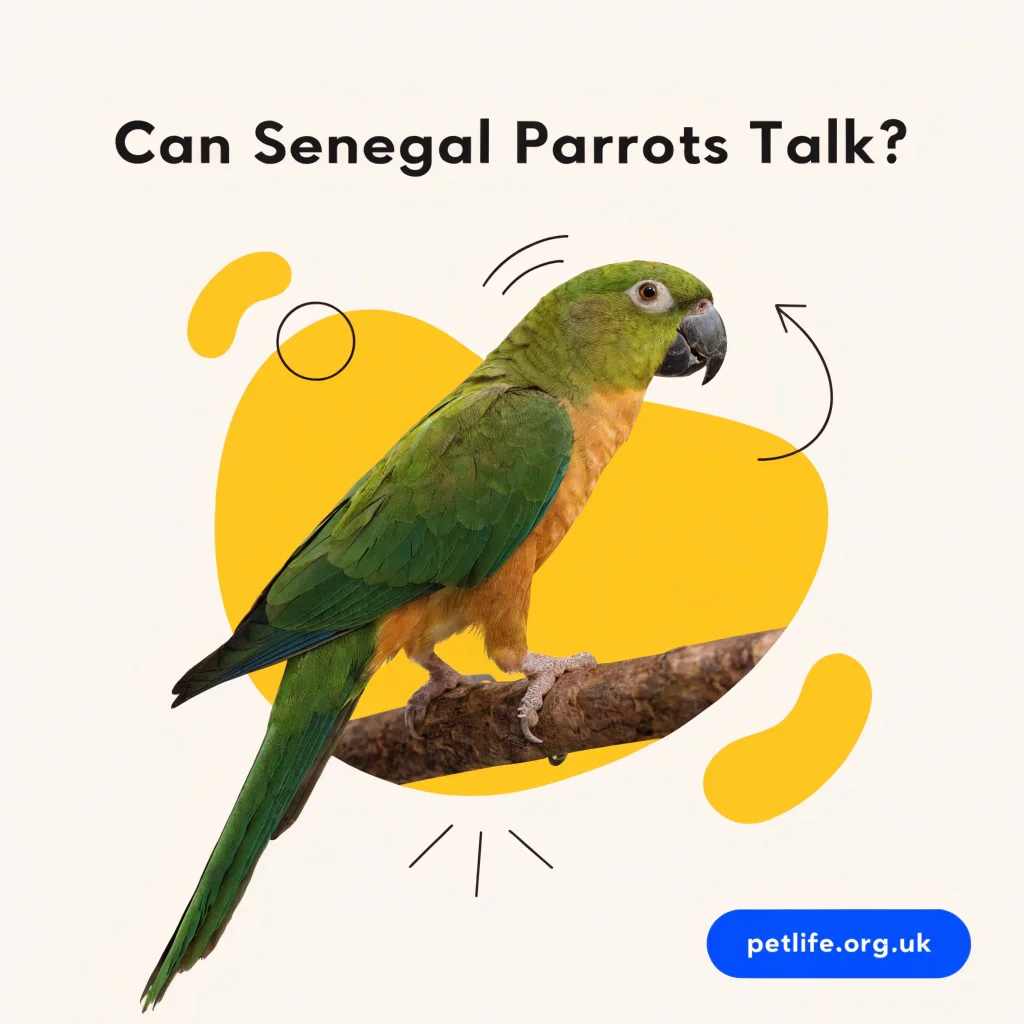
Yes. Senegal parrots can talk, although they are not considered the strongest talkers among parrots.
Many owners are pleasantly surprised by how clearly these birds can copy words and short phrases. Some Senegal parrots develop an impressive vocabulary, while others mainly communicate through whistles and natural sounds.
Their talking ability depends on several factors, including personality, training, age, and how much time their owner spends interacting with them.
How Well Can a Senegal Parrot Talk?
Most Senegal parrots can learn:
- Simple words
- Family names
- Greetings
- Short phrases
- Household sounds
- Whistles
- Phone ringtones
- Laughter
- Doorbell sounds
Some individuals learn dozens of words, while others prefer whistles and natural vocalizations.
Each bird is different, and there is no guarantee that every Senegal parrot will become a skilled talker.
At What Age Do They Start Talking?
Many Senegal parrots begin experimenting with sounds between 6 and 12 months of age.
Clear words often appear after their first year, especially when owners repeat the same phrases daily.
Consistency matters more than long training sessions. Speaking calmly to your bird throughout the day is often more effective than occasional practice.
Tips for Teaching a Senegal Parrot to Talk
You can encourage speech by:
- Repeating simple words often.
- Using the same greeting every morning.
- Rewarding attempts with praise or a favorite treat.
- Keeping training sessions short.
- Speaking clearly and naturally.
- Avoiding loud television noise during lessons.
Positive reinforcement works much better than punishment or forcing interaction.
Talking Ability Compared With Other Popular Parrots
| Parrot Species | Talking Ability |
| African Grey | Excellent |
| Amazon Parrot | Excellent |
| Indian Ringneck | Excellent |
| Quaker Parrot | Very Good |
| Senegal Parrot | Moderate to Good |
| Cockatiel | Moderate |
| Lovebird | Limited |
Although they may not develop the large vocabulary of an African Grey, many Senegal parrots communicate clearly enough to impress their families.
Senegal Parrot Sounds and Noise Level
One reason people choose Senegal parrots is that they are generally quieter than many larger parrots.
They still make noise every day, but their vocalizations are usually less intense than those of macaws, cockatoos, or Amazon parrots.
What Sounds Do Senegal Parrots Make?
A healthy Senegal parrot may produce:
- Soft whistles
- Chirps
- Contact calls
- Happy chatter
- Mimicked sounds
- Short alarm calls
These sounds are a normal part of their communication.
Why Do Senegal Parrots Scream?
Occasional loud calls are normal.
A Senegal parrot may vocalize loudly when:
- Greeting family members
- Feeling excited
- Looking for attention
- Feeling lonely
- Hearing unfamiliar noises
- Becoming frightened
Morning and evening are often the noisiest times because these are naturally active periods.
How to Reduce Excessive Noise
If your Senegal parrot becomes unusually loud, consider whether it has:
- Enough out-of-cage time
- Plenty of toys
- Daily interaction
- A regular sleep schedule
- Fresh food and water
- Mental stimulation
Avoid rewarding screaming by immediately giving attention. Instead, praise calm behavior and provide enrichment before boredom leads to unwanted vocalization.
Senegal Parrot Male vs Female
Many new owners wonder whether a male or female Senegal parrot makes a better pet.
The truth is that both sexes can become wonderful companions. Personality depends much more on the individual bird than its gender.
Can You Tell by Looking?
Unlike some bird species, Senegal parrots are not strongly sexually dimorphic.
Both males and females have:
- Green feathers
- Gray head
- Yellow or orange chest
- Dark beak
- Similar body size
Small differences in body shape or coloring are not reliable enough to identify gender.
The most accurate method is a DNA test performed by an avian veterinarian or laboratory.
Male vs Female Senegal Parrot
| Trait | Male | Female |
| Appearance | Nearly identical | Nearly identical |
| Size | Sometimes slightly larger | Sometimes slightly smaller |
| Talking Ability | Similar | Similar |
| Intelligence | Similar | Similar |
| Lifespan | Similar | Similar |
| Personality | Depends on the individual | Depends on the individual |
Neither gender is consistently friendlier or easier to train.
Do Females Lay Eggs Without a Male?
Yes.
A female Senegal parrot may lay infertile eggs even if she has never been with a male.
Providing proper nutrition, calcium, and guidance from an avian veterinarian is important if egg-laying becomes frequent.
Senegal Parrot Diet
A healthy diet is one of the most important parts of caring for a Senegal parrot. Good nutrition supports strong feathers, healthy bones, proper digestion, and a longer lifespan.
In the wild, Senegal parrots eat a wide variety of seeds, fruits, berries, blossoms, grains, and other plant materials. Pet birds need a balanced diet that provides similar nutrients without too much fat or sugar.
What Should a Senegal Parrot Eat?
Most avian veterinarians recommend the following balance:
- 60–70% high-quality formulated pellets
- 20–30% fresh vegetables
- 5–10% fruits
- Small amounts of seeds and nuts as treats
This combination helps provide essential vitamins, minerals, protein, and fiber.
Best Vegetables
Fresh vegetables should be offered every day.
Good choices include:
- Carrots
- Broccoli
- Bell peppers
- Kale
- Romaine lettuce
- Bok choy
- Spinach (occasionally)
- Green beans
- Peas
- Sweet potato
- Pumpkin
- Zucchini
Offer a variety of colors to provide different nutrients, especially vitamin A, which is important for eye, skin, and immune health.
Safe Fruits
Fruit is a healthy treat when fed in moderation.
Good options include:
- Apples (without seeds)
- Bananas
- Blueberries
- Strawberries
- Mango
- Papaya
- Pears
- Grapes
- Kiwi
- Melon
Because fruit contains natural sugar, it should not replace vegetables.
Healthy Treats
Occasional treats include:
- Almonds
- Walnuts
- Pistachios (unsalted)
- Pumpkin seeds
- Sunflower seeds in moderation
- Cooked quinoa
- Brown rice
- Oats
Treats work well during training sessions.
Foods That Should Never Be Fed
Some foods are dangerous for parrots.
Avoid feeding:
- Avocado
- Chocolate
- Caffeine
- Alcohol
- Onion
- Garlic
- Apple seeds
- Fruit pits
- Raw beans
- Foods high in salt
- Sugary snacks
- Fried foods
These foods can cause serious illness and, in some cases, may be life-threatening.
Daily Feeding Schedule
A simple feeding routine helps maintain good health.
Morning
- Fresh pellets
- Mixed vegetables
- Clean water
Afternoon
- Small amount of fruit
- Foraging activities
Evening
- Pellets
- Small training treats if needed
- Fresh water before bedtime
Remove leftover fresh foods after a few hours to prevent spoilage.
Fresh Water
Your Senegal parrot should always have access to clean drinking water.
Replace water:
- Every morning
- Whenever it becomes dirty
- More often during hot weather
Wash food and water dishes daily to reduce the risk of bacterial growth.
Common Feeding Mistakes
Many health problems begin with poor nutrition.
Avoid these common mistakes:
- Feeding only seeds
- Giving too many nuts
- Offering sugary human foods
- Skipping fresh vegetables
- Overfeeding fruit
- Leaving spoiled food in the cage
- Not monitoring your bird’s weight
A balanced diet, regular exercise, and routine veterinary care are key to helping your Senegal parrot live a long, healthy, and active life.
Best Cage for a Senegal Parrot
Choosing the right Senegal parrot cage is one of the most important decisions you can make. Even though these parrots are smaller than many other companion birds, they are active climbers and need plenty of space to move, stretch their wings, and play.
A cage should be more than just a place to sleep. It should provide a safe, comfortable environment where your parrot can eat, play, and rest while you’re away.
What Size Cage Does a Senegal Parrot Need?
Bigger is almost always better.
A good minimum cage size is:
| Feature | Recommendation |
| Minimum Cage Size | 24 × 24 × 30 inches (61 × 61 × 76 cm) |
| Preferred Cage Size | 30 × 30 × 36 inches (76 × 76 × 91 cm) or larger |
| Bar Spacing | ½ to ¾ inch (1.3 to 1.9 cm) |
| Shape | Rectangular |
| Material | Powder-coated steel or stainless steel |
A larger cage gives your bird more room to climb, flap its wings, and stay active throughout the day.
Cage Setup
A well-designed cage should include:
- Natural wood perches of different sizes
- Stainless steel food and water bowls
- Climbing ropes
- Swings
- Chewing toys
- Puzzle toys
- Foraging toys
- A cuttlebone or mineral block
- Plenty of open space for movement
Avoid overcrowding the cage with accessories. Your bird should still have room to move around comfortably.
Where Should You Place the Cage?
The location of the cage affects your parrot’s comfort and well-being.
A good location is:
- Bright but not in direct sunlight all day
- Away from cold drafts
- Away from heating or air conditioning vents
- In a room where the family spends time
- Quiet at night for proper sleep
Avoid placing the cage in the kitchen because fumes from non-stick cookware, smoke, aerosol sprays, and strong cleaning products can be dangerous for birds.
Cleaning the Cage
A clean cage helps prevent illness.
Every Day
- Replace drinking water
- Wash food bowls
- Remove leftover fresh food
- Clean obvious droppings
- Replace cage liner if needed
Every Week
- Wash perches
- Clean toys
- Scrub food dishes thoroughly
- Wipe cage bars
- Clean the cage tray
Every Month
- Deep clean the entire cage
- Inspect toys for damage
- Replace worn ropes or broken accessories
Regular cleaning reduces bacteria, mold, and parasites.
Best Toys for a Senegal Parrot

A Senegal parrot is an intelligent bird that needs daily mental stimulation. Without enough enrichment, it may become bored, noisy, or develop unwanted behaviors such as feather chewing.
Providing a variety of bird-safe toys encourages natural behaviors like climbing, chewing, and problem-solving.
Chewing Toys
Parrots naturally chew to keep their beaks healthy.
Safe chewing toys include:
- Untreated wood blocks
- Palm leaf toys
- Cork toys
- Vine balls
- Bird-safe cardboard
Chewing also helps relieve boredom.
Foraging Toys
In the wild, Senegal parrots spend hours searching for food.
Foraging toys encourage this natural behavior by hiding treats inside puzzles or small compartments.
These toys help:
- Reduce boredom
- Keep the bird active
- Improve problem-solving skills
- Slow down eating
Puzzle Toys
Puzzle toys challenge a parrot’s intelligence.
Examples include:
- Sliding doors
- Rotating wheels
- Hidden treat compartments
- Shape-sorting toys
- Interactive feeders
Changing puzzle toys regularly keeps them interesting.
Climbing Toys
Senegal parrots love climbing.
Good options include:
- Cotton ropes
- Ladders
- Cargo nets
- Hanging bridges
- Wooden climbing frames
These encourage exercise throughout the day.
Swings
Many Senegal parrots enjoy swinging while resting or playing.
A sturdy swing can provide:
- Entertainment
- Balance practice
- Comfortable resting space
Rotate Toys Regularly
Instead of filling the cage with dozens of toys, rotate them every one to two weeks.
This makes old toys feel new again and keeps your bird interested.
Exercise and Enrichment
Exercise is just as important as a healthy diet.
A Senegal parrot that spends all day inside its cage is more likely to become overweight, bored, or frustrated.
How Much Exercise Does a Senegal Parrot Need?
Aim for at least 2 to 4 hours of supervised out-of-cage time each day whenever possible.
This allows your bird to:
- Fly safely
- Climb
- Explore
- Play
- Socialize
If full flight isn’t possible, climbing and supervised movement still provide valuable exercise.
Safe Flying
Flying is the healthiest form of exercise for parrots.
Before allowing free flight indoors:
- Close windows.
- Turn off ceiling fans.
- Cover mirrors if necessary.
- Remove toxic plants.
- Keep other pets away.
- Secure doors.
A bird-proof room provides a safe environment for exercise.
Training Sessions
Training keeps both the body and mind active.
Simple commands include:
- Step up
- Step down
- Recall training
- Turn around
- Wave
- Target training
Keep sessions short, around 5 to 10 minutes, and reward success with praise or a healthy treat.
Social Interaction
Senegal parrots are social birds.
Daily interaction may include:
- Talking
- Gentle handling
- Playing games
- Reading aloud
- Sitting together while you work
These activities help strengthen trust and reduce loneliness.
Common Health Problems
Like all companion birds, Senegal parrots can develop health issues if their diet, environment, or daily care is not appropriate.
Learning to recognize early signs of illness can make treatment more successful.
Feather Plucking
Feather plucking occurs when a bird pulls out or damages its own feathers.
Possible causes include:
- Stress
- Boredom
- Poor diet
- Skin irritation
- Medical conditions
- Lack of enrichment
Treatment depends on identifying the underlying cause.
Obesity
Too many seeds and too little exercise can lead to obesity.
An overweight Senegal parrot may become:
- Less active
- Short of breath
- More likely to develop liver disease
- Less interested in flying
A balanced diet and regular activity help maintain a healthy weight.
Vitamin A Deficiency
Vitamin A supports healthy skin, eyes, and the immune system.
Birds eating mostly seeds often do not get enough.
Foods rich in vitamin A include:
- Carrots
- Sweet potatoes
- Pumpkin
- Red peppers
- Dark leafy greens
Respiratory Infections
Respiratory illness can develop because of:
- Poor ventilation
- Smoke exposure
- Dirty cages
- Bacterial infections
- Fungal infections
Warning signs include:
- Tail bobbing while breathing
- Wheezing
- Sneezing
- Nasal discharge
- Open-mouth breathing
These symptoms require prompt veterinary attention.
Psittacosis
Psittacosis is a bacterial disease that can affect parrots and, in rare cases, humans.
Symptoms may include:
- Loss of appetite
- Weight loss
- Difficulty breathing
- Fluffed feathers
- Green droppings
Early diagnosis and treatment by an avian veterinarian are important.
Fatty Liver Disease
This condition is often linked to:
- High-fat diets
- Too many sunflower seeds
- Obesity
- Limited exercise
Prevention includes proper nutrition and regular activity.
Overgrown Beak and Nails
A healthy Senegal parrot usually keeps its beak and nails in good condition by:
- Chewing natural wood
- Climbing
- Using textured perches
If they become excessively long, they should only be trimmed by an experienced avian veterinarian or trained bird professional.
Signs Your Senegal Parrot May Be Sick
Birds naturally hide illness, so even small changes deserve attention.
Watch for:
- Sitting quietly for long periods
- Fluffed feathers all day
- Loss of appetite
- Weight loss
- Sleeping more than usual
- Changes in droppings
- Breathing difficulty
- Less interest in playing
- Balance problems
- Discharge from the eyes or nostrils
If these signs continue for more than a short time, contact an avian veterinarian as soon as possible.
Senegal Parrot Temperature Range
A stable environment helps keep your Senegal parrot healthy throughout the year.
Ideal Temperature
Most Senegal parrots are comfortable in temperatures between:
65°F and 80°F (18°C to 27°C)
This range is suitable for most healthy adult birds living indoors.
Humidity
Moderate humidity supports healthy feathers and skin.
A humidity level of 40% to 60% is generally recommended.
If your home is very dry, especially during winter, occasional misting or a room humidifier can help.
Can Senegal Parrots Tolerate Cold Weather?
They can handle mild temperature changes, but sudden drops are dangerous.
Protect your bird from:
- Cold drafts
- Open windows during winter
- Air conditioning blowing directly on the cage
- Rapid temperature changes
Can Senegal Parrots Tolerate Heat?
They are more comfortable in warm conditions than extreme heat.
During hot weather:
- Provide fresh water at all times.
- Ensure good air circulation.
- Keep the cage out of direct afternoon sunlight.
- Offer opportunities to bathe.
Watch for signs of overheating, such as:
- Holding wings away from the body
- Panting
- Rapid breathing
- Lethargy
Move the bird to a cooler area if these signs appear.
Safe Sleep Environment
Senegal parrots need 10 to 12 hours of uninterrupted sleep each night.
A good sleep routine includes:
- A quiet room
- Dim lighting
- A consistent bedtime
- Minimal disturbances
Adequate sleep supports a healthy immune system and helps reduce irritability and excessive vocalization.
Senegal Parrot Breeding
Breeding Senegal parrots requires careful planning, experience, and a commitment to the long-term health of both the adult birds and their chicks. While these parrots can breed successfully in captivity, breeding should only be attempted by responsible bird keepers who understand their nutritional, behavioral, and veterinary needs.
If your goal is simply to enjoy a loving companion, breeding is not necessary.
When Do Senegal Parrots Reach Breeding Age?
Most Senegal parrots become sexually mature between 3 and 5 years of age.
Even after reaching maturity, responsible breeders usually wait until the birds are physically healthy and emotionally mature before pairing them.
Choosing a Healthy Pair
A breeding pair should:
- Be unrelated
- Be in excellent health
- Have regular veterinary checkups
- Eat a balanced diet
- Show compatible behavior
Introducing two birds slowly helps reduce stress and aggression.
Nesting Requirements
In captivity, breeding pairs need a quiet and secure nesting area.
A suitable nest box should:
- Be made from untreated wood
- Be large enough for both birds
- Stay clean and dry
- Be placed in a calm area with little disturbance
The female usually spends more time inside the nest box as egg laying approaches.
Eggs and Incubation
A healthy female typically lays 3 to 4 eggs, although clutch size can vary.
General breeding timeline:
| Stage | Average Time |
| Eggs per Clutch | 3 to 4 |
| Incubation Period | 27 to 28 days |
| Chicks Leave Nest | Around 9 to 10 weeks |
| Independent Feeding | Around 12 weeks |
During incubation, the female spends most of her time on the eggs while the male often helps by protecting the nest and feeding his mate.
Caring for Chicks
Young Senegal parrots need:
- A warm, clean nesting environment
- Proper nutrition
- Regular weight monitoring
- Minimal stress
- Careful socialization as they grow
Many breeders allow experienced parent birds to raise their chicks naturally unless veterinary intervention becomes necessary.
Responsible Breeding
Breeding parrots carries significant responsibility.
Before breeding, consider:
- Whether you have enough space.
- Access to an avian veterinarian.
- Time for daily monitoring.
- Knowledge of hand-feeding if an emergency occurs.
- Suitable homes for young birds.
Responsible breeding helps protect the health and welfare of captive parrots.
Senegal Parrot Price
The Senegal parrot price varies depending on several factors, including age, location, breeder reputation, and whether the bird has been hand-raised.
Although they are less expensive than many large parrots, owning one involves more than the initial purchase price.
Average Senegal Parrot Price
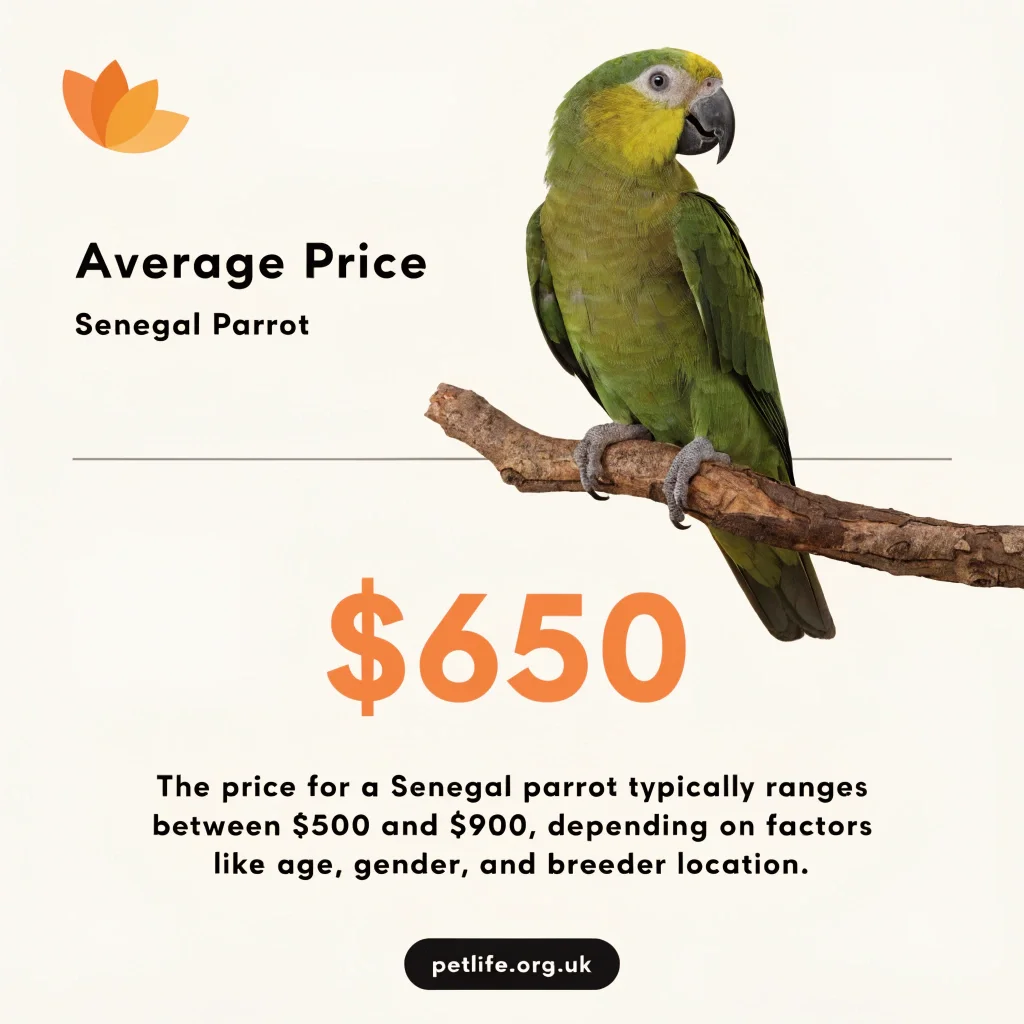
The following estimates can vary by country and local market conditions.
| Region | Typical Price Range |
| United States | $800 to $2,000 |
| United Kingdom | £500 to £1,200 |
| Canada | CAD $900 to $2,000 |
| Australia* | Availability is limited due to import regulations |
*Availability and ownership rules vary by country. Always check local wildlife and pet ownership laws before purchasing a bird.
What Affects the Price?
Several factors influence the cost of a Senegal parrot.
These include:
- Age
- Hand-raised or parent-raised
- DNA sex testing
- Health records
- Breeder reputation
- Training and socialization
- Feather quality
- Local demand
A well-socialized, healthy bird from a reputable breeder may cost more initially but can save money on future veterinary and behavioral issues.
Initial Setup Costs
Before bringing your bird home, you’ll need essential supplies.
Typical startup expenses include:
| Item | Estimated Cost |
| Cage | $200 to $600 |
| Perches | $30 to $100 |
| Toys | $50 to $150 |
| Food and Pellets | $30 to $80 |
| Food Bowls | $20 to $50 |
| Travel Carrier | $40 to $120 |
| First Veterinary Checkup | Varies by location |
Investing in quality equipment from the beginning creates a safer and more comfortable home for your parrot.
Monthly Care Costs
Regular expenses may include:
- Pellets
- Fresh vegetables
- Fruit
- Replacement toys
- Cage liners
- Veterinary savings
- Cleaning supplies
Planning for ongoing care is just as important as budgeting for the purchase price.
Where to Buy or Adopt a Senegal Parrot
Finding a healthy bird should always be your top priority.
Instead of looking only for the lowest price, focus on choosing a bird that has received proper care and socialization.
Buy From a Reputable Breeder
A responsible breeder should:
- Allow you to see the bird’s environment
- Answer questions openly
- Provide health information
- Explain the bird’s diet
- Discuss socialization and care
- Offer ongoing support after purchase
Healthy young birds are alert, curious, active, and have clean feathers and bright eyes.
Consider Bird Rescue Organizations
Many wonderful Senegal parrots are available through bird rescue organizations.
Adopting offers several benefits:
- Gives a bird a second chance
- Often costs less than buying from a breeder
- Rescue staff can explain the bird’s personality
- Many birds are already accustomed to living in a home
Adoption can be a rewarding choice for experienced and first-time owners alike.
Questions to Ask Before Bringing a Bird Home
Ask the breeder or rescue organization:
- What does the bird currently eat?
- Has it been examined by an avian veterinarian?
- Is it comfortable being handled?
- Has DNA sex testing been performed?
- What toys does it enjoy?
- Has it begun talking or mimicking sounds?
- Does it have any known health concerns?
The more information you have, the easier the transition will be.
Warning Signs to Watch For
Avoid buying a bird if you notice:
- Dirty cages
- Sick-looking birds
- Feather damage throughout the collection
- Lack of health records
- Sellers unwilling to answer questions
- Birds that appear weak or inactive
Choosing carefully helps you start with a healthy companion.
Is a Senegal Parrot the Right Pet for You?
The Senegal parrot is a wonderful companion, but it is not the perfect pet for everyone.
Before making a decision, think honestly about your lifestyle, schedule, and long-term commitment.
A Senegal Parrot May Be Right for You If You:
- Want a medium-sized parrot
- Can spend time interacting every day
- Enjoy teaching tricks
- Want a bird with moderate talking ability
- Can provide regular veterinary care
- Understand that parrots live for decades
These birds reward patient owners with companionship and plenty of personality.
A Senegal Parrot May Not Be the Best Choice If You:
- Travel frequently
- Want a pet that requires little attention
- Cannot tolerate occasional noise
- Prefer a bird that stays inside its cage all day
- Are not prepared for long-term care
Like all parrots, Senegal parrots need daily interaction, mental stimulation, and proper care.
Pros and Cons of Owning a Senegal Parrot
| Pros | Cons |
| Intelligent and easy to train | Can bond strongly with one person |
| Moderate talking ability | Needs daily interaction |
| Lower noise level than many parrots | May become territorial without socialization |
| Medium size | Requires mental stimulation every day |
| Long lifespan | Long-term commitment |
| Playful and affectionate | Regular veterinary care is important |
Understanding both the advantages and challenges helps you make an informed decision.
Senegal Parrot Care Checklist
Following a simple routine helps keep your bird healthy and happy.
Daily Care
- Provide fresh drinking water.
- Offer a balanced diet with pellets and fresh vegetables.
- Remove leftover fresh food.
- Spend time talking and interacting.
- Allow supervised out-of-cage exercise.
- Check your bird for any changes in behavior.
Weekly Care
- Wash perches and toys.
- Rotate enrichment toys.
- Deep clean food and water bowls.
- Wipe down the cage.
- Weigh your bird if possible to monitor health.
Monthly Care
- Deep clean the entire cage.
- Inspect toys for damage.
- Replace worn accessories.
- Review your bird’s diet and activity level.
Yearly Care
- Schedule a wellness exam with an avian veterinarian.
- Discuss nutrition and weight.
- Review overall health.
- Update any recommended testing if needed.
Quick Facts About Senegal Parrots
| Feature | Details |
| Scientific Name | Poicephalus senegalus |
| Common Names | Senegal Parrot, African Senegal Parrot |
| Native Region | West Africa |
| Adult Length | 9–10 inches (23–25 cm) |
| Adult Weight | 120–170 grams |
| Lifespan | 25–30 years or more with excellent care |
| Talking Ability | Moderate to Good |
| Noise Level | Low to Moderate |
| Diet | Pellets, vegetables, fruits, limited seeds |
| Difficulty Level | Beginner to Intermediate |
| Suitable For | Families, singles, committed bird owners |
Frequently Asked Questions About Senegal Parrots
Can Senegal Parrots Talk?
Yes. Senegal parrots can talk, and many learn a variety of words, short phrases, whistles, and household sounds. Their talking ability is considered moderate to good. While they may not build the large vocabulary of an African Grey Parrot, they can become confident talkers with regular training, patience, and positive reinforcement.
What Is the Life Expectancy of a Senegal Parrot?
A healthy Senegal parrot typically lives 25 to 30 years in captivity. With excellent nutrition, regular exercise, mental enrichment, and routine veterinary care, some birds live even longer.
How Long Do Senegal Parrots Live in the Wild?
Wild Senegal parrots generally live 20 to 25 years. Their lifespan is often shorter than pet birds because they face predators, food shortages, habitat loss, and disease.
How Much Does a Senegal Parrot Cost?
The price depends on the bird’s age, breeder, and location.
Typical prices include:
- United States: $800 to $2,000
- United Kingdom: £500 to £1,200
Remember that the purchase price is only part of the total cost. You’ll also need to budget for a quality cage, food, toys, and veterinary care.
How Much Is a Senegal Parrot in the UK?
In the UK, most Senegal parrots cost between £500 and £1,200. Birds that are hand-raised, DNA-tested, or well-socialized often cost more than parent-raised birds.
Are Senegal Parrots Good Pets?
Yes. Senegal parrots make excellent pets for people who can provide daily attention, training, and enrichment. They are intelligent, affectionate, playful, and usually quieter than many larger parrot species.
Are Senegal Parrots Good for Beginners?
They can be suitable for committed beginners who are willing to learn about proper bird care. New owners should be prepared for a long-term commitment, daily interaction, and regular veterinary care.
Do Senegal Parrots Bite?
Like all parrots, Senegal parrots may bite if they feel frightened, stressed, excited, or territorial. Gentle handling, proper socialization, and understanding their body language can greatly reduce biting.
What Is the Best Diet for a Senegal Parrot?
A healthy diet includes:
- High-quality pellets
- Fresh vegetables every day
- Fresh fruits in moderation
- Small amounts of seeds and nuts as treats
- Clean drinking water at all times
Avoid feeding chocolate, avocado, caffeine, alcohol, onion, garlic, and foods high in salt or sugar.
What Temperature Is Best for a Senegal Parrot?
Most Senegal parrots are comfortable in temperatures between 65°F and 80°F (18°C to 27°C). Avoid sudden temperature changes, cold drafts, and excessive heat.
What Size Cage Does a Senegal Parrot Need?
A cage measuring at least 24 × 24 × 30 inches is recommended, although a larger cage is always better. It should include natural perches, toys, food bowls, and enough room for climbing and stretching.
Can Two Senegal Parrots Live Together?
Yes, but compatibility depends on the individual birds. Some enjoy companionship, while others prefer their own space. New birds should always be introduced slowly and supervised during early interactions.
What Toys Do Senegal Parrots Like?
Most Senegal parrots enjoy:
- Wooden chewing toys
- Puzzle toys
- Foraging toys
- Swings
- Climbing ropes
- Ladders
- Bird-safe shredding toys
Rotating toys every few weeks helps prevent boredom.
How Often Should a Senegal Parrot See a Veterinarian?
A healthy Senegal parrot should have a wellness examination with an avian veterinarian at least once a year. Birds showing signs of illness should be examined as soon as possible because parrots often hide symptoms until they become seriously unwell.
Final Thoughts
The Senegal parrot is an intelligent, loyal, and entertaining companion that fits well into many households. Its moderate size, playful personality, and lower noise level make it a popular choice for both first-time and experienced bird owners.
Like all parrots, a Senegal parrot thrives when it receives a balanced diet, daily exercise, mental stimulation, and regular interaction with its family. Providing a spacious cage, bird-safe toys, routine veterinary care, and a predictable daily routine will help your parrot stay healthy and active for many years.
Before bringing one home, remember that this is a long-term commitment. With a lifespan that can exceed 30 years, a Senegal parrot depends on consistent care and attention throughout its life.