
Macaws are one of the most easily recognizable species of parrots in the world. They are known for their colorful plumage, long tails, and assertive nature, which makes them popular among bird enthusiasts. If you are just interested in learning about a blue macaw parrot, you’re evaluating whether to purchase a pet macaw, or you simply wish to find out more about the various species, this guide is for you.
A macaw parrot is more than just a colorful bird. With good care, they can live for many decades, and can develop very close bonds with their owners. They need time, space, attention, and a long term commitment, however.
Here you will read about the various species of macaws, their size, lifespan, diet, behaviour and the cost of owning them so you can make an informed decision.
What Is a Macaw Parrot?
A macaw parrot is a large tropical bird that belongs to the parrot family. Macaws are known for their vibrant colors, powerful beaks, and long tail feathers. They are native to Central and South America, where they live in forests, woodlands, and tropical rainforests.
Macaws are part of the Psittacidae family and include several species that vary in size, color, and behavior. Some species are common in captivity, while others are rare and endangered in the wild.
Which Country Are Macaws From?
Macaws are not limited to one country. They naturally occur across several countries in Central and South America, including:
- Brazil
- Peru
- Bolivia
- Colombia
- Venezuela
- Ecuador
- Paraguay
- Mexico
The largest populations are found in tropical rainforest regions where food and nesting sites are abundant.
Where Do Macaws Live in the Wild?
Most wild macaws live in rainforest habitats. They spend much of their time in tall trees and travel in pairs or small flocks.
Their natural habitat provides:
- Fruits
- Nuts
- Seeds
- Berries
- Clay deposits that help with digestion
Because of habitat loss and illegal wildlife trade, some macaw populations have declined significantly.
Macaw Species Explained
There are around 19 recognized macaw species, though some are extinct or critically endangered.
Blue and Yellow Macaw
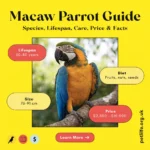
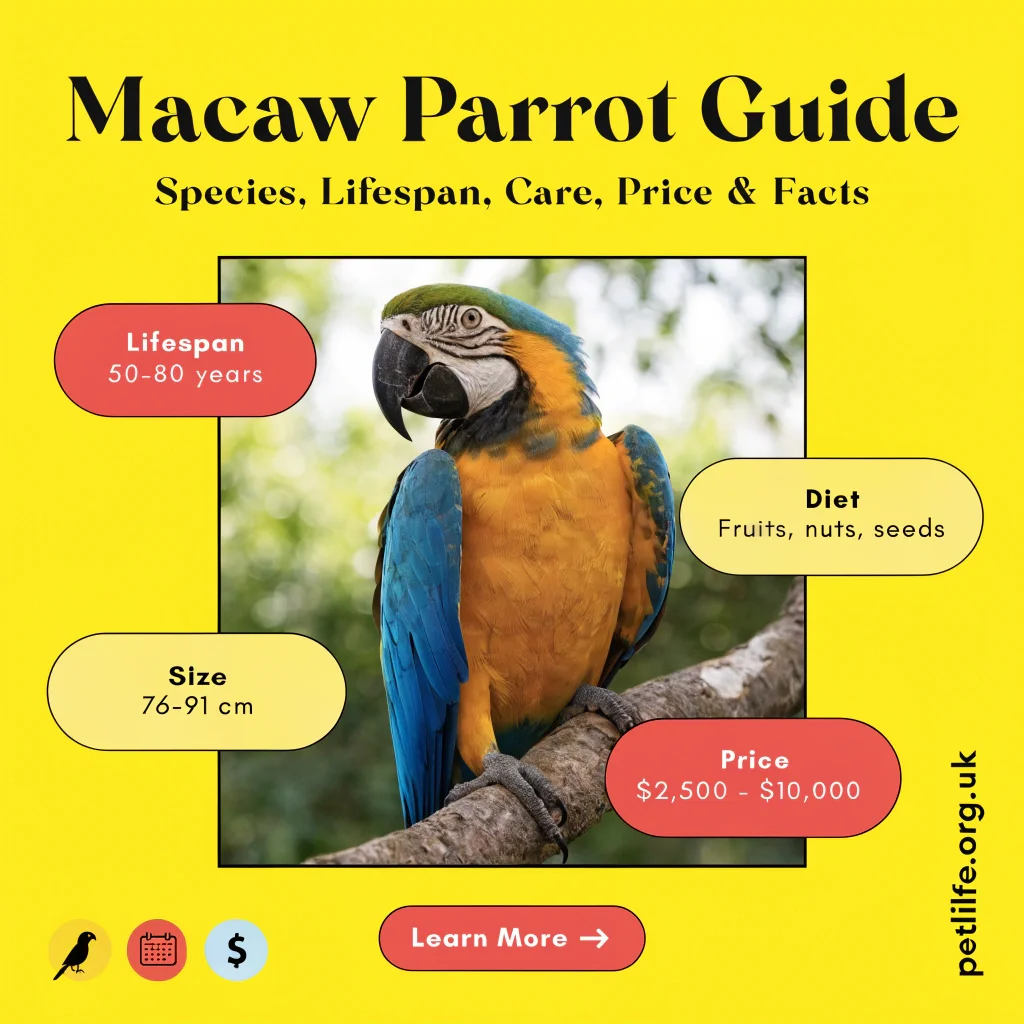
The Blue and Yellow Macaw is one of the most popular pet macaws. It has bright blue wings, a yellow chest, and a friendly personality.
Key facts:
- Length: Up to 34 inches
- Lifespan: 30 to 60 years
- Good talking ability
- Social and playful
Scarlet Macaw Parrot
The Scarlet Macaw Parrot is famous for its red body combined with blue and yellow feathers.
Key facts:
- Highly intelligent
- Strong flyer
- Native to tropical rainforests
- Lifespan often exceeds 40 years
Hyacinth Macaw
The Hyacinth Macaw is the largest flying parrot in the world.
Key facts:
- Deep cobalt blue color
- Massive beak strength
- Can reach nearly 40 inches in length
- Requires experienced owners
Red and Green Macaw
Also called the Green-Winged Macaw, this species is gentle and affectionate compared to some other large parrots.
Harlequin Macaw
The Harlequin Macaw is a hybrid created from the Blue and Gold Macaw and Green-Winged Macaw.
Lear’s Macaw
Lear’s Macaw is a rare blue macaw species found mainly in Brazil. Conservation efforts have helped increase its population.
Red-Shouldered Macaw
Also known as Hahn’s Macaw, this smaller species is often chosen by people who want a macaw but have limited space.
Spix’s Macaw
The Spix Macaw became world famous because of the animated movie “Rio.” It is one of the rarest parrots on Earth and has been the focus of major conservation programs.
Macaw Parrot Size and Physical Characteristics
Macaws are among the largest parrots in the world.
How Big Do Macaws Get?
Size depends on the species.
Mini macaws may reach:
- 12 to 20 inches
Large macaws can reach:
- 30 to 40 inches
The Hyacinth Macaw is generally considered the largest species.
Weight and Wingspan
Most macaws weigh between:
- 300 grams and 1.7 kilograms
Their wingspan can range from:
- 3 to 4 feet
These powerful wings allow them to travel long distances in search of food.
Macaw Colors and Markings
Macaws are known for striking feather colors such as:
- Blue
- Red
- Green
- Yellow
- Orange
Their facial skin patches and feather patterns help distinguish one species from another.
Does a White Macaw Parrot Exist?
There is no naturally occurring white macaw species. Birds sometimes referred to as “white macaws” are usually hybrids or parrots from different species groups.
Macaw Parrot Lifespan
One reason many people admire macaws is their impressive lifespan.
Average Macaw Lifespan
A healthy macaw parrot can live:
- 30 to 60 years on average
Some well-cared-for birds may live even longer.
Scarlet Macaw Lifespan
Scarlet Macaws often live:
- 40 to 50 years
- Sometimes longer in captivity
Hyacinth Macaw Lifespan
Hyacinth Macaws commonly live:
- 50 years or more
Factors That Affect Lifespan
Several factors influence longevity:
- Proper nutrition
- Exercise
- Veterinary care
- Clean housing
- Mental stimulation
- Reduced stress
A neglected macaw may develop health problems that shorten its lifespan.
Macaw Personality and Temperament
Macaws are intelligent, social, and emotionally complex birds.
Many owners compare them to young children because they require daily interaction and mental stimulation.
Are Macaws Friendly?
When properly socialized, macaws can be affectionate and friendly. They often develop strong bonds with family members.
Do Macaws Talk?
Yes. Many macaws learn words and phrases.
Their vocabulary may not match some African Grey parrots, but many can:
- Mimic sounds
- Repeat words
- Learn simple commands
Are Macaws Noisy?
Yes. Macaws are naturally loud birds.
They use vocalizations to:
- Communicate
- Seek attention
- Express excitement
- Warn of danger
Potential owners should be prepared for regular noise.
Can Macaws Bond With Humans?
Macaws form strong emotional connections with their caretakers.
Daily interaction helps build trust and prevents behavioral problems.
Macaw vs Parrot: What’s the Difference?
People often ask about the difference between a macaw and a parrot.
The answer is simple.
A macaw is a type of parrot.
All macaws are parrots, but not all parrots are macaws.
Size Comparison
Macaws are generally larger than most other parrots.
Tail Length
Macaws have much longer tail feathers than many parrot species.
Beak Strength
Macaws possess exceptionally strong beaks capable of cracking hard nuts.
Personality
Most macaws require more space, attention, and enrichment than smaller parrots.
What Do Macaws Eat?
Diet plays a major role in macaw health and lifespan.
Natural Diet in the Wild
Wild macaws eat:
- Fruits
- Nuts
- Seeds
- Leaves
- Flowers
- Berries
They also visit clay banks, which may help neutralize natural toxins in food.
Best Foods for Pet Macaws
A healthy pet macaw diet should include:
- High-quality pellets
- Fresh vegetables
- Fresh fruits
- Healthy nuts
- Clean water
Fruits and Vegetables
Good options include:
- Apples
- Papaya
- Mango
- Carrots
- Bell peppers
- Broccoli
- Sweet potatoes
Foods to Avoid
Never feed:
- Chocolate
- Avocado
- Caffeine
- Alcohol
- Salty foods
- Sugary foods
These items can be harmful or toxic to parrots.
Macaw Parrot Care Guide
Macaws are rewarding pets, but they are not low-maintenance birds. They need daily care, social interaction, and a suitable environment to stay healthy and happy.
Before bringing a macaw home, make sure you can provide enough time, space, and resources for its long-term care.
Housing Requirements
Macaws need large living spaces because of their size and active nature.
A proper setup should provide:
- Plenty of room to move
- Safe perches of different sizes
- Food and water stations
- Areas for climbing
- Daily access to exercise outside the cage
A cramped cage can lead to boredom, stress, and health issues.
Ideal Cage Size
A macaw cage should be as large as possible.
For most large macaw species:
- Width: At least 36 to 48 inches
- Depth: At least 48 inches
- Height: At least 60 inches
Larger cages are always better.
Strong stainless-steel cages are often recommended because macaws have powerful beaks that can damage weaker materials.
Temperature and Environment
Macaws do best in stable indoor temperatures.
Important considerations include:
- Good ventilation
- Natural daylight exposure
- Protection from extreme heat and cold
- Avoiding cigarette smoke and strong fumes
Because parrots have sensitive respiratory systems, air quality is very important.
Do Macaws Like Toys?
Yes. Toys are essential for a macaw’s mental health.
Macaws enjoy:
- Wooden chew toys
- Puzzle toys
- Rope toys
- Foraging toys
- Climbing structures
Rotating toys regularly helps prevent boredom.
Exercise and Mental Stimulation
Macaws are intelligent birds that need daily activity.
Healthy enrichment includes:
- Flight practice in safe areas
- Training sessions
- Problem-solving games
- Interactive play with owners
Without enough stimulation, some macaws may develop destructive behaviors.
How to Bond With a Macaw
Building trust takes patience and consistency.
A strong relationship helps reduce fear and encourages positive behavior.
Building Trust
Allow your macaw to become comfortable at its own pace.
Simple ways to build trust include:
- Speaking calmly
- Offering treats by hand
- Spending time near the cage
- Respecting the bird’s body language
Training Techniques
Macaws respond well to positive reinforcement.
Reward desired behaviors with:
- Praise
- Attention
- Healthy treats
Short training sessions are usually more effective than long ones.
Socialization Tips
Regular social interaction helps macaws become confident and well-adjusted.
Introduce new people, sounds, and experiences gradually.
Common Mistakes New Owners Make
Some owners accidentally create behavioral problems by:
- Ignoring the bird for long periods
- Using punishment
- Providing too little space
- Neglecting mental enrichment
Consistency and patience are important when raising a macaw.
Common Macaw Health Problems
Like all pets, macaws can experience health issues.
Routine veterinary care is essential.
Feather Plucking
Feather plucking occurs when a bird pulls out its own feathers.
Possible causes include:
- Stress
- Boredom
- Poor diet
- Medical conditions
Early intervention is important.
Psittacine Beak and Feather Disease
This viral disease affects:
- Feather growth
- Beak development
- Immune function
Regular health checks can help detect problems early.
Proventricular Dilatation Disease (PDD)
PDD affects the digestive and nervous systems.
Symptoms may include:
- Weight loss
- Regurgitation
- Weakness
Veterinary diagnosis is required.
Obesity
Overfeeding high-fat foods can lead to obesity.
Balanced nutrition and exercise help maintain a healthy weight.
Respiratory Infections
Poor air quality can contribute to respiratory problems.
Maintaining a clean environment is one of the best preventive measures.
Macaw Predators and Natural Enemies
Wild macaws face several threats.
Predators in the Wild
Natural predators may include:
- Large birds of prey
- Snakes
- Wild cats
- Monkeys that raid nests
Adult macaws often rely on their strong flight abilities to avoid danger.
Human Threats
Humans remain one of the biggest threats to macaw populations.
Challenges include:
- Habitat destruction
- Illegal pet trade
- Deforestation
- Environmental changes
Why Are Macaws Endangered?
Several macaw species are considered vulnerable, endangered, or critically endangered.
Population declines are often linked to:
- Forest loss
- Nesting habitat destruction
- Illegal capture for the pet market
Conservation programs continue to help protect these remarkable birds.
Macaw Reproduction and Breeding
Macaws typically form long-term pair bonds.
Many pairs remain together for years.
Breeding Season
Breeding seasons vary by species and location.
Most breeding occurs when food is plentiful.
Nesting Habits
Macaws usually nest in:
- Tree cavities
- Natural holes in large trees
- Protected nesting sites
Eggs and Chicks
Females commonly lay between two and four eggs.
Both parents help care for the chicks.
Baby Macaw Development
Baby macaw parrots grow quickly during their first months.
Young birds require:
- Frequent feeding
- Proper nutrition
- Safe housing
- Social interaction
Responsible breeding is important for the health of both parents and chicks.
Macaw Parrot Price Guide
One of the most common questions people ask is, “How much does a macaw parrot cost?”
The answer depends on species, age, location, and breeder reputation.
Macaw Parrot Price in Pakistan
In Pakistan, macaw parrot prices can vary widely.
Factors affecting cost include:
- Species rarity
- Age
- Health status
- Imported or locally bred birds
Large species such as Hyacinth Macaws are usually much more expensive than smaller macaws.
Macaw Parrot Price in India
Macaw parrot prices in India also vary based on availability and species.
Blue and Yellow Macaws and Scarlet Macaws are often among the most commonly available species.
Scarlet Macaw Price
Scarlet Macaws generally command higher prices because of their popularity and striking appearance.
Factors That Affect Cost
Price can be influenced by:
- Species
- Genetics
- Training
- Age
- Breeder reputation
- Documentation
- Health testing
Potential owners should budget not only for purchase costs but also for long-term care expenses.
Macaw Parrot for Sale: What to Know Before Buying

Buying a macaw is a major commitment.
Many birds live for decades and require daily attention.
How to Choose a Healthy Macaw
Look for a bird that has:
- Bright eyes
- Clean feathers
- Healthy weight
- Active behavior
- Good appetite
Questions to Ask a Breeder
Important questions include:
- Has the bird been health checked?
- What diet is it eating?
- Has it been socialized?
- What is its age?
Adoption vs Buying
Some people choose adoption instead of purchasing from a breeder.
Adoption can provide a home for a bird in need while reducing demand for irresponsible breeding.
Red Flags to Avoid
Be cautious if a seller:
- Refuses health records
- Offers unusually low prices
- Provides poor housing conditions
- Cannot answer basic questions about the bird
Are Macaws Good Pets?
Macaws can be wonderful companions for the right owner.
However, they are not ideal for everyone.
Pros of Owning a Macaw
Benefits include:
- High intelligence
- Strong social bonds
- Long lifespan
- Entertaining personalities
- Ability to learn sounds and words
Cons of Owning a Macaw
Challenges include:
- Loud vocalizations
- High costs
- Large space requirements
- Daily attention needs
- Long-term commitment
Who Should Own a Macaw?
Macaws are best suited for people who:
- Have experience with birds
- Can spend time interacting daily
- Have adequate living space
- Understand long-term pet ownership
Why Macaws Are Not Starter Birds
Because of their size, strength, and care requirements, macaws are generally considered better for experienced bird owners.
Fascinating Macaw Facts
Macaws are among the most interesting birds in the world.
Here are a few facts worth knowing:
Strong Beaks
A macaw’s beak is powerful enough to crack hard nuts and seeds that many other animals cannot open.
Lifelong Pair Bonds
Many macaws form strong partnerships that can last for years.
Excellent Problem Solvers
Macaws can learn routines, solve simple puzzles, and recognize people.
Long Lifespans
Some individuals may live long enough to become multi-generational family pets.
Rainforest Specialists
Many macaw species play an important role in rainforest ecosystems by helping disperse seeds.
Frequently Asked Questions About Macaw Parrots
Q1. How long do macaws live?
Most macaws live between 30 and 60 years, although some may live longer with excellent care.
Q2. Which macaw species is best for beginners?
Mini macaws and Hahn’s Macaws are often considered more manageable than larger species.
Q3. How much does a macaw parrot cost?
Prices vary widely depending on species, age, and location.
Q4. Can macaws talk?
Yes. Many macaws can learn words, phrases, and household sounds.
Q5. Are macaws aggressive?
Well-socialized macaws are usually friendly, but any parrot can bite if frightened or stressed.
Q6. Do macaws need a large cage?
Yes. Their large size requires spacious housing.
Q7. What is the rarest macaw species?
Spix’s Macaw is among the rarest macaw species in the world.
Q8. What do baby macaws eat?
Young macaws require specially formulated diets provided by experienced breeders or caregivers.
Final Thoughts
The macaw parrot is one of the most impressive members of the parrot family. From the colorful Blue and Yellow Macaw to the giant Hyacinth Macaw and the rare Spix Macaw, these birds attract attention with their beauty, intelligence, and personality.
Macaw species differ in size, color, and temperament, but all share a need for proper care, nutrition, social interaction, and mental stimulation. Their long lifespan means ownership is a serious commitment that can last decades.
For people who have the time, space, and dedication to meet their needs, a macaw bird can become a loyal companion and a fascinating part of the family for many years.