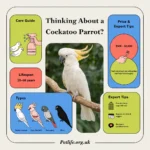

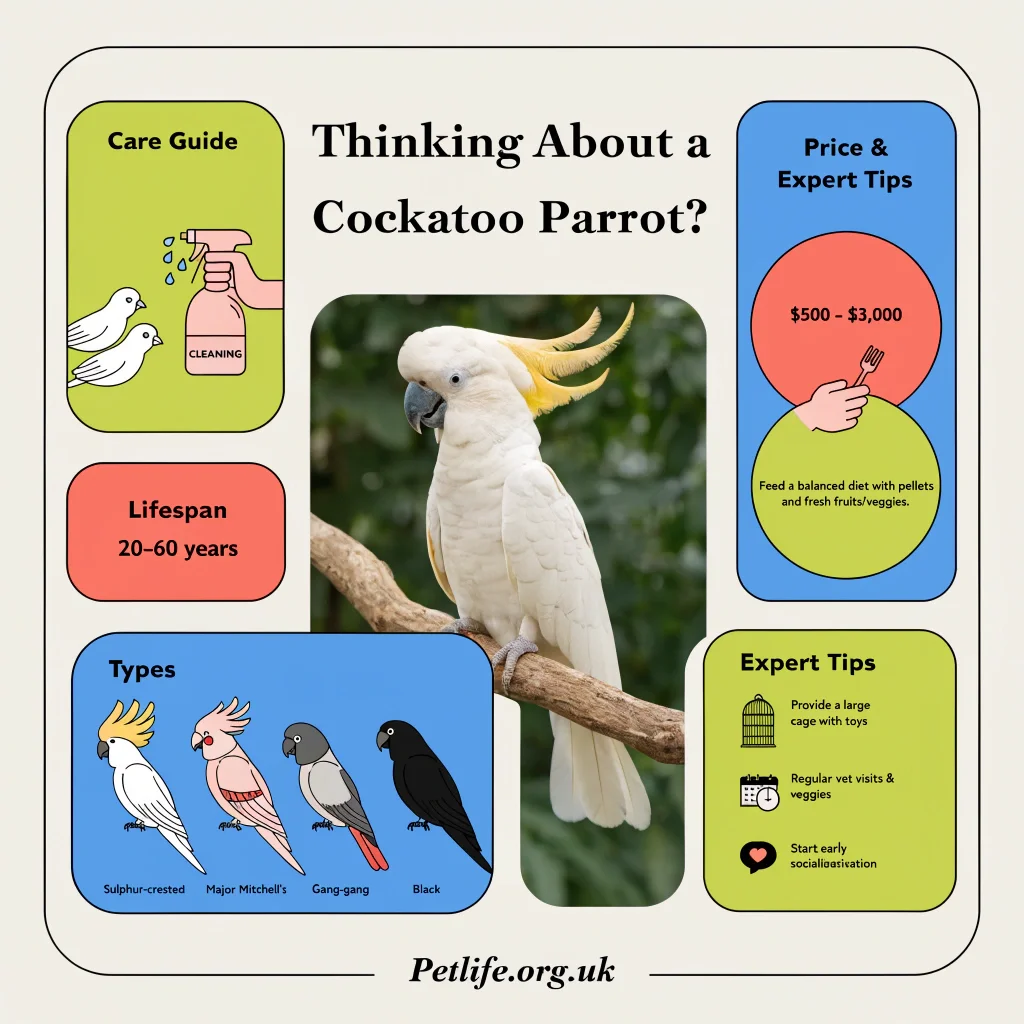
Cockatoos are among the most recognizable pet birds in the world. Their expressive crest, playful personality, and strong bond with people make them a favorite choice for bird lovers. However, they are also one of the most demanding companion birds. Before bringing one home, it is important to understand their care needs, lifespan, and daily commitment.
Whether you are researching a cockatoo parrot as a future pet or simply want to learn more about these intelligent birds, this guide covers everything you need to know. You’ll learn about different cockatoo species, their personality, diet, lifespan, common health concerns, and what it costs to own one. You’ll also find practical advice to help you decide if a cockatoo is the right bird for your home.
Unlike many smaller pet birds, cockatoos thrive on attention and interaction. They can live for decades, require daily mental stimulation, and often become lifelong companions when cared for properly.
Quick Facts About Cockatoo Parrots
| Feature | Details |
| Common Name | Cockatoo |
| Scientific Family | Cacatuidae |
| Scientific Order | Psittaciformes |
| Native Range | Australia, Indonesia, New Guinea, Philippines, Solomon Islands |
| Size | 12–26 inches (30–66 cm), depending on species |
| Weight | 300 g to over 1.2 kg |
| Average Lifespan | 40–70 years, with some living even longer |
| Talking Ability | Moderate to Very Good |
| Temperament | Intelligent, affectionate, social, playful |
| Difficulty Level | Moderate to Advanced |
| Best For | Experienced bird owners with plenty of time |
What Is a Cockatoo Parrot?
A cockatoo parrot is a member of the Cacatuidae family, a group of parrots known for their striking crest feathers and affectionate personalities. There are more than 20 recognized cockatoo species, ranging from small birds like the Goffin cockatoo to large birds such as the Moluccan cockatoo and Palm cockatoo.
Like other parrots, cockatoos have a strong curved beak, two toes pointing forward and two pointing backward, and excellent climbing ability. However, their movable crest sets them apart from most other parrots. They raise or lower this crest to communicate emotions such as excitement, curiosity, fear, or happiness.
Cockatoos are highly social birds that naturally live in pairs or large flocks. In captivity, they often see their owners as part of their flock, which explains why they enjoy spending so much time with people.
Because of their intelligence and emotional nature, cockatoos need daily attention. Without enough interaction, they can become bored, noisy, or develop unwanted behaviors.
Why Are Cockatoos So Popular?
Many people choose a cockatoo pet because of its friendly personality and ability to build close relationships with humans.
Some of the reasons they are popular include:
- Loving and affectionate nature
- High intelligence
- Ability to learn tricks
- Moderate talking and sound mimicry skills
- Beautiful crest feathers
- Long lifespan
- Playful and entertaining behavior
These qualities make them rewarding companions, but they also mean they require more care than many other pet birds.
Are Cockatoos Parrots?
Yes. A cockatoo is a type of parrot.
Many people ask about the difference between a cockatoo and a parrot, but the truth is that all cockatoos belong to the parrot order Psittaciformes. The main difference is that cockatoos belong to their own family, Cacatuidae, while most other parrots belong to the family Psittacidae.
Here is a simple comparison.
| Feature | Cockatoo | Other Parrots |
| Family | Cacatuidae | Psittacidae |
| Crest | Present | Usually absent |
| Feather Colors | Mostly white, black, grey, or pink | Often bright green, blue, red, and yellow |
| Powder Down | Produces fine feather dust | Usually less powder down |
| Talking Ability | Moderate to good | Varies by species |
| Personality | Very affectionate and people-focused | Varies widely among species |
One unique feature of cockatoo birds is the fine feather dust called powder down. This natural powder helps keep their feathers healthy, but it also means owners may need to clean cages and nearby furniture more often.
What Does a Cockatoo Bird Look Like?
If you’re wondering what does a cockatoo bird look like, these birds are easy to recognize because of their unique appearance.
Most cockatoos have:
- A large curved beak
- A movable feather crest
- Strong legs with zygodactyl feet for climbing
- Broad wings
- Expressive eyes
- Powerful chewing beak
Depending on the species, their feathers may be white, pink, black, grey, or a combination of several colors.
Some species, like the Umbrella Cockatoo, have mostly white plumage, while the Galah Cockatoo displays soft pink and grey feathers. The Palm Cockatoo stands out with its dark feathers and distinctive red facial patch.
Origin and Natural Habitat
Cockatoos are native to the South Pacific region. Most species live naturally in Australia, while others are found in Indonesia, Papua New Guinea, the Philippines, and nearby islands.
Their natural habitats include:
- Tropical rainforests
- Open woodlands
- Grasslands
- Coastal forests
- Savannas
- Mountain forests
Wild cockatoos spend much of the day searching for food, flying between feeding areas, and interacting with other members of their flock.
They eat a varied diet that includes:
- Seeds
- Nuts
- Fruits
- Berries
- Flowers
- Leaf buds
- Roots
- Insects and larvae on occasion
This active lifestyle explains why pet cockatoos need large cages, climbing opportunities, and plenty of daily exercise.
How Cockatoos Live in the Wild
Cockatoos are highly social birds. In nature, they rarely live alone and usually travel in pairs or large groups. Flock members communicate using loud calls that help them stay together while flying or feeding.
Wild cockatoos spend several hours each day:
- Looking for food
- Grooming their feathers
- Playing with other birds
- Resting in trees
- Watching for predators
- Flying long distances between feeding areas
Their natural behavior is one reason pet cockatoos require regular mental stimulation. Toys, puzzles, climbing structures, and daily interaction help replace the activities they would normally enjoy in the wild.
Why Understanding Their Natural Behavior Matters
Learning about a cockatoo’s natural habitat makes it easier to provide proper care at home.
For example:
- Birds that fly long distances need daily exercise.
- Birds that live in flocks need regular social interaction.
- Birds that spend hours chewing branches need safe wooden toys.
- Birds that search for food throughout the day benefit from foraging activities.
Meeting these natural needs helps reduce stress and encourages healthy behavior. It can also lower the risk of problems such as feather plucking, excessive screaming, and boredom, which are common in pet cockatoos that do not receive enough enrichment.
Cockatoo Appearance
Cockatoos are easy to recognize because of their elegant appearance and expressive body language. While each cockatoo species has its own unique features, they all share several characteristics that set them apart from other parrots.
A healthy cockatoo bird typically has:
- A strong, curved beak for cracking nuts and chewing wood
- A movable feather crest that shows emotion
- Large, rounded wings for powerful flight
- Zygodactyl feet with two toes facing forward and two backward for climbing
- Bright, alert eyes
- A sturdy body built for climbing and flying
Unlike many colorful parrots, most cockatoos have softer feather colors, giving them an elegant appearance rather than a bright tropical look.
Cockatoo Size
The size of a cockatoo depends on the species.
| Species | Average Length | Average Weight |
| Goffin Cockatoo | 12–13 inches | 250–350 g |
| Galah Cockatoo | 13–15 inches | 270–400 g |
| Sulphur-crested Cockatoo | 17–21 inches | 700–950 g |
| Umbrella Cockatoo | 18–20 inches | 500–800 g |
| Moluccan Cockatoo | 20–22 inches | 850–1,100 g |
| Palm Cockatoo | 22–26 inches | 900–1,200 g |
Larger cockatoos need more living space, stronger perches, and larger toys than smaller species.
Cockatoo Colors and Markings
One of the first things people notice about a cockatoo parrot is its beautiful feathers. While parrots are often known for bright green, blue, and red plumage, cockatoos have a more subtle color palette.
Common cockatoo colors include:
- White
- Pink
- Grey
- Black
- Cream
- Yellow
- Salmon
Many species also have colorful crests or patches hidden beneath their wings or tails.
For example:
- Umbrella Cockatoo has bright white feathers with a large white crest.
- Sulphur-crested Cockatoo features white plumage and a striking yellow crest.
- Galah Cockatoo has a soft pink chest with grey wings.
- Moluccan Cockatoo displays white feathers with salmon-pink coloring beneath the wings.
- Palm Cockatoo is dark grey to black with a bright red facial patch.
- Red-tailed Black Cockatoo has black feathers highlighted by vivid red tail panels.
These natural colors help cockatoos blend into their native habitats while also making each species easy to identify.
Types of Cockatoo Parrots
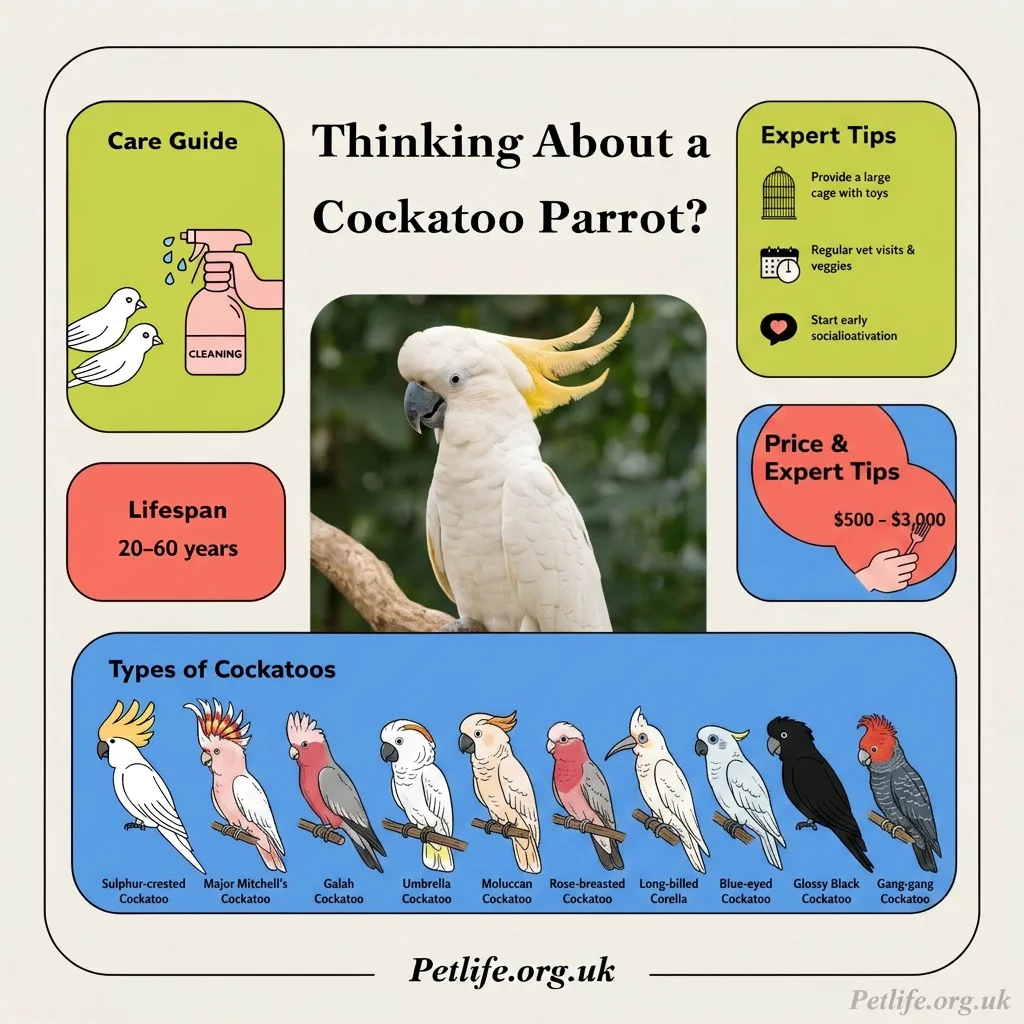
There are 21 recognized cockatoo species, each with its own personality, appearance, and care needs. Some are ideal for experienced bird owners, while others require an exceptional amount of time and attention.
Below are some of the most popular types of cockatoos kept as companion birds.
Umbrella Cockatoo
The Umbrella Cockatoo is one of the most affectionate companion birds.
Highlights
- Brilliant white feathers
- Large umbrella-shaped crest
- Loves human interaction
- Moderate talking ability
- Lifespan of 50 to 70 years
This species forms deep bonds with its family and dislikes being left alone for long periods.
Goffin Cockatoo
The Goffin Cockatoo is one of the smaller cockatoos, making it easier to house than larger species.
Highlights
- Small size
- Highly intelligent
- Excellent problem solver
- Energetic and playful
- Lifespan of 35 to 50 years
Goffin cockatoos enjoy puzzle toys, training sessions, and interactive games.
Sulphur-crested Cockatoo
The Sulphur-crested Cockatoo is famous for its striking yellow crest and lively personality.
Highlights
- Large size
- Loud vocalizations
- Curious and active
- Strong chewing instinct
- Lifespan of 40 to 70 years
This bird requires experienced owners who can provide daily enrichment and consistent training.
Galah Cockatoo
The Galah Cockatoo, also called the Rose-breasted Cockatoo, is one of Australia’s most recognizable birds.
Highlights
- Pink chest
- Grey wings
- Friendly personality
- Moderate talking ability
- Lifespan of 40 years or more
Many owners appreciate their playful yet slightly more independent nature.
Moluccan Cockatoo
The Moluccan Cockatoo is known for being one of the most affectionate cockatoos.
Highlights
- Large size
- Salmon-colored crest
- Extremely social
- Needs constant interaction
- Lifespan of 60 years or longer
Because they become strongly attached to their owners, they can develop behavioral problems if left alone too often.
Palm Cockatoo
The Palm Cockatoo is one of the world’s largest parrots.
Highlights
- Black feathers
- Red facial patch
- Massive beak
- Intelligent but independent
- Lifespan exceeding 60 years
Palm Cockatoos are uncommon as pets because they require specialized care and experienced handling.
Major Mitchell’s Cockatoo
Often considered one of the most beautiful cockatoos, this species has soft white and pink feathers with a colorful crest.
It is generally calmer than some larger cockatoos but still requires daily attention and enrichment.
Black Cockatoos
Several black cockatoo species exist, including:
- Red-tailed Black Cockatoo
- Yellow-tailed Black Cockatoo
- Carnaby’s Black Cockatoo
- Baudin’s Black Cockatoo
These birds are admired for their striking appearance but are less commonly kept as pets.
Which Cockatoo Makes the Best Pet?
There isn’t one perfect species for everyone.
For first-time bird owners, a Goffin Cockatoo or Galah Cockatoo may be more manageable because they are generally smaller.
For experienced owners with plenty of time, larger species like the Umbrella Cockatoo or Moluccan Cockatoo can become incredibly rewarding lifelong companions.
Your lifestyle, available space, and daily schedule should all influence your decision.
Cockatoo Personality and Temperament
The personality of a cockatoo parrot is one of the main reasons people fall in love with these birds.
Cockatoos are known for being:
- Highly intelligent
- Curious
- Affectionate
- Loyal
- Playful
- Sensitive
- Social
- Emotional
They enjoy being involved in daily family life and often seek attention from their favorite people.
Many owners describe their cockatoo as behaving more like a toddler than a pet bird because of its emotional intelligence and desire for interaction.
However, this strong bond also means cockatoos can become anxious if ignored for long periods.
Without enough mental stimulation, they may begin:
- Excessive screaming
- Feather plucking
- Chewing furniture
- Biting from frustration
- Repetitive behaviors
Providing daily enrichment helps prevent these problems.
Are Cockatoos Friendly?
Yes, most cockatoos are very friendly when properly socialized.
A well-raised cockatoo usually enjoys:
- Sitting with family members
- Learning tricks
- Playing games
- Head scratches
- Exploring new toys
- Training sessions using positive reinforcement
However, every bird has its own personality.
Some birds naturally enjoy meeting strangers, while others prefer interacting with only one or two trusted family members.
Early socialization helps build confidence and encourages balanced behavior.
Can Cockatoos Talk?
One of the most common questions is whether cockatoo parrots can talk.
The answer is yes, but their talking ability varies by species and individual bird.
Most cockatoos can learn:
- Words
- Short phrases
- Household sounds
- Laughter
- Doorbells
- Phone ringtones
- Whistles
Although they usually don’t develop vocabularies as large as African Grey Parrots, many cockatoos clearly imitate familiar sounds and words.
Tips for Teaching a Cockatoo to Talk
- Repeat the same words every day.
- Reward successful attempts with praise or treats.
- Keep training sessions short and enjoyable.
- Speak clearly using the same tone.
- Begin training while the bird is young.
Patience and consistency are much more effective than long training sessions.
Are Cockatoos Loud?
Yes.
Cockatoos naturally communicate with loud calls in the wild to stay connected with their flock over long distances.
Pet cockatoos may become especially noisy:
- Early in the morning
- Before sunset
- When excited
- When seeking attention
- If bored or lonely
Providing daily exercise, mental stimulation, and regular interaction can help reduce unnecessary screaming, although some vocalization is a normal part of living with these birds.
Cockatoo Lifespan
One of the biggest commitments of owning a cockatoo parrot is its long lifespan. Unlike many small pet birds, cockatoos can live for several decades. In many cases, they become lifelong companions and may even outlive their owners.
The average cockatoo parrot lifespan depends on the species, genetics, diet, environment, and veterinary care.
| Cockatoo Species | Average Lifespan |
| Goffin Cockatoo | 35–50 years |
| Galah Cockatoo | 40–50 years |
| Sulphur-crested Cockatoo | 40–70 years |
| Umbrella Cockatoo | 50–70 years |
| Moluccan Cockatoo | 50–70+ years |
| Palm Cockatoo | 50–80 years |
Some cockatoos have lived beyond 80 years in exceptional circumstances with excellent care, although this is not typical.
What Affects a Cockatoo’s Life Expectancy?
Several factors influence cockatoo life expectancy, including:
- A balanced diet
- Regular exercise
- A spacious cage
- Daily social interaction
- Mental stimulation
- Routine veterinary checkups
- A clean living environment
- Early treatment of illness
Birds that receive consistent care are more likely to enjoy a long, healthy life.
Cockatoo Diet and Nutrition
A healthy diet is one of the most important parts of caring for a pet bird cockatoo. In the wild, cockatoos eat a wide variety of foods. Pet birds also need a balanced diet rather than relying only on seeds.
A good daily diet includes:
- High-quality formulated pellets
- Fresh vegetables
- Fresh fruits
- Healthy grains
- Small amounts of nuts
- Clean drinking water
Providing a variety of foods helps supply essential vitamins, minerals, and protein.
Recommended Foods
Fresh vegetables should make up a large portion of your cockatoo’s diet.
Good choices include:
- Carrots
- Broccoli
- Bell peppers
- Kale
- Spinach
- Green beans
- Sweet potato
- Peas
Fresh fruits can be offered in moderation, such as:
- Apples (without seeds)
- Bananas
- Mango
- Papaya
- Blueberries
- Strawberries
- Grapes
- Pears
Nuts like almonds, walnuts, and pistachios can be used as occasional treats or training rewards because they are high in fat.
Foods Cockatoos Should Never Eat
Some foods are toxic or unsafe for birds.
Avoid feeding:
- Avocado
- Chocolate
- Caffeine
- Alcohol
- Onion
- Garlic
- Fruit pits
- Apple seeds
- Foods high in salt
- Sugary snacks
- Fried foods
Fresh, clean water should always be available and replaced daily.
Sample Daily Feeding Routine
A simple feeding schedule can help keep your cockatoo healthy.
Morning
- Pellets
- Mixed vegetables
- Fresh water
Afternoon
- Foraging treats
- Leafy greens
Evening
- Small portion of fruit
- A few nuts as rewards if needed
Offering food in foraging toys also encourages natural feeding behavior and provides mental stimulation.
Cage Requirements
Choosing the right cage is essential for your cockatoo pet. These birds are active climbers with powerful beaks, so they need a sturdy enclosure that gives them room to move comfortably.
A suitable cage should have:
- Heavy-duty metal construction
- Strong locks
- Horizontal bars for climbing
- Space for several perches
- Food and water dishes
- Room for toys
As a general rule, bigger is always better. A cockatoo should be able to fully spread its wings without touching the sides of the cage.
Cage Accessories
A well-equipped cage should include:
- Natural wood perches in different sizes
- Rope perches
- Chewing toys
- Puzzle toys
- Foraging toys
- Swings
- Climbing ladders
Rotating toys every week helps prevent boredom.
Exercise and Enrichment
Cockatoos are intelligent birds that need daily physical activity and mental challenges.
Without enough stimulation, they may become frustrated or develop unwanted behaviors.
Most cockatoos should spend at least 3 to 4 hours outside their cage each day in a safe, supervised area.
Daily exercise may include:
- Flying in a bird-safe room, if possible
- Climbing play stands
- Exploring new toys
- Solving foraging puzzles
- Learning new tricks
- Interactive play with family members
Exercise keeps muscles strong, supports a healthy weight, and helps reduce stress.
Why Enrichment Is Important
In the wild, cockatoos spend much of their day searching for food, climbing trees, and interacting with other birds.
Pet cockatoos need similar opportunities to stay mentally active.
Good enrichment ideas include:
- Cardboard boxes for shredding
- Untreated wood blocks
- Coconut shells
- Paper cups with hidden treats
- Hanging ropes
- Bird-safe branches
- Food puzzles
Changing toys regularly keeps your bird interested and encourages natural behaviors.
Grooming and Hygiene
Regular grooming helps keep your cockatoo comfortable and healthy.
Most birds handle basic feather care on their own, but owners should still provide support through routine maintenance.
Bathing
Many cockatoos enjoy bathing several times each week.
You can offer:
- A shallow dish of clean water
- Gentle misting with a spray bottle
- A supervised shower perch
Bathing helps remove dust, supports healthy feathers, and keeps the skin in good condition.
Beak Care
A healthy beak naturally wears down through chewing.
Provide safe items such as:
- Natural wood toys
- Mineral blocks (if recommended by your avian veterinarian)
- Bird-safe branches
Never attempt to trim a cockatoo’s beak yourself unless instructed by a qualified avian veterinarian.
Nail Care
Long nails can make climbing difficult and may catch on toys or cage bars.
Many birds naturally wear down their nails by climbing on rough natural wood perches.
If trimming is needed, it should be done carefully to avoid injury. Owners who are not experienced should have nail trims performed by an avian veterinarian or an experienced bird groomer.
Feather Care
Cockatoos produce a fine powder called powder down, which helps condition their feathers.
Because of this, owners may notice more feather dust around the cage compared to other parrots.
Regular cleaning of:
- Perches
- Cage bars
- Food bowls
- Toys
- Nearby furniture
helps maintain a healthier environment for both the bird and the household.
Daily Care Checklist
Following a simple routine helps meet your cockatoo’s physical and emotional needs.
Every day, make time to:
- Replace food and fresh water
- Offer fresh vegetables and pellets
- Clean food and water bowls
- Remove droppings from the cage
- Spend quality time together
- Provide supervised exercise outside the cage
- Offer new toys or foraging activities
- Check your bird for any signs of illness or injury
Consistency builds trust and helps your cockatoo feel secure.
Signs of a Healthy Cockatoo
A healthy cockatoo is usually:
- Bright and alert
- Curious about its surroundings
- Eating and drinking normally
- Active and playful
- Well-groomed
- Breathing quietly
- Producing normal droppings
If your bird becomes unusually quiet, stops eating, has trouble breathing, or shows changes in droppings or feather condition, contact an avian veterinarian as soon as possible. Birds often hide illness until they become seriously unwell, so early attention is important.
Common Health Problems in Cockatoo Parrots
Cockatoos are generally hardy birds when they receive proper care, but they can develop health problems if their diet, environment, or daily routine is not suitable. Because birds naturally hide signs of illness, even small changes in behavior should be taken seriously.
Scheduling regular checkups with an avian veterinarian and providing a balanced diet can help prevent many common conditions.
Common Cockatoo Health Issues
| Health Problem | Common Signs | Prevention |
| Feather plucking | Missing or damaged feathers | Daily interaction, mental stimulation, regular health checks |
| Obesity | Weight gain, difficulty flying | Balanced diet, daily exercise |
| Fatty liver disease | Tiredness, weight changes | Limit high-fat seeds and nuts |
| Psittacosis | Breathing problems, nasal discharge | Good hygiene and veterinary care |
| Beak or feather disorders | Abnormal feather growth, beak changes | Nutritious diet and routine health exams |
| Calcium deficiency | Weak bones, poor muscle function | Balanced nutrition and veterinary guidance |
| Respiratory infections | Sneezing, wheezing, breathing difficulty | Clean cage and good ventilation |
Never give medication meant for people or other pets unless your avian veterinarian specifically recommends it.
Signs Your Cockatoo May Be Sick
Contact an avian veterinarian if you notice any of the following:
- Loss of appetite
- Weight loss
- Sitting quietly for long periods
- Difficulty breathing
- Dirty feathers around the face
- Swollen eyes
- Unusual droppings
- Excessive sleeping
- Balance problems
- Sudden aggression or behavior changes
Early treatment often leads to better outcomes.
Cockatoo Parrot Price
One of the most common questions from future owners is, “What is the price of a cockatoo parrot?”
The answer depends on several factors, including:
- Species
- Age
- Hand-raised or parent-raised
- Health status
- Training
- Breeder reputation
- Country
- Availability
Rare species usually cost more than common ones.
Average Cockatoo Prices by Species
| Species | Typical Price (USD) |
| Goffin Cockatoo | $1,000–$2,500 |
| Galah Cockatoo | $1,500–$3,000 |
| Sulphur-crested Cockatoo | $2,000–$4,000 |
| Umbrella Cockatoo | $2,500–$5,000 |
| Moluccan Cockatoo | $3,000–$6,000 |
| Palm Cockatoo | $10,000 or more in places where legal and available |
Prices vary by breeder and location, so these figures are estimates rather than fixed amounts.
Cockatoo Parrot Price in Different Countries
Costs vary significantly around the world due to import rules, breeding availability, and local demand.
Pakistan
The cockatoo parrot price in Pakistan can vary widely depending on the species, age, and whether the bird was locally bred or legally imported. Prices are generally higher for species such as the Umbrella or Moluccan Cockatoo because they are less common.
India
The cockatoo parrot price in India depends on the species, breeder, and local regulations. Larger and rarer cockatoos typically cost more than smaller species.
United Kingdom
In the UK, prices are influenced by breeder reputation, age, and whether the bird has been hand-raised. Buyers should also consider the ongoing costs of housing, food, enrichment, and veterinary care.
Philippines and Sri Lanka
Cockatoo prices vary depending on legal availability and breeding programs. Before purchasing, always check local wildlife laws and ownership requirements.
Tip: The purchase price is only part of the total cost. A quality cage, toys, nutritious food, veterinary care, and enrichment over several decades will usually cost far more than buying the bird itself.
Where to Buy a Cockatoo Parrot
If you’re searching for a cockatoo parrot for sale, choose a responsible source rather than focusing only on price.
Good options include:
- Reputable bird breeders
- Licensed aviaries
- Bird rescue organizations
- Adoption centers
- Specialty bird stores with strong welfare standards
A healthy bird should be alert, active, clean, and comfortable around people if it has been properly socialized.
Questions to Ask Before Buying
Before bringing home a cockatoo, ask:
- Has the bird been examined by an avian veterinarian?
- What is its age?
- What foods does it currently eat?
- Has it been hand-raised?
- Does it have any known medical conditions?
- Has it been socialized?
- Is any health documentation available?
These questions help you make an informed decision and reduce the risk of unexpected health or behavioral problems.
Buying a Cockatoo Online
Many people search for:
- Cockatoo parrot for sale
- Cockatoo parrot for sale UK
- Cockatoo parrot for sale near me
If you buy online:
- Verify the breeder’s reputation.
- Request recent photos and videos.
- Ask for veterinary records.
- Avoid deals that seem unusually cheap.
- Confirm that the sale complies with local wildlife laws.
Never purchase a bird from someone who cannot answer basic questions about its care or refuses to provide health information.
Pros and Cons of Owning a Cockatoo
Every pet has advantages and challenges. Understanding both will help you decide whether a cockatoo fits your lifestyle.
| Pros | Cons |
| Highly intelligent | Can be very loud |
| Strong bond with owners | Needs daily attention |
| Long lifespan | Long-term commitment |
| Playful and entertaining | Requires mental stimulation |
| Can learn tricks and words | Powerful beak can damage furniture |
| Beautiful appearance | Large cages and toys can be expensive |
| Social and affectionate | May develop separation anxiety |
Cockatoos can be wonderful companions, but they are not the right choice for every household.
Is a Cockatoo the Right Pet for You?
A cockatoo as a pet can be incredibly rewarding for someone who understands its needs.
A cockatoo may be a good choice if you:
- Have several hours each day to spend with your bird.
- Enjoy training and interactive play.
- Can provide a spacious cage and safe play area.
- Are prepared for a commitment that may last several decades.
- Have access to an avian veterinarian.
You may want to consider another bird species if you:
- Spend long hours away from home.
- Prefer a quiet pet.
- Have limited space.
- Want a bird that requires less daily interaction.
Choosing a pet based on your lifestyle is one of the best ways to build a happy, long-term relationship.
Responsible Cockatoo Ownership
Owning a cockatoo involves more than providing food and shelter. These birds depend on their owners for companionship, enrichment, and consistent care throughout their lives.
Responsible owners should:
- Learn about the needs of their chosen species before buying.
- Provide a balanced diet and clean water every day.
- Schedule regular veterinary checkups.
- Offer safe toys and opportunities to chew and forage.
- Spend time interacting with the bird every day.
- Keep the living environment clean and secure.
Meeting these needs helps your cockatoo stay healthy, active, and emotionally balanced.
Cockatoo Care Checklist
Caring for a cockatoo parrot becomes much easier when you follow a consistent daily routine. These intelligent birds thrive on structure, interaction, and a clean environment.
Use this checklist to help meet your cockatoo’s daily needs.
Daily Checklist
- Replace fresh drinking water
- Feed high-quality pellets and fresh vegetables
- Offer a small serving of fruit as a treat
- Remove leftover food before it spoils
- Clean food and water bowls
- Spend at least 2–4 hours interacting with your bird
- Provide supervised time outside the cage
- Rotate toys or add a new enrichment activity
- Check your bird’s feathers, eyes, and droppings for signs of illness
Weekly Checklist
- Deep clean the cage
- Wash perches and toys
- Inspect toys for damage
- Trim nails if recommended by your avian veterinarian
- Weigh your bird to monitor its health
- Rearrange toys and climbing areas to keep things interesting
Following a regular routine helps your cockatoo stay physically healthy and mentally engaged.
Frequently Asked Questions
Q1. What is the difference between a cockatoo and a parrot?
A cockatoo is a type of parrot, but it belongs to the Cacatuidae family, while most other parrots belong to the Psittacidae family. Cockatoos are known for their movable crest, powder-down feathers, and affectionate personalities. Many other parrots have brighter feather colors and different social behaviors.
Q2. What is the price of a cockatoo parrot?
The cockatoo parrot price depends on the species, age, breeder, and country. Smaller species such as the Goffin Cockatoo are generally less expensive than larger species like the Umbrella or Moluccan Cockatoo. Besides the purchase price, remember to budget for a large cage, nutritious food, toys, and ongoing veterinary care.
Q3. Are cockatoo parrots friendly?
Yes. Most cockatoos are friendly, affectionate, and enjoy spending time with their owners. They often form strong bonds with their family and like being included in daily activities. Early socialization and positive reinforcement help encourage good behavior.
Q4. How much is a cockatoo in the UK?
Cockatoo prices in the UK vary depending on the species, age, and breeder. Hand-raised birds from reputable breeders generally cost more than older or rehomed birds. Always choose a responsible seller and make sure you understand the long-term costs of ownership.
Q5. How long do cockatoos live?
The average cockatoo parrot lifespan is between 40 and 70 years, although some species can live even longer with excellent care. A healthy diet, regular exercise, mental stimulation, and routine veterinary care all contribute to a longer life.
Q6. Can cockatoos talk?
Yes. Many cockatoos can learn words, short phrases, whistles, and household sounds. Their talking ability varies from bird to bird. While they may not develop vocabularies as large as some other parrots, they are excellent at communicating through sounds, body language, and vocal expressions.
Q7. Are cockatoos loud?
Yes. Cockatoos naturally use loud calls to communicate with their flock in the wild. Some noise is normal, especially during the morning and evening. Providing enough attention, exercise, and enrichment can help reduce excessive screaming caused by boredom or loneliness.
Q8. What do cockatoos eat?
A healthy cockatoo diet should include:
- High-quality pellets
- Fresh vegetables
- Fresh fruit in moderation
- Healthy grains
- Small amounts of nuts
- Clean drinking water
Avoid feeding chocolate, avocado, caffeine, alcohol, onion, garlic, and other foods that are toxic to birds.
Q9. Do cockatoos make good pets for beginners?
Most cockatoos are better suited to experienced bird owners because they require daily interaction, training, and mental stimulation. Smaller species, such as the Goffin Cockatoo, may be easier to manage than larger species, but they still need a significant time commitment.
Q10. How much attention does a cockatoo need?
Cockatoos are highly social birds and need several hours of interaction each day. This can include training, supervised playtime, talking, or simply spending time with their family. Birds that are left alone for long periods may become stressed or develop unwanted behaviors.
Final Thoughts
A cockatoo parrot is one of the most intelligent, affectionate, and rewarding companion birds you can own. Their playful personality, expressive crest, and ability to form deep bonds make them a favorite among bird enthusiasts around the world.
At the same time, cockatoos are not low-maintenance pets. They need daily attention, mental stimulation, regular exercise, a nutritious diet, and lifelong veterinary care. Their long lifespan also means adopting a cockatoo is a commitment that can last for decades.
Before bringing one home, take time to research different cockatoo species, compare their personalities and care requirements, and consider whether your lifestyle can meet their needs. Choosing the right bird and providing proper care from the beginning will help your cockatoo live a healthy, happy, and enriching life.